Tag Archives: aging mule deer

Very Old Mule Deer Buck

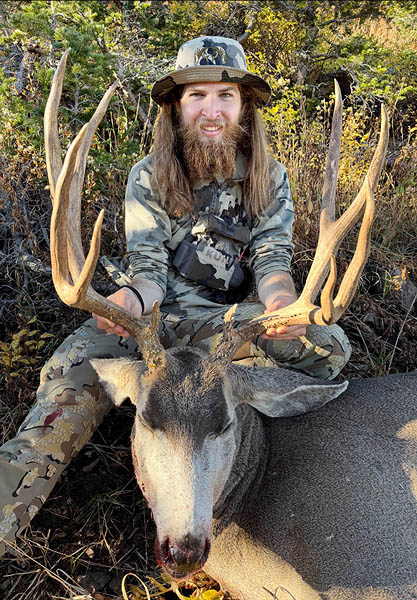
Tyler and his ancient mule deer buck.

This is my nephew, Tyler, and his 2025 muzzleloader buck. He is one of the best hunters I know, shooting large, older-class animals every year.

At first glance this might look like just another good 4-point buck. However, upon further examination during the skull-mounting process, I concluded this to be the oldest buck I’ve ever seen.

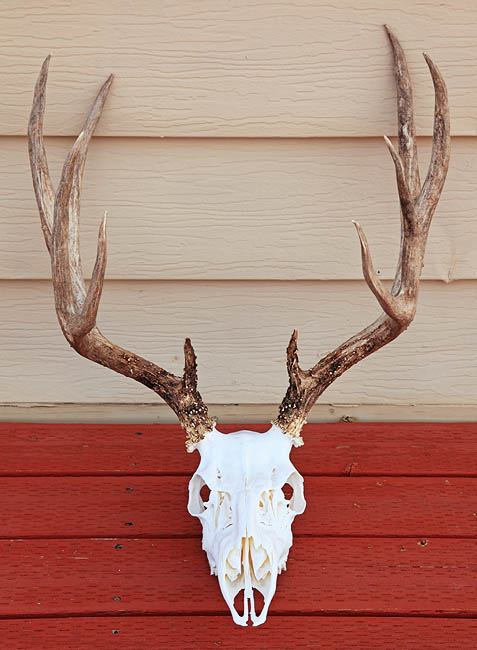
Without tooth analysis, judging old age in mule deer is difficult. However, this deer was unusually large in body and and neck size. It also had an unusually wide muzzle and face.

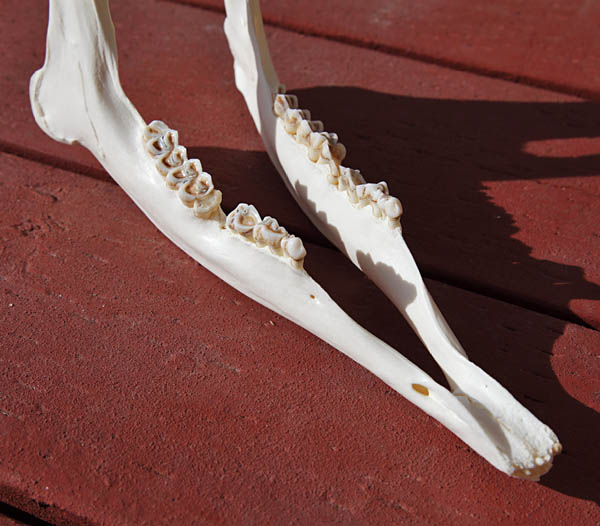
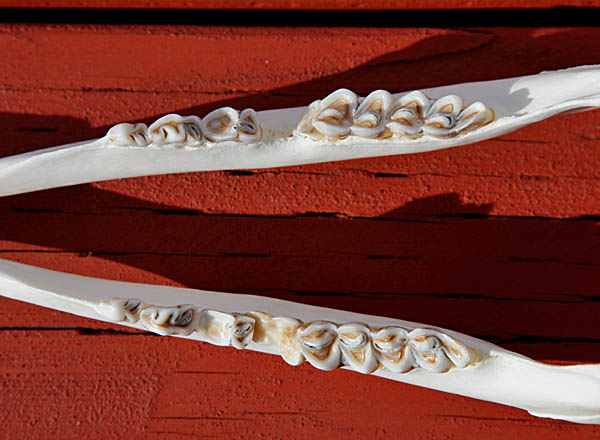
Lower jaw showing advanced aging.

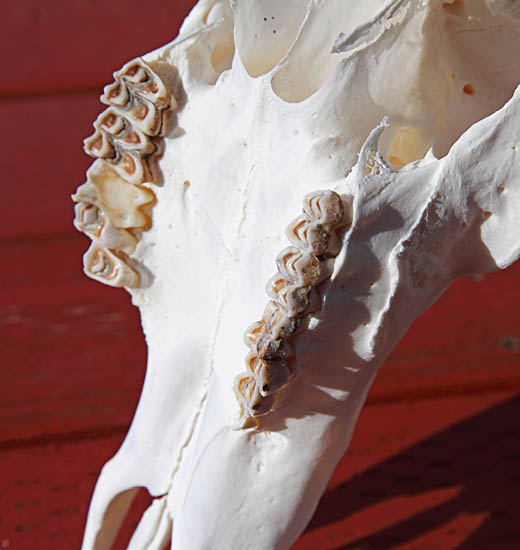
Tooth wear tells the whole story. First off, it has NO front (biter) teeth at all; they are completely worn away. Second, it’s missing a couple teeth in its lower jaw and some of the regular chewers are completely worn flat.

Wildlife biologists are able to determine the exact age of a deer by tooth analysis. This deer won’t be aged, but it’s clearly very old and likely would not have survived many more years.

Finished skull with unusually wide face and muzzle.

As a taxidermist I’ve examined dozens of old bucks, but none were this advanced. I would estimate the age between 12-15 years. What do you think?
Mule Deer Age Progression

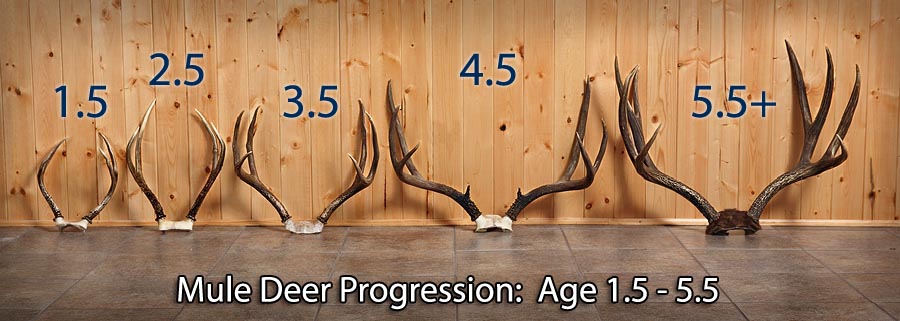
Mule Deer Age Progression:  Antlers

This is pretty neat. I got a bunch of younger deer in for taxidermy this year (including my own) ranging from 1.5 to 5.5 years old. So, I lined them up in order of age for this photo.  (Click to see larger version).

progression2
Mule deer antler age progression based on size.

The reason they are aged in half-year increments is because all mule deer are born in spring, and then harvested in fall, making the youngest legal buck 1.5 years old. Before that, they are fawns without antlers.

The buck on the far right is my late grampa’s largest buck.  It’s a beautiful, symmetric 4×4 without eyeguards. Without seeing the buck’s teeth, I can only guess the age at 5.5, although it could be as old as 7 or 8.

It can be difficult to age large bucks just by their antlers because after they become fully mature (4.5 years), genetics plays a big part in determining antler size.

The best way to age a buck is to look at tooth wear. After 5 or 6 years there will be noticeable wear on the back molars. They become less jagged and more flat. Eventually all the molars flatten down to the gum line while the front teeth (aka biters) fall out one by one.

The next best way to age a buck is to look at antler bases. Old bucks (from 8 to 10) grow similar size racks each year, but they are thicker around, especially at the bases. This is called “mass.”

Very old bucks (10-12 years old) tend to regress in antler size because their teeth become so worn that they can’t get enough nutrition from their food. At that point they slowly starve and/or freeze to death during winter. Mother Nature can be a cruel beast! And you thought hunters were cruel…

The one thing that would enhance this photo is a true giant in his prime, aged 9 – 11 years.  A “superbuck” scoring into the mid-200s would dwarf them all.