The Good, the Bad, and the Beautiful: My 2025 Deer Hunt Story

The Good, the Bad, and the Beautiful

Same Goal, Different Year

Now in my 29th year of bowhunting mule deer, the annual ritual remains the one thing I look forward to every year. I suppose it’s a combination of high mountain adventure and escapism, but mostly I love the extreme challenge of chasing tough, cagey animals through extreme terrain with my bow and arrow. And if I’m successful, it provides the meat that sustains my life all year long.

What I don’t love is a sport that degrades with each passing year. I don’t want to complain here—especially about hunting—but the diminishing quality of the modern hunt has become the overriding theme of my hunting experience. The once magical woods that brought me so much joy over the years—even rescuing me from my darkest times…well, it’s changed.

Primarily, there are far less deer now, and far fewer great bucks. There are many reasons for the mule deer’s decline, but it’s mostly the result of human encroachment coupled with gross mismanagement by the state game department. Of particular note, the public land where I hunt is becoming so overrun with recreationalists—not just other hunters—that most big bucks don’t even bother leaving private land.

A big buck learns quickly to equate people with danger, and whenever he wanders onto public land and encounters a person, he flees back to the relative safety of private land. Worse yet, he usually won’t come back for the rest of the season. This has become the toughest challenge.

Still, my goal remains the same: To harvest a monstrous 200” buck with my bow and arrow. It’s really an unrealistic goal; in fact I haven’t seen a 200” deer in many years. However, the unit I hunt borders the infamous Paunsagunt premium deer unit, so genetically it has  trophy potential.

Unfortunately, very few public land bucks live long enough to reach maturity thanks to poor management by the Division of Wildlife Resources (DWR) whose primary goal is maximizing revenue by issuing excessive permits for a deer population that hangs on by a thread.

Despite all of this, my love for the hunt doesn’t change even if the quality does. Nor does it stop me from devoting an entire month to my beloved endeavor…

That is, unless I don’t draw a tag. For the first time in my life I didn’t draw an archery deer tag in 2024. I was nearly traumatized. However, that meant I would be guaranteed a tag in 2025.

What could possibly go wrong?

Stroke

In January, Esther—my wife and hunting partner—had a major stroke. Long story short, I found her paralyzed on her right side and unable to speak. We spent most of January in the hospital trying to recover.

Esther’s first day in the hospital following a major stroke.

During the extended stay, I spent much time reading and learning about stroke recovery. What really got my attention was the brain’s incredible ability to heal itself by creating new neuro pathways around damaged areas through a process called neuroplasticity. It’s not as easy as it sounds.

The human brain demands an inordinate amount of energy and focus to do simple tasks, like eating, walking, talking, etc. Humans spend their formative years programming these simple motor skills to memory, after which we just take it for granted. A stroke forces you to start over.

Esther’s recovery was slow and steady. She would fall into exhaustion and despair on a near-daily basis, but the goal of getting back to the mountains remained steadfast, and we fought onward.

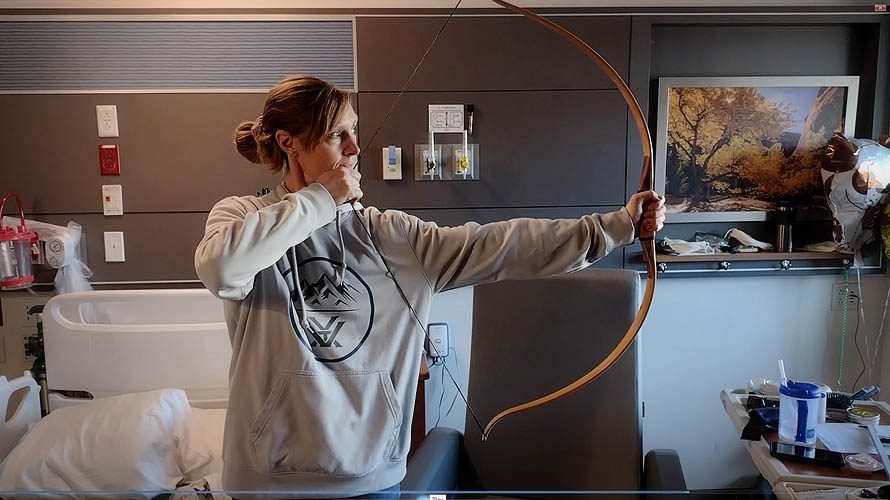
Turning tragedy into action, I brought a youth bow to Esther’s hospital room where she spent weeks relearning the basics of archery, as well as walking and talking. With the bow hunt just seven months away, returning to the steep mountains seemed like an impossible goal.

Esther relearning how to draw a bow in the hospital.

Upon returning home, Esther continued to recover while I struggled to stay caught up with work. Summer came and we went hiking often. Esther stumbled and fell through the woods, but eventually prevailed and no longer needed a leg brace. She worked daily to pull her 60-pound hunting bow back, and could even shoot a few wobbly arrows before collapsing.

And before we knew it, the hunt was on.

Not My Woods

Butterflies tickled my stomach as we set up camp ahead of the hunt opener. We made it! I had a tag and some hope, and that’s all I needed.

As with past years I picked up where I left off. But right away I could tell things were different. Days ticked by as I moved from area to area searching for big bucks and tracks, but with no luck. The likely culprit was the severe drought. It hadn’t rained in months and the woods were sickly dry with minimal forage and water. Such conditions tend to suppress deer movement and confine them to tiny home ranges near water.

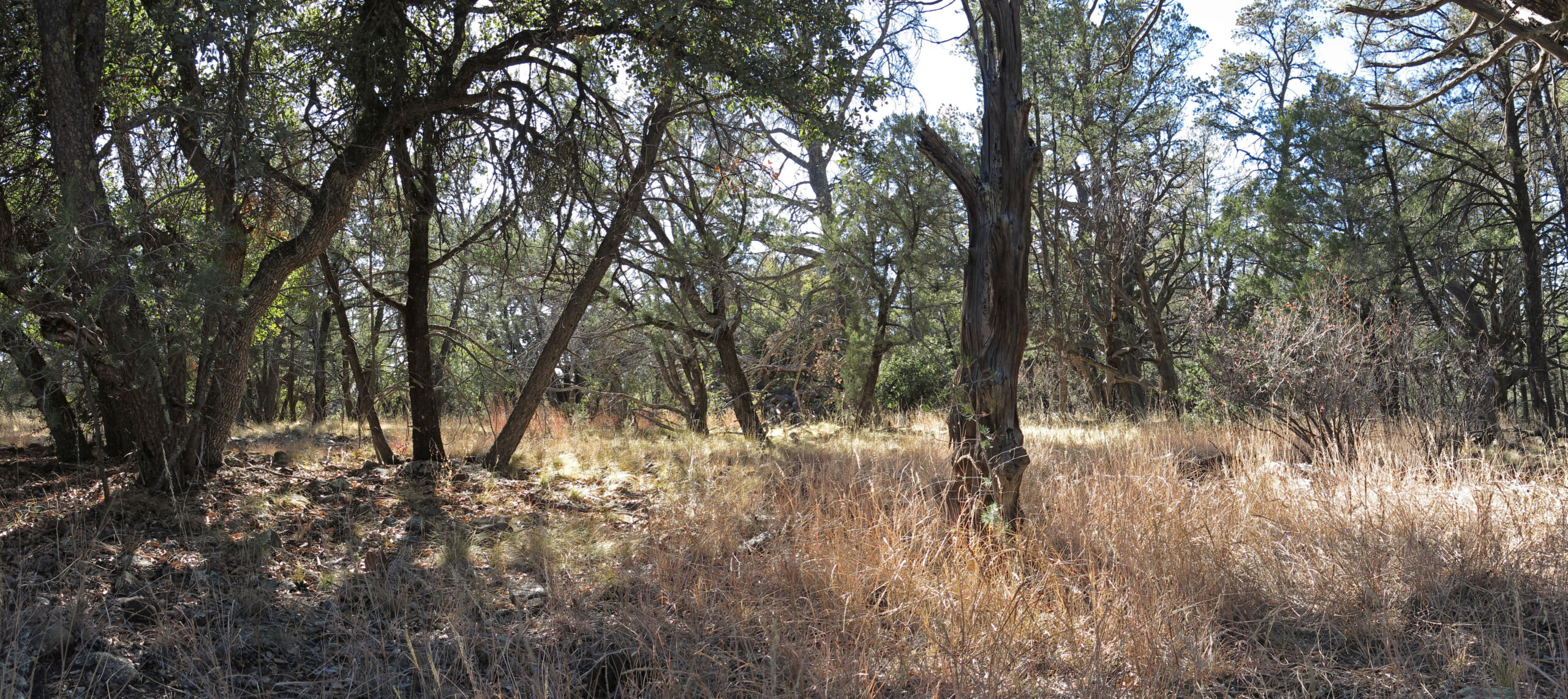
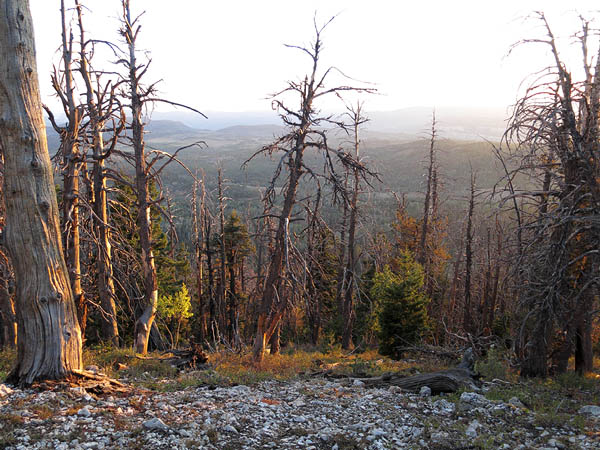
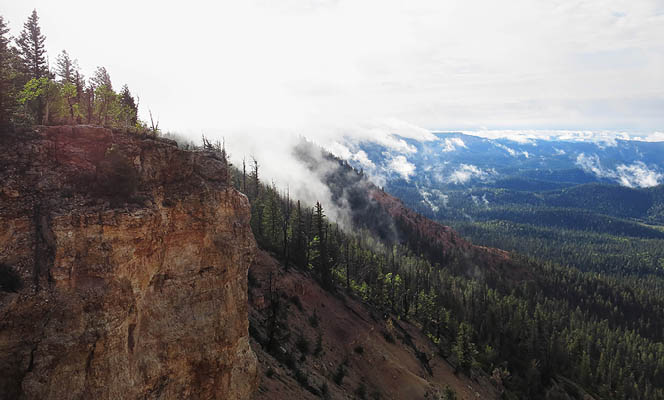
Deer woods 2025.

Big brother Brent was hunting a few miles away in a secret area he calls “The Ribbon.” We would meet up for lunch every once in a while to compare notes and commiserate about the lousy hunting conditions. Joking about our growing “forlornness” was common.

We both went into the hunt with visions of 200-inch bucks, but neither of us had seen anything over 160. Worse yet was the realization that, according to our personal statistics, we were only averaging one shot opportunity per 28-day season. This lied in stark contrast to three decades ago when you’d regularly shoot every arrow out of your quiver in a single weekend. In the end all we could do was put in the time and wait for conditions to change. Man, we really needed some rain!

After waking and hiking at 5am every day, it was nice to spend the long, hot, midday hours resting back at camp. But it was far from relaxing. The sun beat down from cloudless skies, turning the tent into an oven and making napping miserable. Worse yet, there was a crazy band of perma-campers nearby who spent all day getting high and yelling obscenities, or blaring rave music from the car stereo. This continued throughout the entire hunt!

I don’t understand the people who’ve taken over my woods. On one particular night someone fired a high-powered rifle over our camp at 2 a.m., likely elk hunters trying to run us out of their “secret” area. They’d done this before, so it wasn’t a surprise this time. Still, I never feel so much hate as when I’m doing what I love the most.

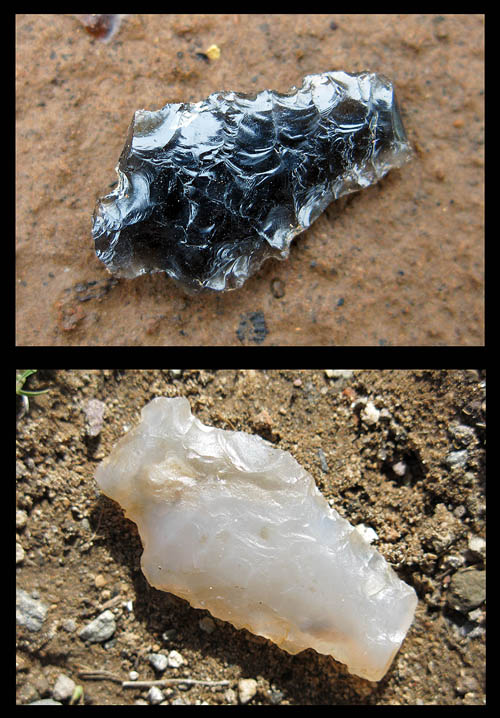
Arrowheads found during the hunt: remnants of ancient man.

Esther had her own struggles. She spent most of the time exploring our old, traditional haunts that still held an occasional deer. However, stalking quietly and shooting accurately eluded her due to residual effects from her stroke.

On one occasion I accompanied her as she stalked after a group of three mature bucks feeding unawares. She got close and drew her bow a couple times, but didn’t have a clear shot. When a buck finally stepped into the open, she tried to draw again but couldn’t get the string back. In a panic I grabbed her arm and pulled it to full draw. But then she was too shaky and missed the deer widely.

At that point I realized I couldn’t help her. I couldn’t be there every moment to pull on her elbow. The best thing I could do was offer some advice. Here’s what I told her:

“There was a great karate master who could chop through thick boards with seemingly little effort. His students were perplexed by his skill. Try as they might, their boards stood strong against their strikes, leaving their hands bruise and broken. The master finally explained: “Don’t focus on the board. See your hand already through the board, and put it there.”

That was the secret: To see past the obstacle.

I continued, “Don’t focus on the draw; focus on the deer. Visualize the bow already drawn. You’re stronger than you think.” And with that we parted ways; I hunted my woods and she hunted hers.

Two weeks into the hunt, the mountain suddenly cooled off with relentless monsoonal rains. The woods mysteriously cracked and popped all day and night—something I’d never experienced before. I figured it was the sound of parched timber rehydrating and expanding at a rapid rate.

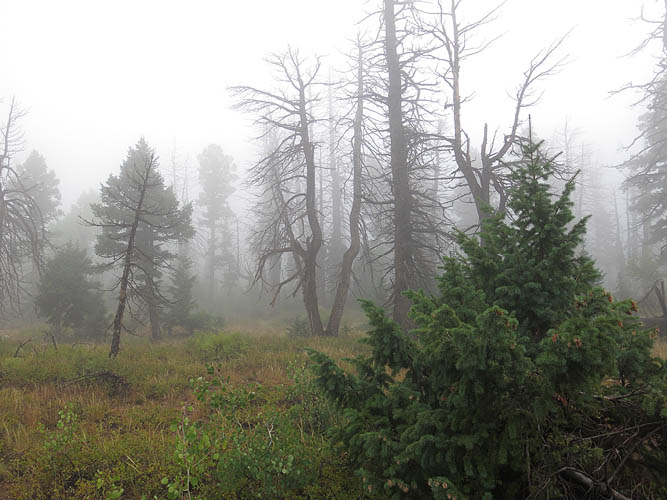
Finally, a high-mountain cool-off with rain.

I was much more hopeful with the cool-off. Between storms I slogged along, sometimes with a big golf umbrella in hand, hoping to catch new deer coming up from the vast private lands below.

The Desert

One day I was sitting in my truck waiting out a storm when I got a call from a local about some taxidermy work he needed done. When I told him I was hunting, he got excited and told me about some large bucks he’d see in the low desert country near the Arizona border. Needless to say I was elated to learn this, and immediately drove to the desert alone.

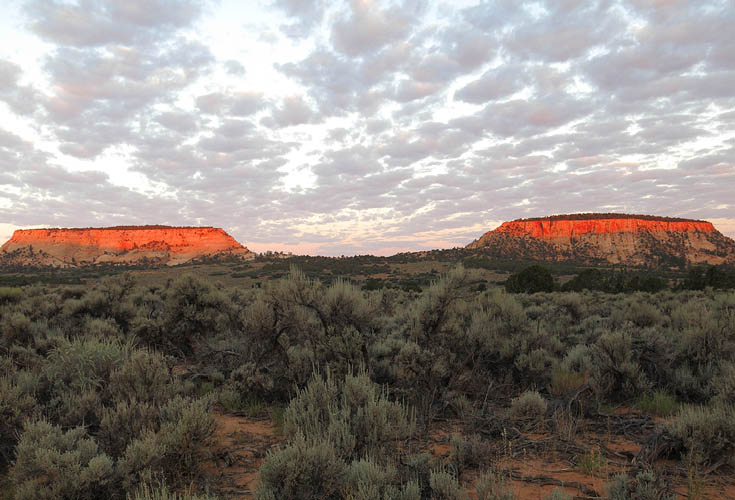
The low-land desert country.

Long story short, I spent two days in the sandy, hot desert. I found the area he described alright, but glassing didn’t turn up any deer and tracking was nearly impossible in the sand. Unlike the high mountains, the desert was hot and dry.

Knowing that nothing could survive there without water, I set out the second day in search of water. I hiked all day, carefully inspecting every possible water source on the map, but there was no water anywhere. By mid-afternoon I realized I’d pushed too hard and was running dangerously low on water myself.

To make matters worse, I got cliffed out while hiking a long plateau back to the truck. There was no safe descent, so I had to backtrack several miles in the afternoon heat. At one point I considered holing up in the shade and traveling at night when it was cooler, but I was already perilously dehydrated.

I pushed ahead at a steady clip and by some miracle arrived at the truck just before dark, drenched in sweat and dust. In disgust I threw camp into the truck and headed back to high country. Better to fail in my cool mountains, I figured, than suffer the horrible desert another day.

Changes

Upon returning to the soggy, 9000-foot mountains, I decided to reinvent the hunt. I started by hunting exclusively on very steep wooded areas adjacent to private land. The hunt was half over and any areas accessible to humans were devoid of deer.

High mountain adventure.

I saw my first big buck on morning #16 while sneaking through some dense timber. Heavy antlers bobbed as he fed fifty yards downhill from me. I pulled an arrow and waited for a clear shot. While standing there, a doe and fawn came wandering through, threatening to blow up the area. I froze up and they continued on unawares.

The buck was still out of view, but if I could just take a couple steps to my right, I might have a clear shot. I whispered a prayer and took a step. Suddenly the whole area blew up. Apparently a smaller buck had wandered in unseen to my right, and when I moved he snorted and blasted downhill, taking the big buck with him. That’s bowhunting, I guess.

Day #20 had me sneaking through dense timber in the gray light of morning; same mountain, just lower. Movement caught my eye fifty yards below. I froze up at the same time an old warrior buck caught my movement. We stared at each other for a good long minute before he got nervous and disappeared into the trees. I pulled an arrow just in case. Sure enough he walked right into my scent stream, and then spun around and bounced back into the opening. I was ready and sent an arrow whistling his way. In a split second he jumped out of the arrow’s path and smashed down the mountain to private, never to be seen again.

Stroke of Luck

Day #25; only three days left in the hunt. No days off, no more camp breaks; just full days afield, sneaking through tangled timber alone; half ninja, half madman. Success or failure hinges on every decision. This is what I work for all year long. One tag, one opportunity, that’s all I ask. Desperate, but grateful, I’m at peace here in the big woods.

The big woods; deep and steep.

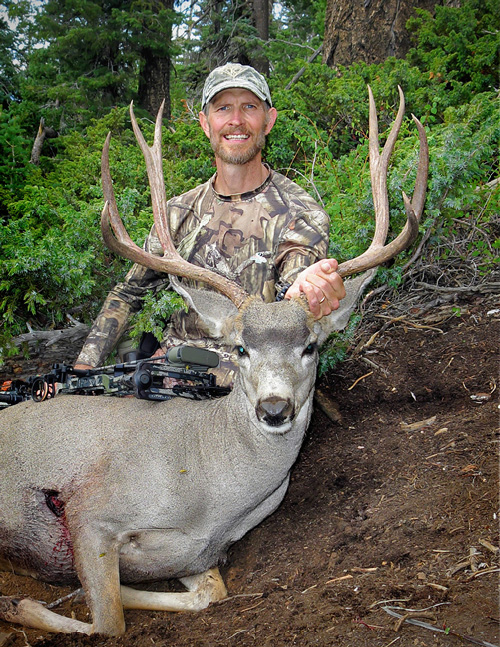
I’d gotten just about as far from the truck and trail as possible when I got a message from Esther. There was a picture of a fine buck lying dead and a text reading “Deer down.” I couldn’t believe it! She had climbed the mountain and took care of business all by herself. For the first time in weeks I sighed with relief. Whatever happens now, the hunt is a success.

It took two hours to power out of the woody hole I’d descended into and get back to my truck. In my haste I ran face to face into a wonderfully wide 4×4 deer, but he was equally surprised and bounded away. No big deal.

Back at the truck, I drove to Esther’s side of the mountain and then scrambled up to find her standing over her deer, all smiles. We took photos, quartered the deer, and loaded it into packs. I almost didn’t notice the crushing weight of the pack as we descended the mountain together.

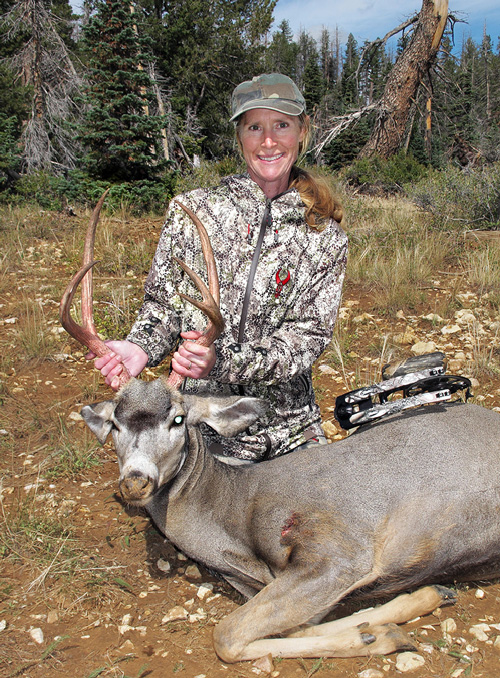
Esther’s deer on day #25.

The next day was a total bow-out…literally. I woke up to gale force winds trying to rip the tent from the ground with me inside. I spent the day afield but saw nothing. Deer don’t move much in high winds because it dulls their survival senses. They just hole up in the thick stuff and wait it out.

Day #27

Day #27 was less windy, and with only two days left it was time to cut my losses. Earlier in the hunt I found a group of average deer living in one of my old haunts. I headed there at first light but found the area completely devoid of deer. With the morning waning on, I scurried over the ridge and dropped down the steep southwest face where I’d busted an unseen buck earlier in the hunt.

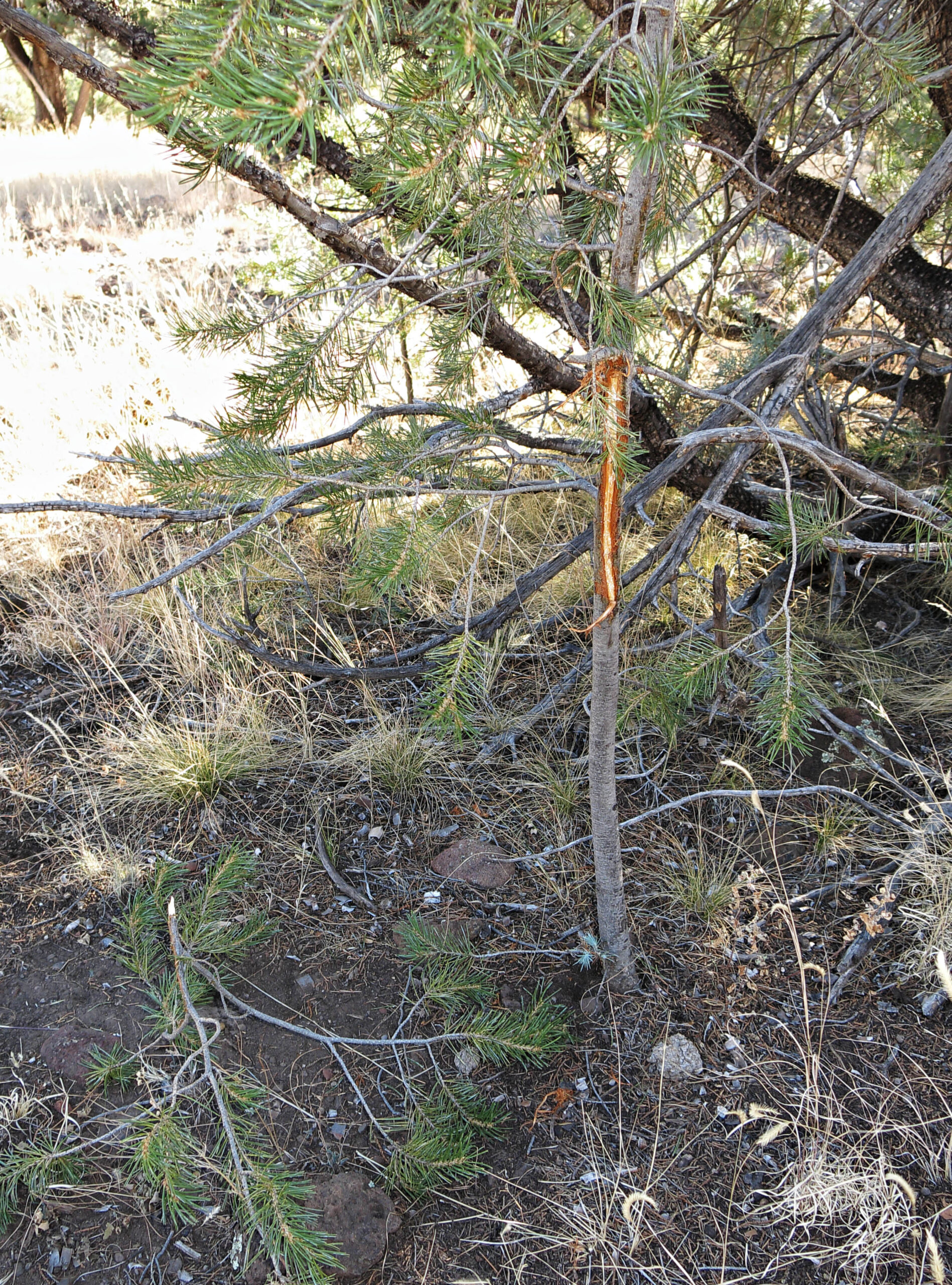
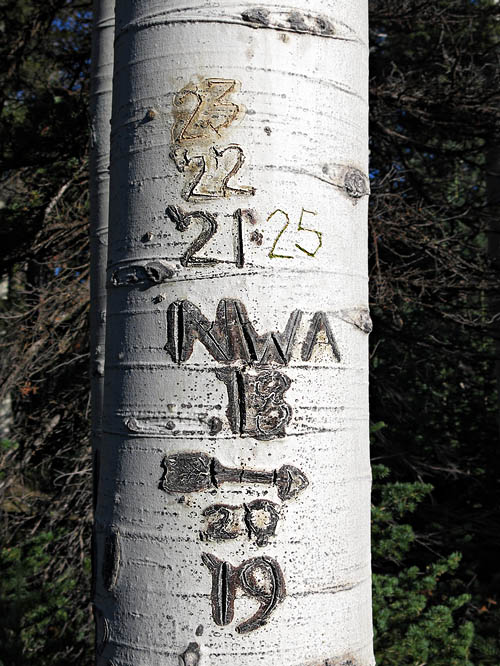
My sign tree.

While working steadily down the wooded slope, movement caught my eye 20 yards ahead. Only the wind swooshing through the trees had obscured my approach. All I could see was bits and pieces as a wide-antlered buck fed in the direction of a dense bedding area. In slow motion I loaded an arrow and scanned ahead for an opening. If he continued his current trajectory, he’d pass through a little window between fir trees.

My unblinking eyes squinted over my bow, tracking the buck’s every movement as he slowly and cautiously stepped towards the opening. Then things happened fast! He disappeared behind a tree, I drew my bow, and he popped into the opening. Just as I was squeezing the trigger release, the buck began turning to go downhill. Simultaneously I noticed I was holding the wrong sight and in a millisecond dropped the top pin behind his shoulder and released the arrow.

The buck blasted away.

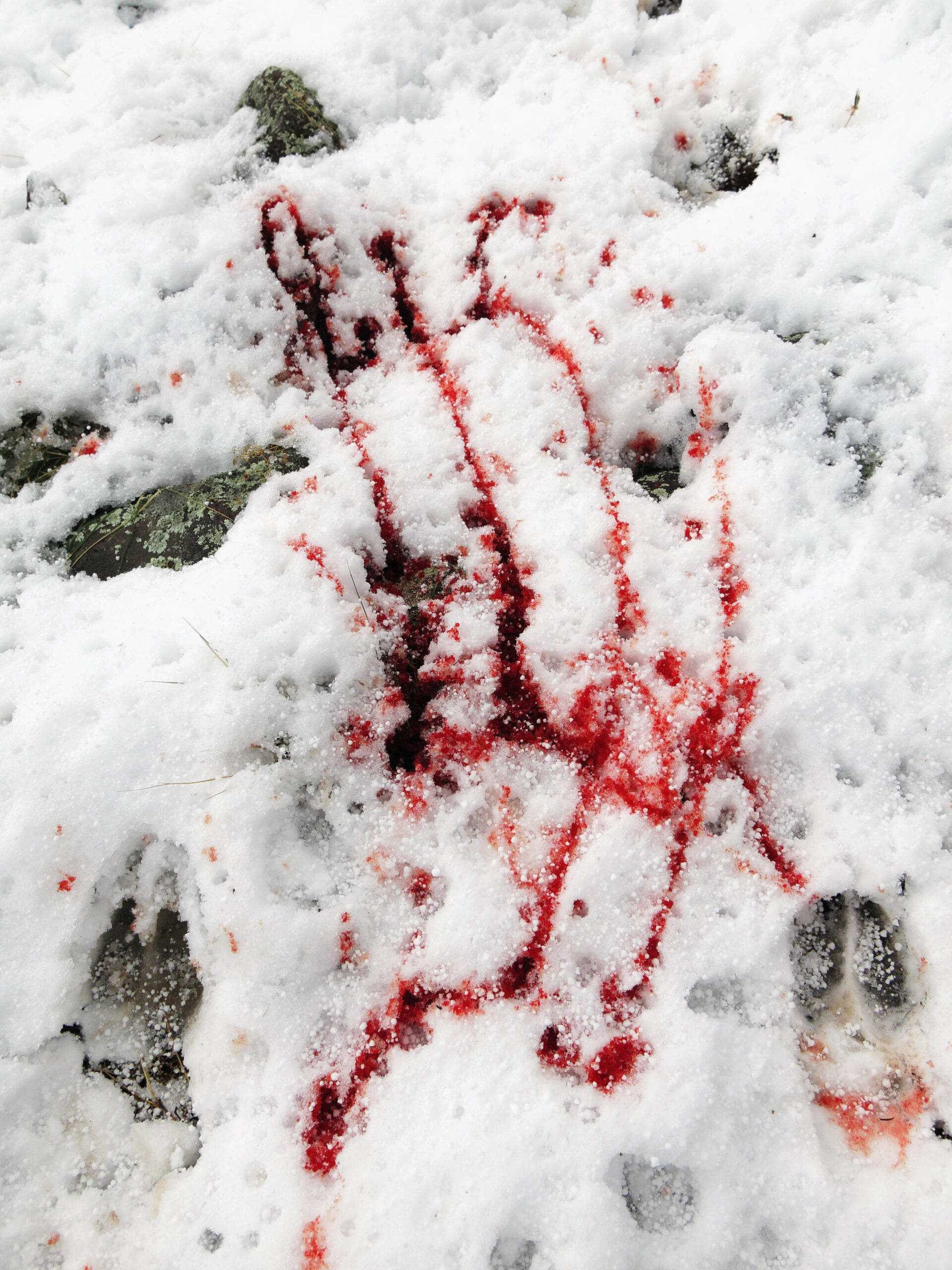
I waited a few minutes then crept over to where he was standing. The ground was torn up, but there was no arrow or blood. Fearing a miss, I followed the dug-in tracks. Suddenly a broken-off arrow covered in blood appeared on the ground. A hit!

I continued on. Rounding some trees, the buck came into view standing 40 yards away and looking back up the mountain. I could tell he was hit hard and eventually he lied down. I knelt down too, loaded an arrow and waited. He kept lifting his head, and then pushed up to a standing position. I was ready but rushed the shot just as he stepped forward behind some cover. My arrow deflected off a branch and the buck hopped out of sight.

Not wanting to push the buck down to private, I backed out and made a wide circle below and downwind. That way if he busted, he’d go uphill and remain on public land. Well, I got 100 yards below where I’d taken the second shot and a big buck suddenly jumped up in front of me and bounded down the mountain to private. I was sure it was my buck and was devastated. But as I followed his bounding tracks I noticed there was no blood or indication he was wounded.

Now, standing at the bottom of the mountain I questioned whether it was my buck at all, or perhaps a near-identical one instead. The only option now was to hike back up and follow the original blood trail.

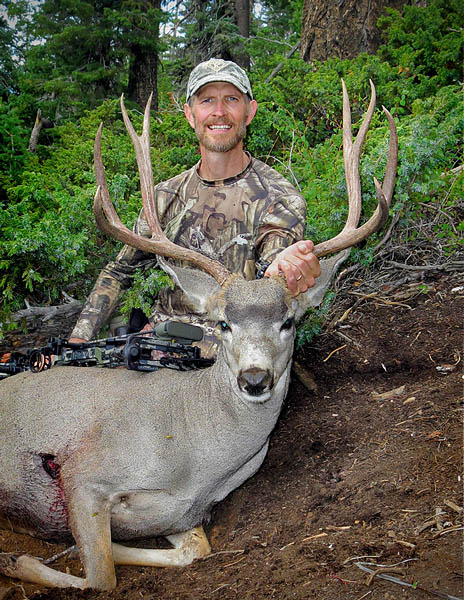
With my legs burning and sweat dripping off my brow, I finally arrived at the original blood trail. I followed the conspicuous trail past the second shot location and side-hilled for about 100 yards. When I looked up again, there he was, laying upside-down in a pile of deadfall branches. What relief! My first shot had been lethal after all.

With all my remaining strength, I wrangled the beautiful 4×4 buck out of the deadfall and dug out a flat spot on which to process the deer. It was a race against midday heat and dehydration to get the deer quartered and hung by myself. Perhaps the best decision I made during the hunt was stashing a water bottle about a quarter mile away on a mountain saddle. It may have saved my life.

The rest of the evening was spent hauling meat back to the truck, just as I had done two days earlier with Esther’s deer. My whole body was hammered, especially my quads from ducking limbs and climbing over deadfall with a heavy pack, but I couldn’t be happier. Somehow, in the final days of a long and difficult hunt, everything came together for both Esther and me.

Conclusion

With all the challenges of modern bowhunting, the quality of the experience certainly has diminished some. Even if you can draw a permit, the few remaining deer continuously adapt to elude us hunters faster than we can keep up with them.

Despite everything, the mountain stands strong against the madness of modern life. What remains is the supreme beauty of nature, the thrill of the hunt, and miraculous success found in the final hours of seemingly impossible hunts.

And there, deep in the shadows of twisted timber, where few men dare go, lies the majestic muley buck, waiting to test every fiber of one’s being.

Swhacker #201: BEST Expandable Broadhead for 2026

My Broadhead Search is Over

The Swhacker 201 is my choice for the best performing mechanical broadhead in testing and field-proven.

For three decades I’ve been on a quest for the perfect expandable broadhead, and I think I finally found it with the 100-grain Swhacker #201 with a 1.75-inch cut.

Swhacker broadheads have been around for many years, but it wasn’t until I tested them against some industry standards–including Rage, Muzzy, and NAP–that I realized how good they really were.

In this test I was looking for maximum penetration, as well  as overall toughness; and the Swhacker #201 beat them all. The secret to their success lies in Swhacker’s unique design, with sharpened wing blades that act more like a fixed head by cutting on contact, even before deploying the main blades.

Why Expandable?

Before moving on, you might be wondering why I choose to shoot expandables over fixed broadheads. Simply put, mechanicals fly truer with less planing, and less exhaustive bow tuning.

Even if your bow is tuned perfectly, a little torque from an awkward body position can throw a fixed blade off target. Worse yet, your bow may go out of tune halfway through a hunt. Expandables are simply more accurate under all hunting conditions.

Broadhead Criteria

Here is a prioritized list of all the attributes I require from my broadheads, expandable or otherwise:

  1. The broadhead must fly like a field point with no wind drift of planing.
  2. The blades must be razor sharp and super strong.
  3. The broadhead must provide maximum penetration, maximum wound channel, and with minimal deflection on quartering shots.
  4.  It must be reliable in flight, and durable in the quiver.
  5. It must be affordable.

A Closer Look

The Swhacker meets all the above criteria. Let’s break it down further.

Swhackers fly with field-point accuracy. Before the hunt I just unscrew my practice points and screw on the broadhead.

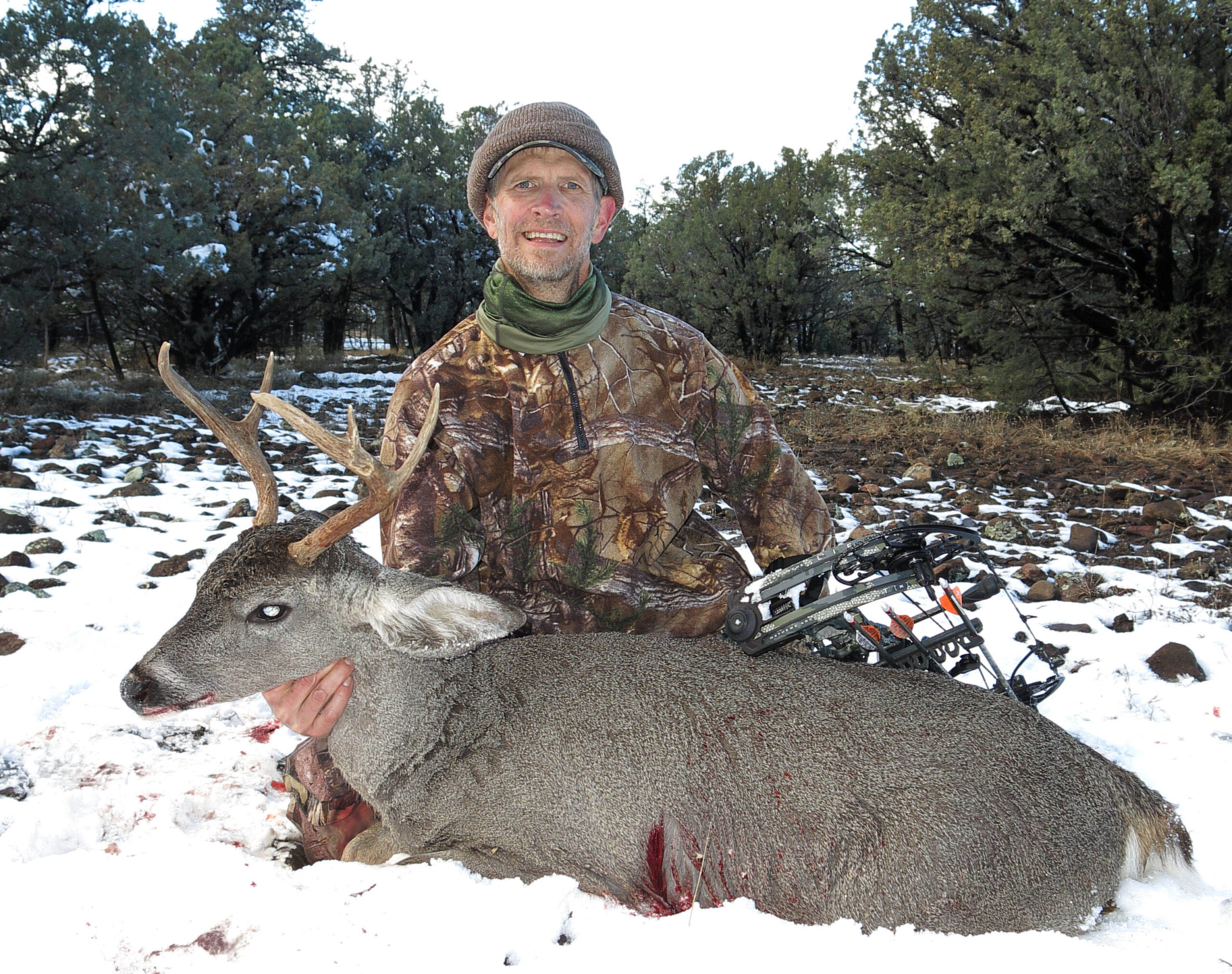
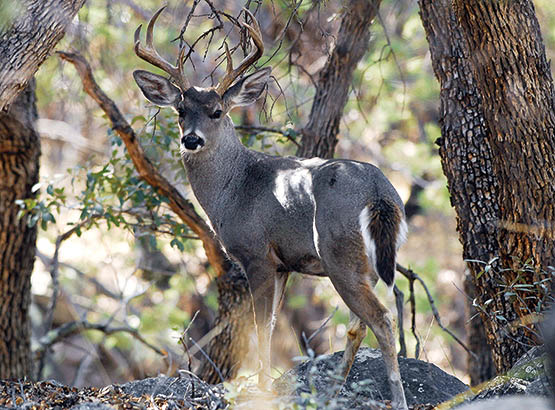
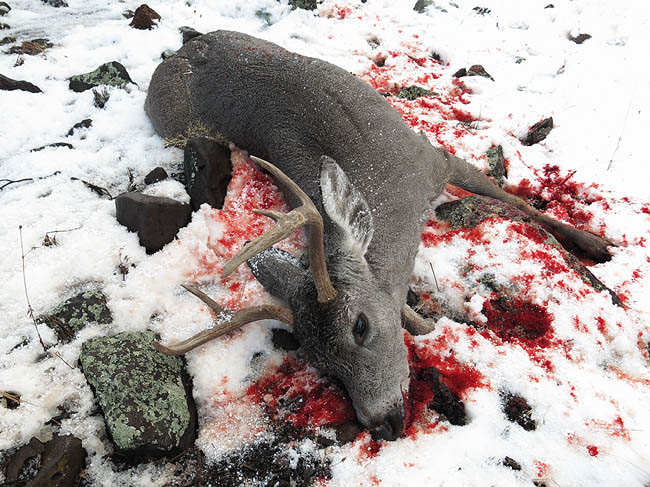
I recently took this coues whitetail at 50 yards with a perfect double-lung shot and complete pass-through with the Swhacker 201s.

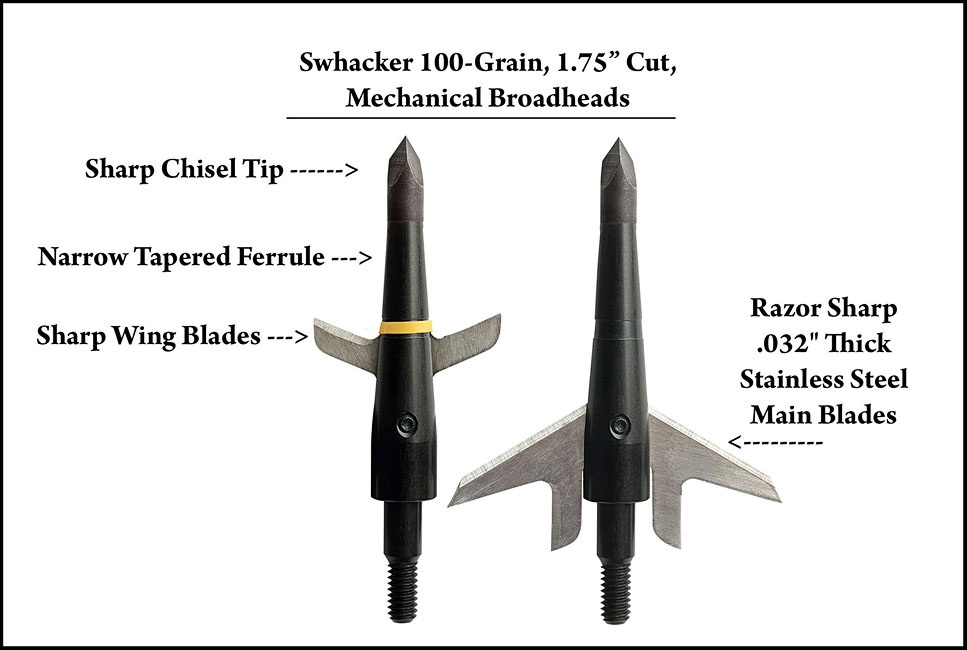
Secondly, the Swhacker has a unique blade design with two separate cutting edges. The first set of edges (wing) blades, are used for cutting the hide and ribs. These blades are also used to open the broadhead, and are much smaller than the main blades. The main blades still have pristine edges when they open in the body cavity and create a widened wound channel.

As for toughness, the Swhacker features stout, .032” blades that resist bending or breaking. During flight the blades are held in place by sturdy, yellow Swhacker bands. These bands hold the blade  in place during flight, but open easily upon impact, and with minimal energy loss.

The pefect design for a mechanical broadhead.

Swhacker broadheads come in three cut sizes: 2.0″, 1.75″, and 1.50″.  A wider cut translates to better wound channels; however it creates more drag as it cuts. Thus, you need to match the blade diameter to your draw weight. For example, a 2-inch blade is better for higher-poundage bows (70+), while a narrower, 1.75″ blade works better with lighter draws like my 60-pound Mathews bow.

For bows 50 pounds or less, it’s probably best to stick with fixed blades. Fixed blades cut on impact without robbing the arrow of kinetic energy needed to open mechanical blades.

What about the Ferrule?

The Swhacker broadhead features a narrow, tapered body, or ferrule. Narrow ferrule broadheads penetrate much better than wider ones. Also, the chisel tip nose design reduces deflections on quartering shots.

Where to Buy?

These days, mechanical broadheads with titanium ferrules can range in price up to $100 for a 3-pack. Most of them are over-engineered  and/or made with unnecessarily expensive materials like titanium.

Perhaps my favorite feature about the Swhackers is the price: I buy  them in bulk on Ebay where they range in price from $12.00 – $18.00 per 3-pack. This is great news because I go through a lot of them!

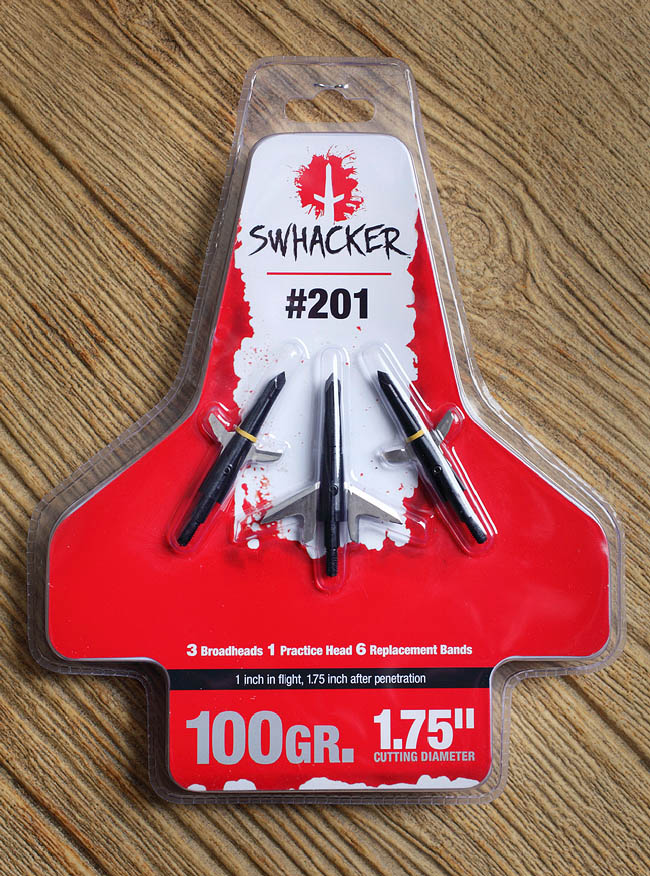
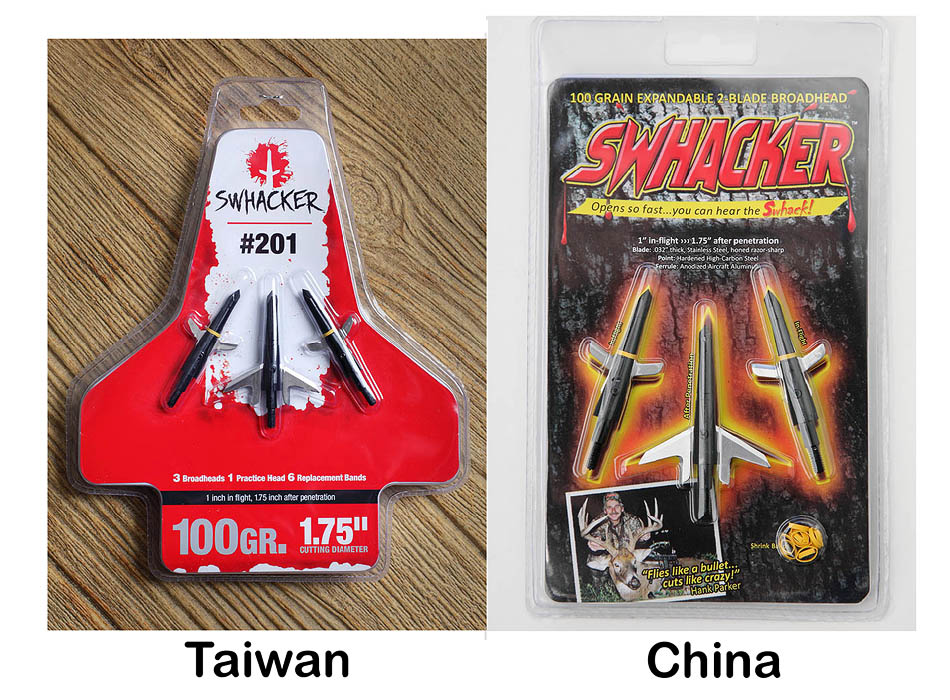
Interestingly, the Swhackers #201s are sold in two different packaging options (see below). The black packaging is made in China and the red packaging (more common) is made in Taiwan.

I’ve tested both and they perform equally well. Visually, they are identical. Just note, the Chinese packs are cheaper, but do not include a practice point.

Conclusion

In the age of expensive and confusing hunting gear, it’s nice to have a cheap and reliable broadhead. Swhackers are the most reliable mechanical head I’ve ever used or recommended. What’s your favorite broadhead?

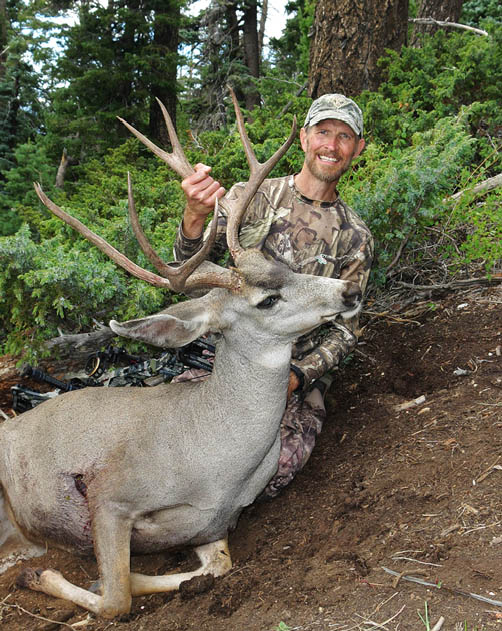
I used the Swhacker 1.75″ to take my 2025 mule deer buck.

Best Hunting Boots for Bowhunting

Silent Stalker Boots

Soft-soled stalker-style boots are my first choice for bowhunting, where moving close to wary game requires super stealth. Stealth means zero noise and zero detection. Some serious hunters even choose to wear running shoes, although I can’t recommend this in the backcountry.

The specific boots I wear are called “silent stalk sneakers” and were sold by Cabala’s, but have been discontinued. I’m looking at other brands now, but whatever I choose, they must meet my highest criteria for stealth:  Lightweight and soft-soled.

Stalker-style boots are much lighter than traditional hunting boots. My stalker boots weigh 1.5lbs each, while my fancy insulated boots come in at 2.25lbs–that’s a 66% difference! Nothing wears you out faster than heavy boots. As they say, “One pound of weight on the foot is equal to 10 pounds on the back.” This is especially true for backcountry hunting, or snow hunting.

Stalker boots also feature a thin, soft rubber or neoprene sole which allows you to feel every twig under foot. Hard rubber or Vibram soles are just too noisy for close quarters hunting.

For years I had two boot options: A pair of heavy, high-top insulated boots for winter and a pair of uninsulated stalker boots for the early season. Eventually I stopped wearing insulated boots altogether because they were just too heavy, especially when pushing through snow. They were also too hot, even in freezing conditions. Of course hiking the steep Wasatch Mountains is different than sitting ambush in a cold tree stand, so it really depends on your style of hunting. For  active hunting, uninsulated works best for me in all weather.

Stalker-style boots do come with some drawbacks. First, because the soles are so soft, they can be hard on your feet when hiking in rough or rocky country. This can be solved by adding a thicker insole, or even an extra set of lightweight insoles. Second, because they are uninsulated, your feet can get cold. For this I simply wear two pairs of wool socks, or in wet weather I’ll carry an extra pair of wool socks in my pack. And third, stalker boots have a shallow tread pattern that relies on soft rubber for traction rather than aggressive tread. This amounts to more slipping around in the snow and mud. To counter this, I’ll simply strap on a lightweight pair of ice cleats. Ice cleats provide excellent traction in ice and snow.

Lastly, no matter what boot I wear, I always go with a high-top boot for maximum ankle support, especially in the backcountry. Hunting boots generally range between 6 and 10 inches. Shorter boots are a little lighter, but you’ll be more susceptible to ankle injuries. My 10-inch boots have saved my ankles from serious injury innumerable times. But again, it really comes down to personal preference and your style of hunting.

Very Old Mule Deer Buck

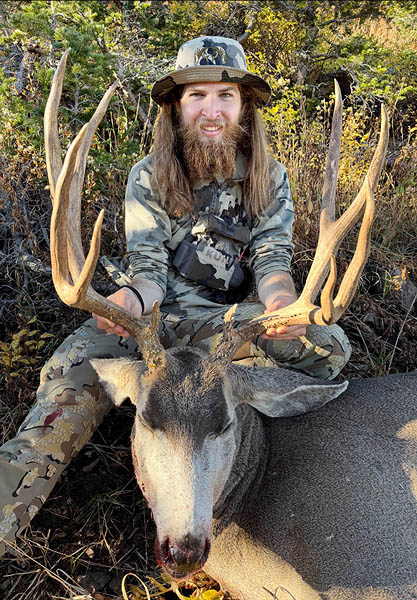
Tyler and his ancient mule deer buck.

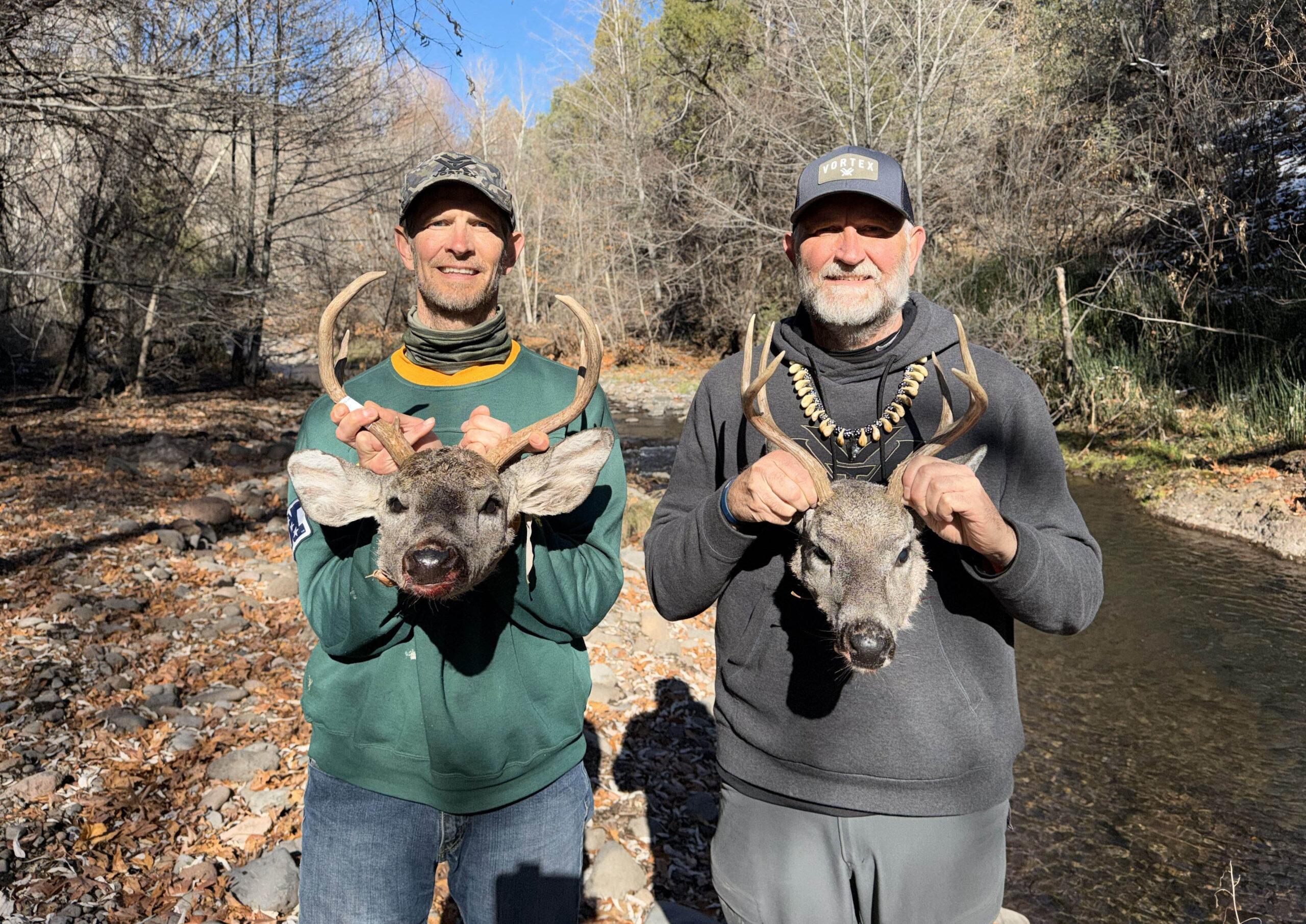
This is my nephew, Tyler, and his 2025 muzzleloader buck. He is one of the best hunters I know, shooting large, older-class animals every year.

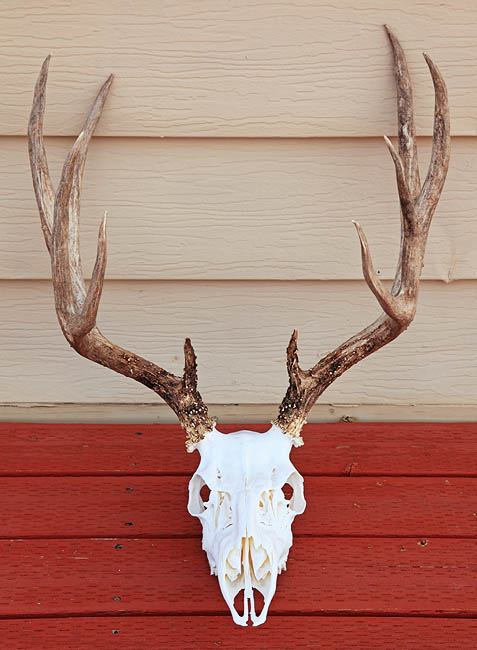
At first glance this might look like just another good 4-point buck. However, upon further examination during the skull-mounting process, I concluded this to be the oldest buck I’ve ever seen.

Without tooth analysis, judging old age in mule deer is difficult. However, this deer had an unusually large body, neck, and a wide muzzle and face.

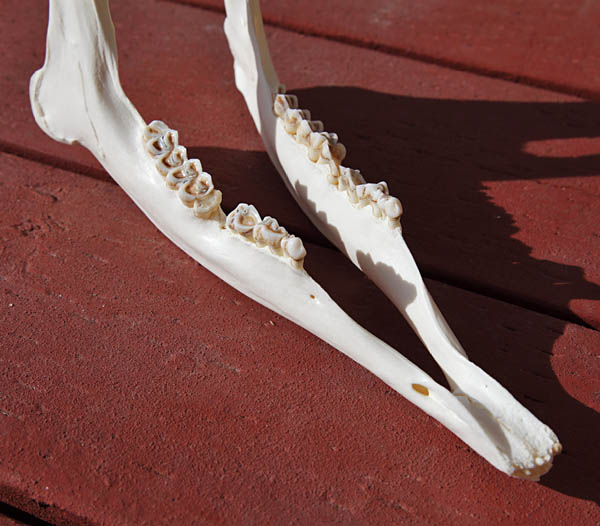
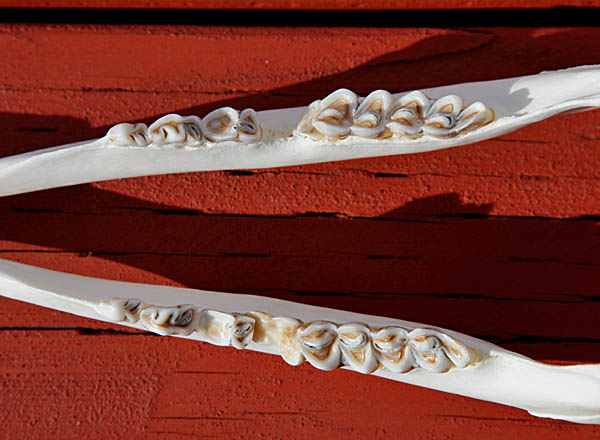
Lower jaw showing advanced aging (no front teeth!)
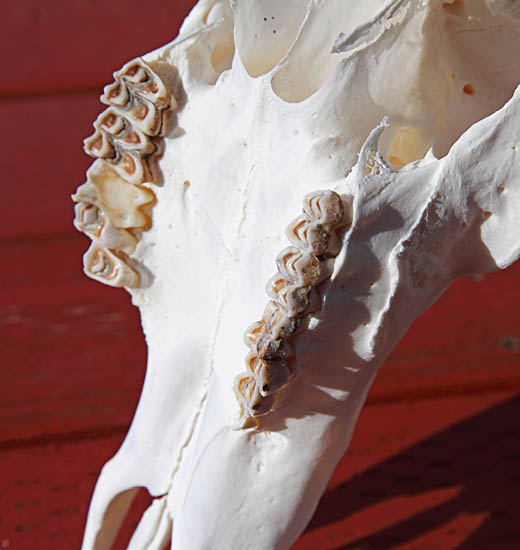
Worn down and missing molars.

Teeth wear tells the true story of a deer’s age. First off, it has NO front (biter) teeth at all; they are completely worn away down to the roots. Secondly, it’s missing a couple teeth in its lower jaw and some of the regular chewers are completely worn flat like plates.

Wildlife biologists are able to determine the exact age of a deer by tooth analysis. This deer won’t be aged, but it’s clearly very old and likely wouldn’t survive many more years.

Finished skull with unusually wide face and muzzle.

As a taxidermist I’ve examined dozens of old bucks, but none were this advanced. I would estimate the age between 12-15 years. What do you think?

One Step Ahead: My 2023 Deer Hunt Story

One Step Ahead

(Published in Eastmans Bowhunting Journal, EBJ #148)

The Quest for “Big 5”

I never felt so tired! It was 4:30am on the nineteenth morning of my Utah bow hunt. Whenever I lied down to sleep my mind swirled with strategies to outsmart the giant, velvet-clad buck I called “Big 5.” But he always managed to stay one step ahead of me.

I spotted Big 5 on the fourth day of the deer hunt. He was feeding in a thick, oak brush-covered hillside, and I raced to get ahead of him in the fading evening light. Just as I was closing in, the wind shifted and blew him out of the canyon. I spent the next week searching surrounding canyons and exploring other parts of the unit, but couldn’t turn him up. Although I saw plenty of other bucks, none compared to the amazing Big 5. At that point I decided to devote the rest of the season to hunting this one buck.

First sighting of Big 5 (from video footage).

Just before dark on the twelfth day, Big 5 reappeared in the canyon where I first saw him. There wasn’t enough light for a stalk, but I returned to camp with newfound hope.

My mind buzzed with excitement as I lied in bed anticipating the morning stalk. But wouldn’t you know it, over night a great herd of elk moved in and pushed all the deer out. I spent the next three days searching for him, but to no avail.

The Return of Big 5

During this time I joined forces with two elk hunters—Brian and Mike—who were hunting in the same general area. We had an agreement: I would keep tabs on any big bulls, and they would keep an eye out for Big 5.

Just when I was beginning to lose hope, Mike spotted Big 5 crossing into the canyon at dark on the fourteenth evening. The next morning I sneaked into the deer’s primary feeding area, but ended up busting him out again while still-hunting through the thick and noisy oak brush. This was the lowest point of my hunt.

Bowhunting is a low-odds venture to begin with; things don’t work out most of the time. As a rule, bowhunting success comes from having multiple opportunities, and the fastest way to limit your success is by hunting for one deer exclusively.

The daily glassing game.

To keep hope alive, I wrote a list of positive affirmations in my hunt journal. Of particular note was a reminder that not only do I have 27 years of bowhunting experience under my belt, but I’ve been down this road before: Hunting for just one deer. Only this time was different. I didn’t have three years to get the job done!

The Tank Buck

Hope returned on day 16 when I discovered a new buck—a massive, old, wide-racked 4×4 I called the “Tank”—in an adjacent canyon. He wasn’t as impressive as Big 5, but the longer I watched him the more I fell in love. He was a magnificent deer, and if nothing else he served as a good backup. The season was half-way over after all, so I was relieved to have another target on my very short list.

The “Tank” buck.

So you can imagine my disappointment when, the very next morning, I found that Tank and Big 5 had joined forces! They were now feeding together—along with a few smaller bucks—in the bottom of the canyon where it all started. And just like that, all my eggs were in one basket:  Bust one, bust ‘em all.

Desperate to make a stalk, I threw down my glass, picked up my bow and scrambled to the bottom of the steep, aspen-choked canyon. But just as I was closing in, the wind changed and blew one of the smaller bucks out of his bed. I turned and backed out immediately to avoid further damage.

Stalk through the aspens.

The next morning, in complete darkness, I snuck to the bottom of the canyon hoping to get in front of the bucks before first light. But once again my plans were foiled when I glassed up the bucks feeding at the top of the canyon! As morning dragged on, the bucks side-hilled out of view and disappeared. Once again they stayed one step ahead of me.

Endless Pursuit

By day nineteen I was at wits end. At some point during the restless night I hatched a plan to get ahead of the bucks. I knew from experience that big bucks get big by being unpredictable. So if they fed at the top of the canyon yesterday, perhaps they’d be at the bottom today. Again, in the cover of darkness I dropped down the canyon. And wouldn’t you know it, the bucks stayed high! This time, however, I wasn’t letting them out of my sight.

Immediately I ascended the aspen ridge between us, and then watched as all three deer—Big 5, Tank, and a smaller 3-point—fed along the ridge top and eventually bedded beneath a couple big pine trees. I pulled out my notebook and drew a diagram of the bedding area, noting landmarks that I could use during the stalk. But first I’d have to wait for the thermals to stabilize.

Stalk landmarks and notes.

I returned to camp and was just about crawling out of my skin waiting for the south winds to prevail. Finally, at noon I set out on a low-odds stalk towards the bucks, knowing that one false move could blow the bucks out forever. Surely they were growing weary of my chase.

Big 5 bedded underneath big pine.

The Final Stalk

The midday sun beat down on my face as I crested the ridge fifty yards above the bedded bucks, but thick oak brush obscured my view. Must get closer.

Hot, south crosswinds carry away my scent and the sound of my footsteps amongst the loose gravel on the hillside that grows steeper with each step. A frightened chipmunk shrieks and scurries away. I freeze for a minute, then take a range from the lower limbs of one of the trees: 45 yards. I slowly load an arrow and continue forward. Everything must be perfect now.

Each footstep is timed with the occasional gust of wind or the raspy sound of flying grasshoppers. I take another range: 35 yards. I wince as the wind continually dips down, then rises again. My heart-beat quickens; sweat beads up across my face. I take another step and look up again. Fuzzy antlers are suddenly bobbing through the oak brush. Big 5 is up and feeding, but only his head is visible.

I slowly raise my bow and scan ahead for a shot window. The situation unfolds in strange contrast: the natural world flows lazily along, but my mind is frantic as I try to manage a myriad of details in a heightened state of awareness. I’ve been here before; I know the odds. “What happens next? How does this end?”

The buck slowly feeds towards a little, two-foot gap in the oak brush. It’s all a blur as I draw my bow and track the buck with my 30-yard pin. He finally steps through and my arrow is off. There’s an audible “thunk,” and then pandemonium as all three bucks explode down the mountain. Seventy yards out, Tank and the smaller buck regroup and look back, but Big 5 continues out of sight.

Twenty minutes later I begin tracking down the mountainside. There’s blood right away, and for the first time in weeks I feel a sense of relief. A little further down the canyon and there he is. In my haste to shoot, the arrow hit forward in the neck, but did the job.

The buck is finally mine!

Like a dream, I reach down and grasp the buck’s sprawling antlers in my hands. I feel strangely numb. Whatever elation I’m supposed to feel has been cancelled out by the rigors of mountain, dampened by loss of sleep, and swamped in disbelief. Sometimes a hunter gets lucky; other times he earns it. In this case, the only luck I had was seeing the buck in the first place. I gave this hunt everything I had; I paid full price for my trophy.

Final Thought

Long ago, in a personal attack fueled by jealousy, an old “friend” once said to me, “I don’t have to shoot the biggest deer on the mountain to prove I’m a man!” I don’t disagree, however it does prove other things:  That you have a special skill set; that you are a provider of meat; and above all, you are the top predator you were meant to be. And that, my friends, puts you one step ahead of the rest.

Ancient petroglyphs in my hunting area.

Pre-Season Mule Deer Scouting

Preseason Scouting

Scouting is hunting; it’s not optional. As rule of thumb, you should spend at least twice as much time scouting as you do hunting. With fewer trophy opportunities these days, it’s best to locate big deer and big deer habitat well ahead of hunting season. Simply put, the more days you spend scouting in the preseason, the less time you’ll waste during your hunt.

Scouting doesn’t mean just locating deer, but locating feed and water, bedding areas, escapes routes, game trails, and sign. You don’t have to actually see a big buck to know he’s there; just look for tracks and read the signs.

Multiple Opportunities

Once you’ve located or even patterned a buck, you need to devise multiple game plans. Bowhunting is a low-odds game which means you always need a backup plan, or maybe several. What do you do if you bust the buck on opening morning? Where do you go next? What if that doesn’t work? What if someone else shoots your target buck out from under you?

Effective scouting means always having a backup plan or even a backup buck. Whether I’ve found a great buck, or if I’m just hunting promising new areas, I always have plan A, B, C, D, and so on that will at least cover the first few days of the season.

Part of planning is to anticipate variables, like changing wind direction, and then figuring out the best time of day for a stalk. One method that works for me is to make a list of likely big buck areas and then assign the best time frame to stalk based on thermals, bedding areas, and other factors. For each area I’ll mark morning, evening, or both.

E-Scouting

With modern technology, such as super-optics, trail cameras, GPS with topo maps, and 3D internet mapping, you can now scout anywhere in the country, 365 days a year, even late at night in your underpants.

E-scouting is great for locating promising new country, but nothing beats boots on the ground. Physical scouting accomplishes two important things: first, you’ll become intimately familiar with the terrain you’ll be hunting, and second, you’ll get plenty of pre-hunt exercise while enjoying God’s natural splendors.

Trail Cameras

Trail cameras are a valuable piece of scouting equipment. Not only do cameras tell me when and where the bucks are, but they also tell me where they are not. Any hunter with a limited amount of scouting time will benefit from setting up an array of cameras in likely buck areas.

The best locations to hang cameras are in prime feed locations, secluded water seeps, game trails, bedding routes, and water routes. Even better locations include pinch points, saddles, funnels, and trail intersections. A month or two before the hunt opener I’ll set up four or five cameras covering an area of about five miles. By the hunt opener I have a pretty good idea of the quality and quantity of bucks in my area.

Avoid bumping deer while scouting, especially in the weeks leading up to your hunt. Check your trail cameras during the day when bucks are bedded and less likely to notice you.

Quality Optics

I can’t over-emphasize the importance of quality optics. Binoculars and spotting scopes open up the vastness of the mountain, and quality optics even open up the shadows during the critical morning and evening hours when big bucks are likely to be moving.

The strength of your spotting scope depends on the type of terrain you’ll be hunting. In thick timber country with limited sight distance you’d probably be fine with a 48x, or maybe just 40x binoculars. In this case it’s more important to identify big buck tracks and droppings than to actually see a deer. If you know what you’re looking for, you’ll find the deer.

In open or vast country I would recommend a high-quality, 60-power minimum spotter with a large objective lens that gathers plenty of light early and late in the day. Just beware that spotting scopes in this range can get very pricey and very heavy to pack around.

Where to Look for Big Bucks

When scouting a new mountain, the first step is to locate prime feeding areas. Begin by searching south- and east-facing slopes, especially in areas adjacent to thick timber or steep bedding cover.

East-facing slopes tend to grow better feed than north and western slopes because they get more sun early, and then fall into shade later when the sun is hottest and thus hold more ground water.

Next, look for secluded stands of aspen trees. Aspens only grow where there is an abundance of ground moisture. Not only do deer love to eat aspen leaves, but the myriad of succulent forbs that grow in these areas as well. In the early season, aspen groves provide an ideal bedding area because the ground is cooler.  In late fall as bucks get ready to shed their velvet, they spend more time near scrub aspens which they rub their antlers on.

While investigating likely feeding areas, scan the ground continually for large tracks and droppings. Also watch for areas with plenty of chewed-down vegetation. Once you’ve identified prime feed, follow any trails or large deer tracks leading in and out of the area. At the very least, these trails will point to likely bedding areas. Even if you lose the trail, you’ll still get an idea of which direction the deer are coming from or going. Big bucks have relatively small home ranges, so you should have little trouble locating likely bedding areas.

Final Note

It’s always possible that your traditional hunting area will go downhill or be lost to the crowds. So you need to be adaptive and mobile, always searching for promising new areas. If you didn’t draw a tag this year, or you just have extra time on your hands, it’s always a good idea to investigate other units or new areas just to see the potential. You don’t need a tag to scout, so get out there and do some camping and hiking. You never know what you’ll turn up.

Conclusion

Scouting is hunting and should be taken seriously. Just drawing a decent tag is quickly becoming the hardest part of hunting. So when it’s your time and your tag, don’t waste valuable hunting days looking for deer that you could have found during the long preseason months.

Shaping Up for Bowhunting

Getting in Shape for Backcountry Hunting

To succeed with today’s trophy bucks you need to start hunting where other hunters stop. The best hunters I know have no physical limits. They can get go anywhere the animals go, and then get the animal out after the shot.

If you want to spend more time hunting and less time recovering, you’ll need to put a pack on and literally run to the hills long before the season opens.

I won’t get into any specific work-out regimens here; just know that your regular work-out should include donning a heavy pack and doing some vertical hiking. In addition to cardio, a little weight training will do wonders to strengthen your back, legs, and core.

Cardio Training

Cardio training—aka high-endurance aerobics—is the best thing you can do to prepare for backcountry hunting. If your heart and lungs are sluggish, it won’t matter how big your biceps or quads are. Your cardiovascular system is what delivers necessary oxygen and nutrients to your muscles.

Any cardio-type exercise will help prepare you for the mountains, but if you’re planning an extreme pack-in hunt, you’ll need to change things up a bit. A daily jaunt on the treadmill won’t be enough.

For backcountry hunts I recommend starting a high-endurance aerobic exercise regimen at least two months in advance. Running, biking, swimming, and hiking are all good activities. Do at least one of these activities three times a week for a minimum of one hour.

You should get your heart rate up to 60-65 percent of your maximum heart rate, and then keep it there for at least one hour. If your goal is to become an “extreme wilderness athlete,” you’ll need to bump your heart-rate up to 70-85 percent of maximum heart rate, and then keep it there for a minimum of two hours.

Note: To figure out your “theoretic” maximum heart rate, simply subtract your age from 220. For example, if you are 30 years old, then your maximum heart rate is 190. To reach 85% of maximum heart rate, you simply multiply 190 by .85 (161.5 beats per minute). The only way to monitor your heart rate is with a fitness tracker. I use the cheap and effective Amazfit Band 5 Activity Fitness Tracker found on Amazon.

Again, it all depends on your style of hunting. If you’re sitting in a tree stand or ambushing a water hole, then you can get away with some pretty low-intensity training. A little jogging or cycling around the block a couple times a week would suffice.

Strength Training

After cardio, leg training should be your top priority. Your legs are the powerhouse of hiking and packing.

Trail running on uneven ground is an ideal exercise for your legs. In addition to intense cardio, running on uneven ground also strengthens the lower legs and joints. Like every joint in the body, the knees and ankles are surrounded by a vast network of tendons and muscles. Strengthening and tightening these joints also helps you to avoid injuries in the backcountry.

Trail running has the added benefit of preparing your body for high-altitude conditioning and endurance. This is especially important for low-landers since everything becomes more difficult with altitude.

Note:  If you are out of shape, trail running can be a very arduous workout. At the very least, you should begin with trail hiking, and work up from there. You’ll still get many of the same benefits of running.

Back and Core Muscles

Heavy packing relies on both your legs and your back. Dead-weight lifting and squats are the two best ways to condition your back and core.

In addition to weight training, hiking while wearing a heavy pack will help strengthen your back and core muscles. Taking extended scouting trips into the mountains is a great way to train while scouting for animals.

Conclusion

There’s no way around it; backcountry bowhunting requires you to be an athlete. Proper training for the backcountry means taking on a three-prong approach starting with cardio, then leg training, and finally back and core.

Utah Archery Turkey Video

My 2023 Turkey Bow Hunt on YouTube

After nine years of chasing turkeys with my bow, I finally got this fine tom on public land in Utah during the general season.

Even better than an early Thanksgiving bird was all the wild places I’d visited and the memories I made over the years.

Watch through to the end for an epic slideshow chronicling my turkey adventures.  Enjoy!


Turkey versus Elk Hunting: Similarities and Differences

Turkey vs. Elk

When I first started hunting turkeys, someone said they were very similar to elk. This sounded absurd considering the two animals are practically complete opposites. However, nine years later I have to admit that turkey behavior during the spring rut is very similar to elk behavior in the fall.

What this means is that any hunter transitioning from turkey to elk, or elk to turkey, will already have many of the necessary skills and knowledge to hunt the other creature.

In this article we’ll explore both the similarities and differences between the two animals.

Turkey and Elk Similarities

  1. Both animals have very loud calls (gobbles or bugles) that are used frequently to locate and communicate with other members of the herd. These calls are very useful for hunters trying to locate and call in animals. Also, both animals call more frequently in the morning and evening.
  2. In both cases, the flock or herd is led by a senior female, also known as a lead cow or hen. The bull or tom almost always pulls up the rear of the herd. This protects the tom or bull from threats and makes them more difficult to hunt.
  3. Both animals leave lots of sign and make lots of noise. Wherever turkeys or elk are living, they leave lots of tracks and droppings. This is key to locating the animals. Also, the both sexes of both animals make lots of noise or “flock talk:” Cows mew and chirp; hens yelp and cluck.
  4. Both elk and turkeys are difficult to drop with an arrow. In other words, your arrow must be perfectly placed in the vitals. Although turkeys are much smaller, they can really take a beating. Even a pass through shot can result in a lost bird if not placed in the 4-inch vital zone or head. As for elk, they are extremely tough. Even a single-lung hit can result in a lost animal.
  5. Both bulls and toms easily become call shy after just a couple bad experiences with hunters. Both animals are hunted hard out West and they learn fast. A call-shy or over-pressured animal might respond from afar, but they mostly hang up well out of bow range. If the hen or cow that you are trying to imitate isn’t willing to come to them, then the bull or tom will eventually lose interest and leave.
  6. Both animals use alarm barks or clucks when danger is detected. Turkeys immediately erupt into high-pitched alarm clucks when they see danger. Elk make sharp alarm barks. At this point the herd goes silent and moves off rapidly. In other words, it’s game over!
  7. Both elk and turkeys go silent during mid-day. Both animals feed heavily in the morning and go through their courting rituals before bedding down. Turkeys remain more day-active than elk—feeding and traveling around—but they are mostly silent. Elk just bed down and mostly sleep during the day. Then, in the last hour or two of light, both animals become loud and animated again.
  8. Both elk and turkeys are very exciting to hunt. A big bull elk is arguably more exciting, however, when you have a big tom strutting and gobbling into your decoy, it’s sure to get you riled up! Some elk hunters scoff at the idea that turkeys are exciting, but for the dedicated turkey hunter, it’s just as fun as elk hunting.

Now that we’ve examined the various similarities between elk and turkeys, let’s take a look at the major differences.

Turkey and Elk Differences

  1. Turkeys have excellent eyesight compared to elk. Elk can’t see colors in the red spectrum, nor can they see fine detail. Instead, they are forced to rely on scent or movement to detect danger. Turkeys on the other hand, being a bird, have extremely good eyesight. They see both color and fine detail. It’s also apparent that turkeys have a much faster frame-rate than mammals, which means they process visual information faster, and therefore see in slow motion. A hunter wearing camouflage and sitting still can easily be picked off at 30 yards by a turkey, where an elk won’t detect the hunter until he’s practically eyeball-to-eyeball.
  2. As mentioned before, elk rely on scent whereas turkeys don’t seem to use scent detection at all. This means a tom turkey can approach from any direction, but an elk must always be hunted with a favorable wind direction.
  3. Elk have a much larger kill zone than a turkey. The vital kill zone of an elk is almost the same size as an entire turkey (about 12 inches), whereas a turkey has a kill zone the size of a softball. Turkeys also move around a lot, which means they are much harder to hit with an arrow. Basically an archer needs to take his effective range (the distance where he can hit an 8-inch paper plate with every arrow) and divide it by two in order to be effective on turkeys.
  4. Elk leave much heavier blood trails and tracks than a turkey. A well-hit turkey can travel very long distances while leaving little to no sign to follow. Turkeys bleed very little and are nearly impossible to track without snow or mud. A poorly hit elk, on the other hand, will usually leave lots of blood and deep hoof tracks. Sure, elk are tough, but you can generally track them for much longer distances.
  5. There are far fewer turkeys than elk available to hunt. In Utah there are about 85,000 elk, but only 30,000 turkeys. That’s almost a 3-to-1 ratio. Although there is less demand for turkeys, you still might have a harder time locating turkeys.
  6. Aside from the major differences listed above, here are a few other differences:  a) Turkeys sleep during the night; elk sleep during the day, b) Turkeys have a much smaller home range compared to elk, and c) elk rut in the fall while turkeys rut in spring, mostly.

Conclusion

On the surface, turkeys and elk might seem like completely opposite animals. But hunting them can be very similar. Hopefully the above comparisons will help you transition between the two animals. The majestic bull elk are considered by most hunters to be the most exciting animal to pursue out West, but any dedicated turkey hunter will argue that the lowly thanksgiving bird ranks right up there with him.

Archery, Zen, and Hunting