Tag Archives: bowhunting

Over- and Under-Estimating Big Bucks

muledeer_011
(Photo courtesy of Utah DWR)

Over- and Under-Estimating Big Bucks

Any seasoned hunter will tell you, “NEVER underestimate a big deer!” I agree, but experience also tells me that ‘NEVER’ really means ‘SOMETIMES.’

I have spent up to seven hours stalking big bucks, and other times, I’ve barreled right in on the animal, either because I was losing light or he was distracted by something.

I’ve also watched hunters watched hunters stalk directly at a deer or elk in plain view, thinking he was invisible because he’s wearing camouflage! I’m not joking! You should’ve seen the look on the animal’s face just before it jumped up and ran away.

What it boils down to is that every situation is different. You can’t judge the current situation on the last one, whether it worked out or not. In bowhunting there are just too many variables.

Big bucks are extremely wary…or at least most of the time. On rare occasion you’ll still catch a buck being lazy or carelessly feeding along. But most times you won’t be able to get inside the buck’s 60-yard security bubble without using extreme caution. Within this bubble a buck’s senses are exceptionally acute. This is where critical decisions make or break your hunt.

Below is a list of situations that either cause me to speed up my approach, or sloooow waaaay down:

When to Speed Up a Stalk

  1. It’s getting dark. Assuming you won’t be able to relocate your target buck later on, you’d better roll the dice and make your move. I’ve seen a lot of stalks end in dark failure. If it’s the last evening of your hunt—for example—you will have no choice but to make a move. Even if you have to walk straight at him, it’s still better than doing nothing.
  2. The buck is about to unbed. Finding an unaware, bedded buck is a Godsend. If he it’s early and he just bedded down for the day, you’ll probably have several hours to implement a stalk strategy. But if he’s been bedded all day, you’d better make your move. Can you get close enough for a shot before he stands? I hope so, because when he stands you’ll likely be pinned down.
  3. The wind is about to change. If the wind is blowing steady in your face during a stalk, you’re golden. But wind can change at any moment. If the wind is starting to swirl, you’d better speed up your stalk. Wind direction changes more often in stormy weather or with thermals: in late morning it begins to rise, and in the evening, as the sun begins to set, it cools and goes downhill. Anticipating wind changes is probably the most important factor in speeding up or slowing down during a stalk.
  4. There is cover noise. I’ve used every possible noise for cover including wind, flying grasshoppers, squirrel barks, jets and planes, buck fights, etc. Anything that makes noise–other than you–will help you get closer faster. Wind rustling through the trees or brush is the most common cover noise. It’s also important to pattern wind. For example, at higher elevations winds are mostly non-existent early and then kick up between 10 a.m. and 11 a.m. In the evening winds often die down precipitously just before sundown.
  5. The buck is distracted. Distractions range from buck fights to antler rubbing to squirrel chatter; basically anything that distracts the buck away will give you a chance to move in. The best distraction is when he’s raking a tree with his antlers. Bucks are practically blind and deaf when they head is buried in a tree

When to Slow Down a Stalk

  1. When the buck beds down for the day. Once a buck beds you’ll likely have several hours to get close, so take your time and move with the wind or other cover noise. It’s usually best to wait a couple hours for the buck to start sleeping before making a move. Usually the buck will rise up and re-bed at least once before really dozing off. So the longer you can wait the better.
  2. The wind is blowing steadily in your face. If you’re lucky enough to be hunting during a stretch of steady wind, you can keep your stalk slow and methodical. Unless there’s unsettled weather, wind will prevail from a certain direction for several hours of midday.
  3. The ground is noisy. See how quiet you can be while sneaking twenty yards across a forest floor covered in dry pinecones, gravel, or pine needles. Dry conditions can be a nightmare, especially in thick cover. Oftentimes it’s simply impossible to stalk close to a buck. Fortunately, there are a couple things that can help you. First, take your boots off and stalk-in-socks. Second, wait for cover noise like wind or jets. Dry, hot conditions often bring flying grasshoppers to life. Their loud, short-burst flying noise is the ultimate cover noise when you need to get one step closer. Worst case you can always scoop sticks and brush out of the path with your hands.
  4. The buck is facing you. If you’re trying to stalk close to a buck that’s facing you, you probably can’t move at all. If you can see the buck’s eye, it can see you. However, if the buck’s face is partially hidden then a super slow-motion stalk is possible. Deer have a hard time seeing fine detail and slow motion. Technically, if you could move slowly enough, you could literally walk right to a buck without him seeing you.

These are just a few examples of when to speed up or slow down a stalk. What it really boils down to is common sense and experience. It also helps to spend some time observing and studying your prey. What are their strengths and weaknesses? The more you understand your prey, the better you’ll understand its limitations.

Archery Effective Range

range Archery Effective Range

Spring is in the air and that means one thing: archery! It’s time to dust off that old bow and drag your pasty, out-of-shape, winterized carcass outside and do some shooting. Today we’re going to talk about effective range.

What is your “effective range”?

In this post we’ll answer the following questions: At what range are you an effective bowhunter? How do you find out? And why does it matter?

Question #1:  What is effective range?

Effective range–or effective distance–is the distance at which you can get all your arrows within a “kill-zone” size area of a target every time.

Question #2: How Do I Figure it Out?

The kill-zone on an average big game animal–like a deer or elk–is a circle 8-10 inches in diameter. This circle encompasses the heart/lungs area known as the vitals. The easiest way to learn your effective range is to shoot four arrows at a paper plate. A standard size paper plate is nine inches, so it makes a perfect kill-zone target. Starting at close range (say 20 yards), shoot four arrows. If all arrows hit within the paper plate, move back ten yards and repeat. Continue doing this until you miss one arrow. WHEN you finally miss a shot, you will know your effective range: It’s the last place you shot where you didn’t miss! So if you miss at 40 yards, then your effective range is 30 yards. At this point, you should begin working on your form and follow-through until you can consistently get every single arrow in the plate at farther distances. Until then, you should never take shots at game over 30 yards.

Question #3:  Why is it important?

When you don’t know your effective range, you will end up shooting beyond your abilities and either missing or injuring an animal. This will be a horrible experience for you and the animal, I guarantee it!

Shooting at animals is a lot harder than shooting at a paper plate. There are many psychological factors involved–primarily buck fever–which will cause you to miss. For this reason, you should also practice shooting in adverse conditions such as wind and steep elevation, as well as different body positions like kneeling and crouching–anything that will simulate an actual hunting scenario.

Knowing and sticking to your effective range is the most important first step you should take before going bowhunting. Not only is this a fun exercise, but a valuable measure of your skills. Expanding your effective range will force you to set goals and hone your skills.

Happy shooting!

Hunt Smarter NOT Harder: Part 2

Hunt Smarter Not Harder Part 2

GridFlat_small

What the heck is this a picture of???

This is Mount Ben Lomond with a grid overlay. Maybe I just have too much time on my hands, or maybe I’m actually hunting smarter these days.

Last October, my brother Brent had a once-in-a-lifetime mountain goat tag for Ben Lomond. Once you’re on top of the mountain, it’s almost impossible to see down the steep sides. Therefore, the best way to hunt is to have a spotter (me) park at the base of the mountain looking up, while the hunter (Brent) is on top receiving directions to the goats via cell phone.

Although effective, this method requires a lot of explaining and guesswork in communicating directions. So, one day while sitting below Ben Lomond, it occurred to me that if we both had a picture of the mountain overlaid with a grid, then it would be much easier to communicate where the goats were. Being a somewhat photo-tech-savvy-individual, I did a multi-photo pan of the mountain, from north to south. Then, in Photoshop I overlaid a grid and put numbers and letters along the sides.

So basically all I have to do is spot a goat, call Brent, and say, “G-13.”

It’s like goat battleship!

Although very effective in theory, we never had a chance to use this grid-method. Brent ended up shooting his goat on a day I couldn’t be there. Fortunately for me and my brother-in-law Josh, we are looking to draw the same goat tag either this year or next, and I have the feeling this map will come in handy.

Incidentally, Brent shot his goat in section I-11.

brent_goat2

P.S.  If you would like a digital copy of the Ben Lomond Grid Map, let me know and I’ll send it to you.

Hunt Smarter NOT Harder: Part 1

Hunt Smarter NOT Harder: Part 1

Hunt smarter, NOT harder!

I keep these four words in mind all year long. When I’m applying for a tag, for instance, I might be tempted to apply for an area that had good hunting in years past, but is waning now. I might be tempted to hunt an area close to home and practically kill myself looking for a good buck, when I know I could have gone to a farther-away unit and been almost guaranteed a bigger buck. Sometimes it’s the third day of a slow hunt and I’m tempted to sleep in and recuperate, and then hunt the rest of the day. But I know more than anything that my best odds of intercepting a deer is very early in the morning.

You get the idea.

All of this was born out of the hunt for the infamous Drop-tine buck in 2010. For a while, I wondered how this magnificent, one-in-a-million, double-droptine buck managed to elude hunters for eight years while living less than half a mile from the busiest dirt road. By the third year of hunting the Drop-tine Buck, I realized that 90% of the hunters either didn’t get off their ATV weren’t willing to hike very far from it.

More importantly, I learned that amazing bucks sometimes live a short distance off the side of the road. You just need to know where to look for them. This requires you to learn a little about deer behavior and diet. It also requires that you hunt smarter, but not necessarily harder. While some hunters are repelling up a cliff in search of the ever-elusive big-buck, I might be wandering within shouting distance of the highway and stirring up even bigger bucks!

With ever-increasing obligations these days, time is in short supply for most of us. We need to learn how to become more efficient predators, and not with new gear but new information. I often warn people about the pitfall of gear. The gear won’t save you. Focus on the improving your skills first! Spend more time scouting and less time buying stuff.

Right now, we’re sitting in the middle of the off-season. What a perfect time to invest in our priceless, upcoming hunts by learning, studying, and scouting. More than any other time in history, there’s a wealth of information being published about modern game animals and hunting techniques. Below, I’ve listed the absolute best books that have helped me maximize my time in the field. Remember, information is power.

Blood in the Tracks, by Jim Collyer

Mule Deer Quest, by Walt Prothero

Public Land Mulies, by David Long

Mule Deer: A Handbook for Utah Hunters and Landowners, by Dennis D. Austin

…and don’t forget my eBook (shameless plug), Zen Hunting.

Next post,

Hunt Smarter NOT Harder: Part 2

Resting on Your Laurels

Resting on Your Laurels

It’s hard to believe it was only a year ago that this giant, 200-inch monster muley stepped out in front of me at 20 yards. It’s even harder to believe how easy that hunt was! Now, how in tarnation can I expect that to happen every year?

superbuck_002

After an incredibly difficult season this year, I have two words to say:  WHO CARES!?  I spent many, many days afield, marveled at God’s natural splendor, and came out with a rejuvenated spirit…many times. And at the end of the season, with hopes and dreams dashed, I still get to come home to a loving wife, a room full of magnificent mule deer trophies, and countless memories of amazing hunts.

A couple years after getting the infamous Droptine Buck, I remember telling my  brother that failed hunts don’t bother me anymore because at the end of the day I can go home, take the Droptine mount off the wall, and snuggle with it in bed. Russ got a kick out of that.

What really happens is I hobble downstairs on sore feet, cramping legs, and with a broken ego and weary back. I slowly look up from the floor and stare at these magnificent creatures. If their glassy eyes could see my face, they’d see a man with many more questions than answers. A minute later, solemnity fades and I force a smile. I think these masters of the woods deserve appreciation, and I think I deserve some satisfaction, even amidst failure.

Anyway, failure is relative. I failed to meet my goal this year, but in the final hour I still brought home some sacred meat for the family. Guy Eastman once wrote that if you fail to harvest a deer, it’s okay. It just makes the ones you get that much more special. These words of wisdom have stuck with me, and I want to believe it’s true.

With only a week left in the extended hunt, I saw the looming clouds of failure building. Then I remembered Superbuck and asked myself, “How long is a trophy good for?” It seems a buck like that can keep a man going for a few years, at least.

This year, I will rest on my laurels. I think I’ve earned it.

superbuck_003

My 2014 Archery Buck

01Nate2014

My 2014 Archery Buck Story

Here it is folks, my 2014 trophy buck!  Okay, it was an off year, but I couldn’t be happier.  With only two days left in the season, I was very fortunate to find this buck up a little side canyon. After Thanksgiving, the area was being pounded by dozens of other hunters (or “dudes” as I call them).

I busted this little two-point halfway up a dense draw. He ran to fifty yards where he stood for a while before returning to feeding. For fifteen minutes I debated whether or not to take a shot. Would I find bigger buck? Highly unlikely. Do I need meat for the winter?  YES!!!

The buck stepped through a narrow opening in the trees. As I shot, he stepped again… I was worried as I watched my arrow hit several inches behind where I was aiming. The buck exploded down the canyon and out of sight.

I hurried over to where he stood and found my arrow: a clean pass through with lots of dark blood. Thank goodness it wasn’t guts!

02IMG_1927

I waited a while then wandered down the canyon. The blood trail was easy to follow as it was coming out of both sides. About 100 yards down the canyon I spied a motionless pile of fur. The shot was good, hitting liver and lots of vital arteries.

Reflections

As I sat in the snowy canyon cleaning my harvest, I couldn’t believe the season was finally over. I thought about the many challenges I endured this year–blown stalks, swirling wind, dreadful heat, blinding blizzards, and a major illness that wiped out half of my November hunt. I also thought about the dozen or so BIGGER bucks I passed up for a chance at a real monster that never came.

Shot on the 28th; my lucky number!

In the end, I wouldn’t be that much happier with a bigger buck earlier on. For the trophy hunter, it’s all or nothing and I never found what I was looking for. But I’m also a meat hunter, and so this little buck means a lot. His death means continual life for me and my family.

Dragging my organic, free-range food back from God’s grocery store
Dragging my organic, free-range food back from God’s grocery store.

The Bigger Picture

It’s easy for the trophy hunter to lose sight of what’s really important. The experience, the opportunity, and the passion supersedes the kill. The reality is, we are extremely lucky to live in a time and place where we can still partake in this wonderful tradition of hunting. I know that without it I would be lost in a world devoid of purpose.

I hope all of you had a great season this year. I’m already looking forward to next year. Good luck in 2015!

Dealing With Failure in Hunting

Dealing Failure in Hunting

Whenever you fall, pick something up. –Oswald Avery

If you are following this blog, then I apologize for my absence. My last post was over a month ago. Work obligations are somewhat to blame, but more than that, it’s been my lack of inspiration following a long and difficult hunting season.

When the general season ended with no new venison in the freezer, I was somewhat perplexed. What did I do wrong? Going in, I was convinced I’d unlocked the secret to bagging big bucks. But try as I might, I couldn’t do it. Immediately following the hunt, I  felt deflated and uninspired. Five weeks later, I’m just starting to realize that failure is exactly what I needed to keep my ego in check. How can a person ever fully understand big bucks in the first place? It’s impossible. They are brilliant, highly adaptable survivors!

All told, I spent 13 days hunting hard all over my prescribed unit, but never drew my bow on a buck. At the same time, I could have shot at least a dozen small bucks–mostly 2- and 3-points–but I was holding out for a trophy. This is what caused me so much grief. No matter how much ground I covered, and no matter how high I went, I was disappointed by the low numbers of mature bucks. I knew I could find them if they existed, but they were almost non-existent. Of the 50+ bucks I saw, only two were mature bucks in the 170-180″ class range; barely trophies in my book. Long story short, these bucks were either inaccessible or the stalk failed for one reason or another. Either way, the problem is with how few big deer there are anymore.

In observing so many deer in the wild, I was blown away by the sheer brilliance of the modern mule deer and the ways in which it’s adapted to avoid modern hunters.  Their survival tactics seem well thought out and highly effective. For instance, some of the largest bucks would keep does between them and the timberline as a sort of security fence. Basically, a bowhunter would have to get through a string of does to get to the bucks, making it nearly impossible to hunt them. This and many other evasive tactics were documented and will be covered in my next blog-post.

So the hunt was a failure, but only because I failed to provide meat for my family. At the same time, the hunt was a huge success. The countless hours spent sitting alone in nature, watching sunrises and sunsets, creeping through the dark timber, and observing innumerable animals going about their business–all these things stirred my soul and rejuvenated my being. Life’s daily problems  and stresses melted away. I saw the hand of God through all his creations, and all questions about the purpose of life were answered.

Fortunately the hunt isn’t over yet. The extended hunt began where the general season ended. Now, the extended hunt can be extremely difficult due to high hunting pressure, dry and noisy leaves on the ground, and the low numbers of scattered deer. At the same time, the odds go up when the snow flies and pushes big bucks down from the high country and concentrates them on the lower elevation windswept slopes. This occurs in mid-November, and that’s where my hunt will resume.

Yes, I failed to harvest a deer, but the season isn’t over yet. I still have an unused deer tag and an elk tag in my pocket, and I will succeed in providing meat for my family. I have learned humility through failure. I have found my inspiration and I’m full of hope. I still believe in Zen hunting, and through the process of Zen hunting, success is still a decision.

2014 Bowhunt Part 3 of 3

2014 Bowhunt Part 3 of 3

On Saturday I got back from my third of three bowhunting trips to Southern Utah. Me and my wife drove into the vast unit on Sunday afternoon and began hunting various areas throughout the week. After five days of “running and gunning” with little success, the lessons I’ve learned are many:

  1. Just like all public land hunting units in Utah, the Beaver unit is over-hunted, too easily accessible, and contains very few, if any, real trophy deer. According to all human evidence, the area has been depleted of its greatest resource (mule deer).
  2. The few “big” bucks that have managed to survive to maturity exist only above tree-line (above 10,000 feet), in relatively open areas. They’ve also developed intricate security measures to avoid hunters. In other words, they are mostly unhuntable. With very few opportunities at decent bucks, the odds of success are extremely low, even for the greatest hunters.
  3. The big bucks are only visible in the early morning and only for a short time before they seemingly vaporize without a trace. They also do not reappear until after dark, so your only opportunity is morning.
  4. Because mature bucks live in such inaccessible areas, it requires the hunter to be in extreme physical condition. If you can’t climb 1000 vertical feet before sunrise, you have no chance.
  5. Throughout the week I saw a total of 40 bucks scattered throughout the unit. Of those bucks, only two would be considered “trophy” quality, scoring between 170-180″.
  6. It only takes two days for a hunter to completely blow out an area, even in the biggest valleys. What I mean is, after pursuing deer throughout a valley for two days, a hunter’s scent and presence is made known. In turn, every deer changes its behavior and location, and by the third day there are no more deer.
  7. The largest bucks in the unit repeatedly return to the same food source. Like they say, “Where you find the best feed, you’ll find the best bucks.” After being spooked, however, the bucks do not return, or feed only at night.

That’s all! The general bowhunt is now over, but the extended hunt has begun and will continue until December. My goals have not changed. I will continue to pursue these mystical creatures, but now with greater fervor.

2014 Bowhunt Part 1 of 3

2014 Bowhunt Part 2 of 3

2014 Hunt Photos: 3 of 3

2014 Hunt Photos: 3 of 3

Here are some photos from my third bowhunt of 2014:

My hunt area, mid-September, watching fall roll in.
Wild currant berries grow everywhere in this unit. If the fruit wasn't so hairy I would eat some.
Wild currant berries grow everywhere in this unit. If the fruit wasn’t so hairy I would eat some.
September 10, 2014, 7:17 a.m.
Above 10,000 and almost straight down. This is some of the steepest country I've hunted.
Above 10,000 and almost straight down. This is some of the steepest country I’ve hunted.
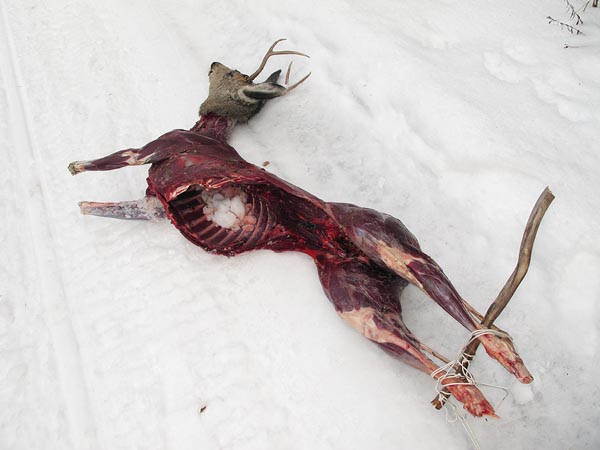
Looks like a cougar got to this deer before I could.
The scattered buck skeleton I found was picked clean by predators. The antlers measured 26+".
The scattered buck skeleton I found was picked clean by predators. The antlers measured 26+”.
More high country.
More high country.
 I could have shot a small buck every single day, but I'm holding out for a big one that's lived past his prime. My lonely bow got no action on this hunt, just lots of scratches.
I could have shot a small buck every single day, but I’m holding out for a big one that’s lived past his prime. My lonely bow got no action on this hunt, just lots of scratches.
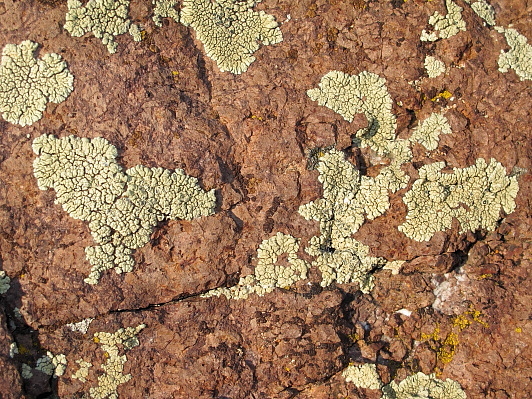
Lichen on the rocks. Might as well enjoy the small stuff.
Parting shot: I was walking through a meadow at dark without my flashlight when I noticed a dark form in front of me. Suddenly half split off and ran down the mountain. Stupefied, I dug out my flashlight and found 1 of 2 porcupines nervously turned away from me and showing me its bristly backside. Neat little animals!


2014 Hunt Photos:  1 of 3

2014 Hunt Photos:  2 of 3