Tag Archives: hunt

Coues Whitetail Hunt: A Seven Year Quest
Coues Whitetail Hunt: A Seven Year Quest

Early Encounters

From across the valley I watched a very nice Coues buck chasing a hot doe into a clump of trees where they bedded for the day. I didn’t dare make a stalk over crunchy ground, and elected to wait them out. But they never emerged and with only two hours of light left, I crept within bow range of the trees. As I lied in wait, another fine buck came creeping down the hillside with his nose to the ground, following the same trail the doe had been on six hours earlier. When the buck paused at 55 yards I shot. The buck jumped clean out of the arrow’s path and looked back. I was ready and sent a second arrow streaking his way. He jumped again, this time trotting away unscathed.

That was in 2023, my fourth year hunting the “gray ghost” of Arizona. I’d heard the rumors and read about these notoriously spooky deer, but now I’d seen it for myself. Famous bowhunter, Chuck Adams, once referred to Coues deer as “America’s most difficult big game animal to hunt.”

The wariness of the Coues is attributed to the fact that they are hunted relentlessly by mountain lions, coyotes, people, and even Mexican gray wolves. To compound the difficulty, I was hunting general units with OTC tags and never really found an area with any densities; just an occasional lone buck that always gave me the slip. But I wasn’t discouraged; I just wanted one even more.

What is a Coues Deer?

Named after the man who discovered them, Coues whitetails are a desert-dwelling sub-species of the common Eastern whitetail. Their range extends through Arizona, New Mexico and Old Mexico. They are North America’s smallest deer with mature bucks weighing 100 pounds or less, which is about half the size of the venerable mule deer buck. This also means your target kill-zone is half the size.
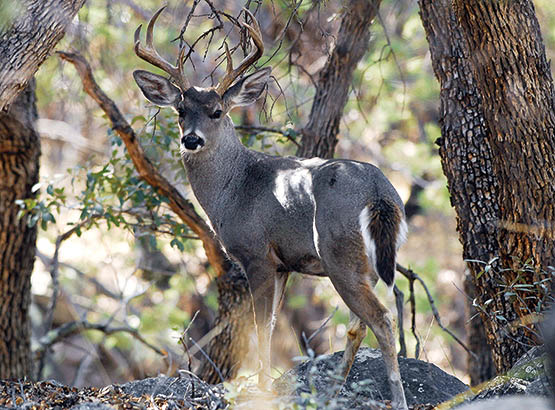
Coues whitetail deer (photo courtesy of Arizona Fish and Game Dept.)

The only advantage bowhunters have with Coues deer is the timing of the rut, which starts in December and peaks around mid-January. During the rut big bucks climb down from their secret haunts and troll for hot does in more accessible areas. Bucks will scratch out scrapes below licking branches, just like Eastern whitetails. They also respond moderately to grunt calls and rattling.

A New Hope

As fate would have it, my brother Brent was scouting for elk in a remote part of Arizona that same year. While hiking to a glassing point one day he bumped into a gigantic Coues buck: a ridiculously old, heavy-antlered buck with long points and eye-guards. The buck took one curious look at him and then sauntered off without a care. It was obvious this buck had gone his whole life without encountering a person.

Until that time, Brent hadn’t given much thought about hunting Coues deer. But with the sudden prospects of a world record, he planned a hunt the following year. Surely this remote land of unpressured bucks would yield a true trophy.

In 2024 Brent and his daughter Maddy returned to the area while I was hunting javelina in a different unit. They spent several days chasing mature Coues bucks. Ultimately they both got shots, but didn’t connect. When I got into cell service, Brent convinced me to drive several more hours to join him for the last two days of the hunt.
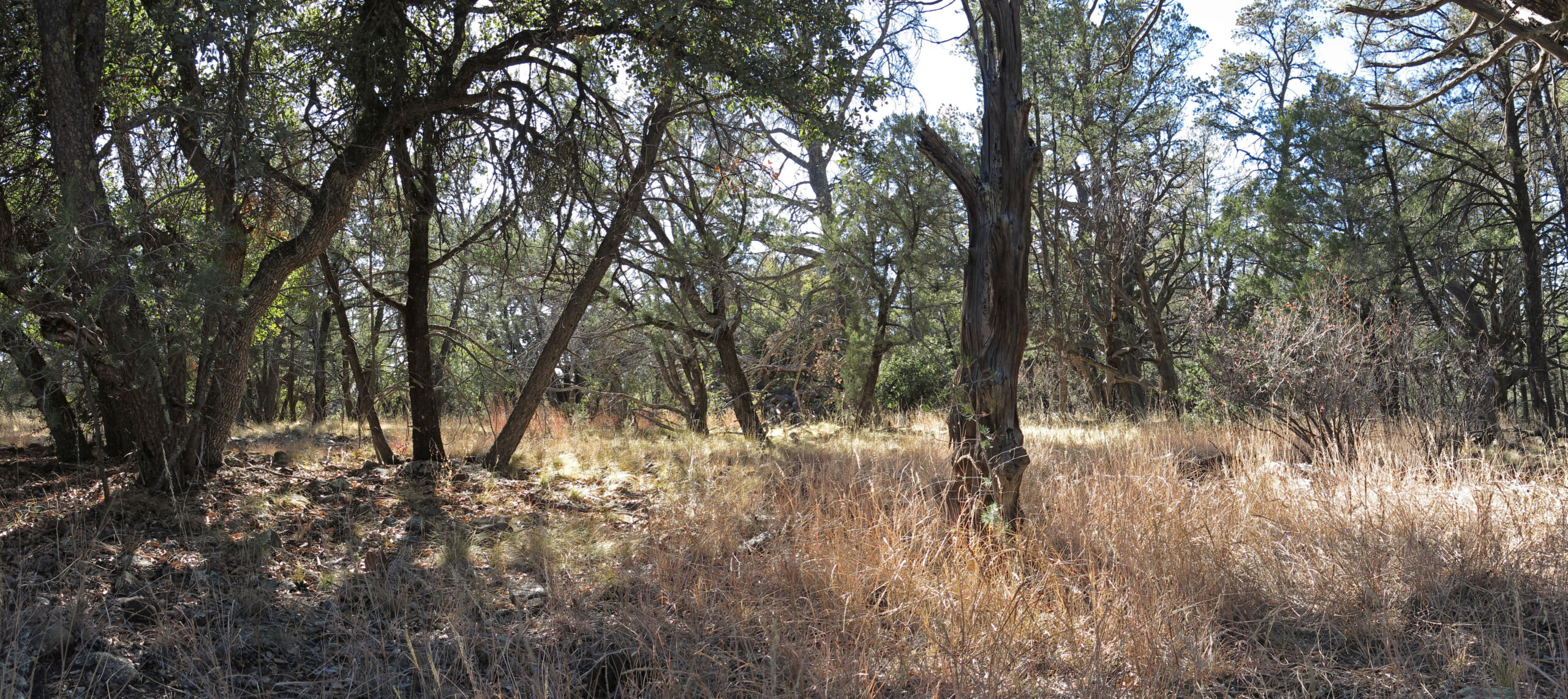
Coues deer habitat

The first day I didn’t even see a buck until late evening after hiking down the ridge toward camp. When I looked back up the mountain, there were two bucks standing right where I’d just been. With 15 minutes of light left, I scurried up the mountain but they were gone. If there’s one drawback to hunting the rut, it’s that bucks are always trolling for does, rarely staying in one place very long unless there’s a hot doe present. The second day I only saw two younger bucks and the hunt ended.

Year #6

With high hopes I hunted with Brent in the 2024-2025 season. We pounded the mountain hard, but noticed very little buck activity. It was December and the rut was apparently running late. We were also racing against a rapidly diminishing deer quota. Arizona manages their general units with a quota system, which means once a predetermined number of deer are harvested, the unit closes for the season. Well, six days into the hunt the quota was met. Brent got lucky and arrowed a decent buck at the last minute, while I had no choice but to head back to one of my old units that was still open.

It was a rat-race from the start; too many hunters and too few deer. But I had a secret. Years ago I located a small deer herd living in a secluded canyon situated about 1500 vertical feet from the dirt road. Unless you knew exactly where to look, you’d never see them.
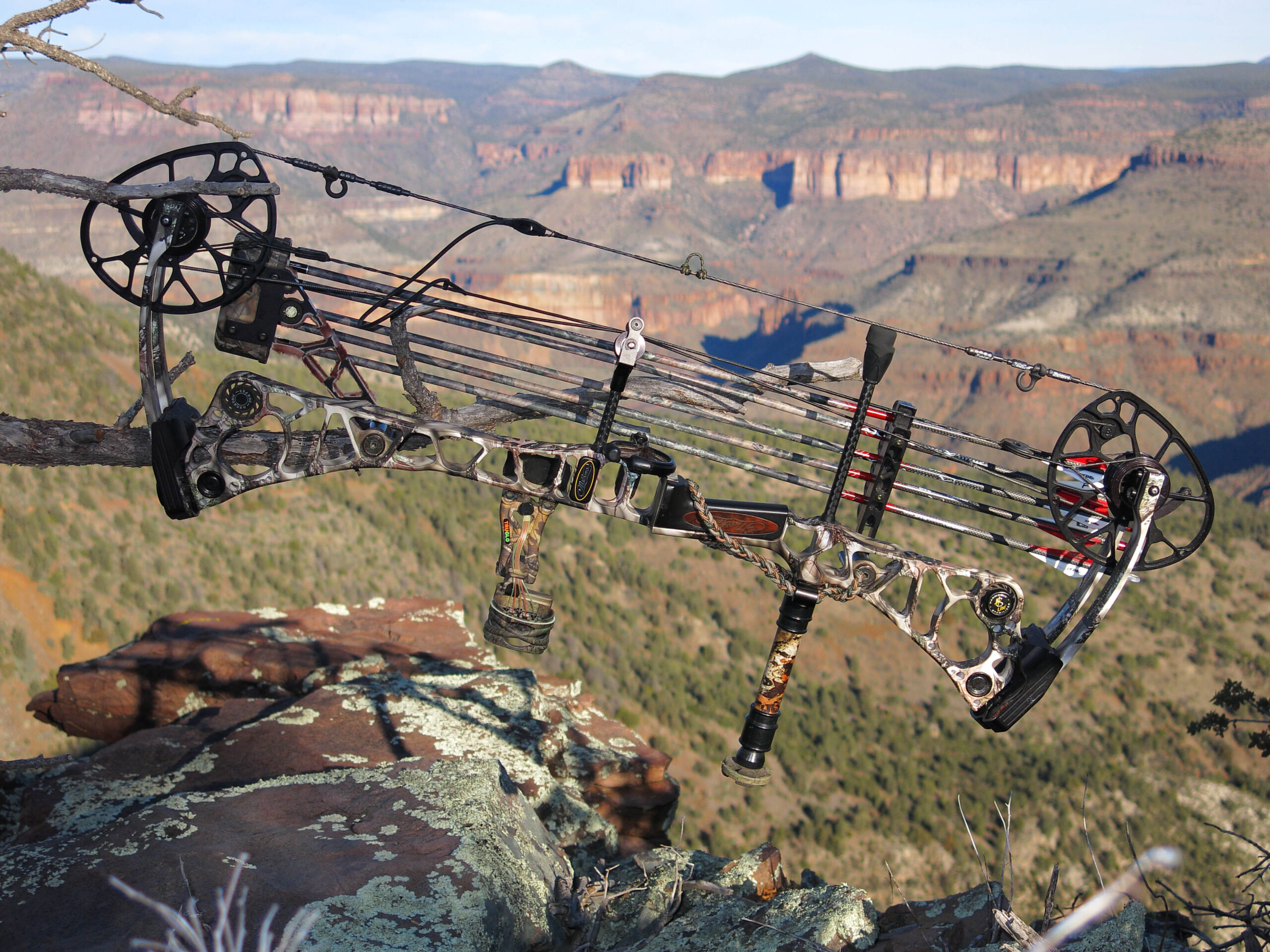
Scene from my first coues hunt in 2020.

The next morning I made the grueling hike and right away spotted a great Coues buck dogging a doe on the steep hillside above me. But as I closed the distance, they moved up and over the ridge. Figuring they’d bed on top, I looped around and slowly filtered through the trees. Well, I got close—maybe too close. There was a short snort followed by a white flag waving goodbye as the buck strode away.

I spent the rest of the day exploring new areas to no avail. Whenever I got cell service, I called home but my wife didn’t answer. In fact she hadn’t answered for the last 24 hours, which was odd. That night I called again and she answered, but couldn’t speak. I threw everything in the truck and drove eight hours home to find her half paralyzed and unable to speak due to a major stroke. Long story short, we spent half the year in and out of therapy while I planned a seventh Coues hunt for 2026.

2026

There was sticky note in my planner left over from last 2025. It read: “Coues buck no matter what; do or die!” I pulled it out and stuck it in my new planner; same plan, different year. I pored over my old notes and drew up new strategies to conquer my nemesis creature. I raced to get caught up with work, and then three days after Christmas made the long trek to Arizona, vowing to stay as long as it took.

The hunt was tough from the start. The rut was late again, with very little buck activity. I rotated daily between known and unknown canyons and mesas, glassing and exploring as I went. The good news was I didn’t see a single other hunter in the woods. The bad news was the bucks were still scattered over a massive area, living in secret haunts away from doe groups.

In the few cases that I bumped into a buck, he wasn’t really spooked, having never seen a person before. Rather than snorting and running, he’d just move cautiously away while holding tight to the thick brush and trees. One time I bumped a shooter buck at 15 yards. I could only see bits and pieces as he moved off. I caught up with him again while crouching through a tunnel of thick oak brush. When I looked up he was peeking through the tunnel 20 yards ahead. All I could see was his head and then he moved off for good.

It was now a waiting game with the rut building momentum with each passing day.

Terrible Terrain

Arizona is the rockiest state I’ve ever seen. In our area the entire landscape is blanketed with loose rocks and small boulders. I like to keep my eyes up when hunting, but here you have to watch every step or you’ll roll your ankles continually. It’s the only place where I have to wear stiff-soled boots with serious ankle support. But even then, your knees get hammered for the first week or so.
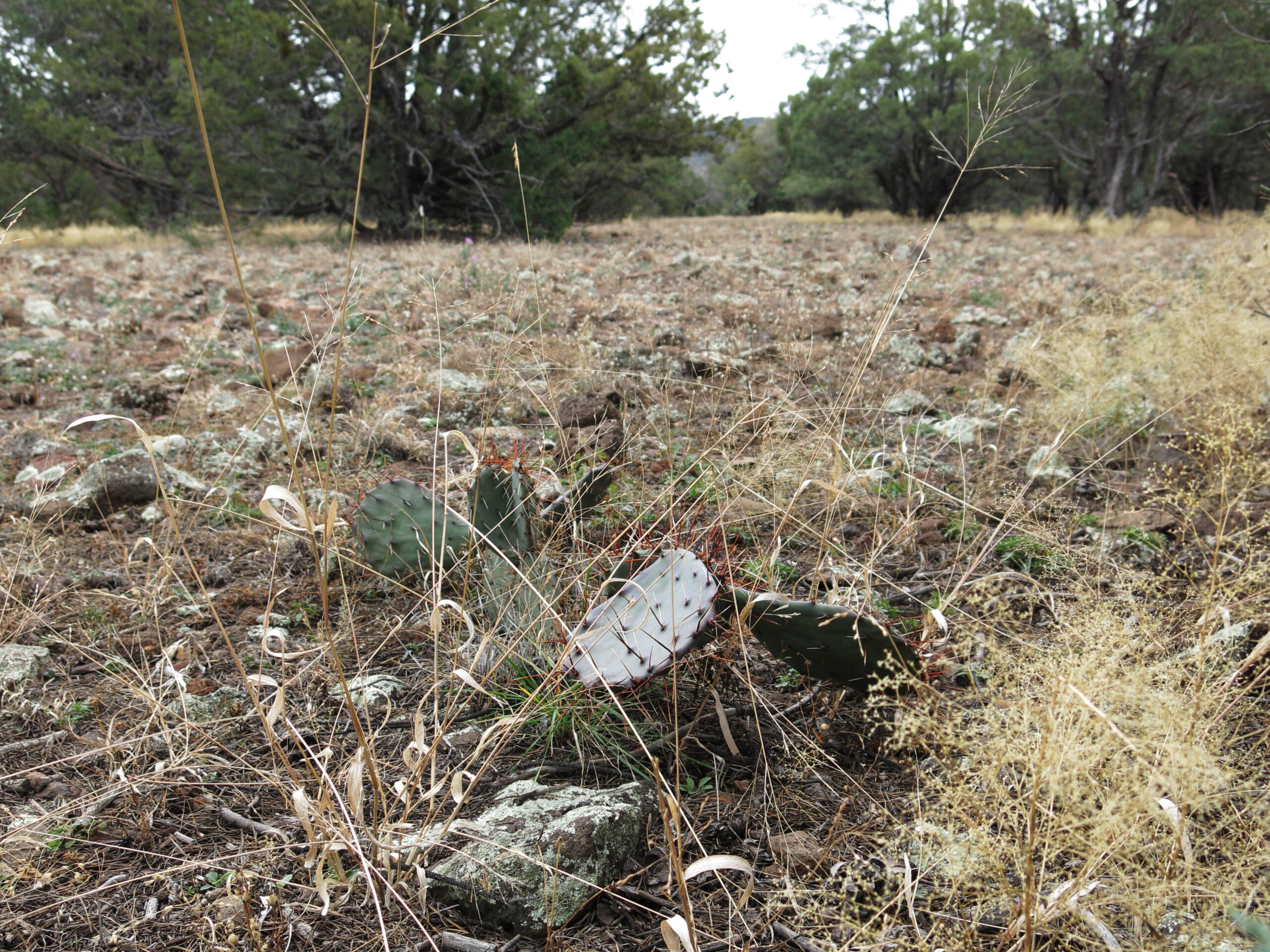
Rock-strewn ground.

Then there’s the weird fauna….and I mean WEIRD!

After falling asleep under a big juniper tree, I woke to a strange skunky smell blowing up from the south slope. I headed down the slope to warm up when I caught sight of a long, four-foot, black monkey tail moving fully erect through the brush. Through my binos I could see it was attached to a fuzzy animal resembling a giant raccoon with a long snout and tiny ears. I moved closer for a better view and spotted five of these strange creatures stacked in the lower branches of a tree. When they saw me they bailed out and scrambled away.

Later, Google told me it was a pack of “coati.” When I got back to camp I described the encounter to Brent. He was perplexed. How  did we live our entire lives without hearing about these creatures before? What other strange animals are lurking in the woods that we don’t know about?
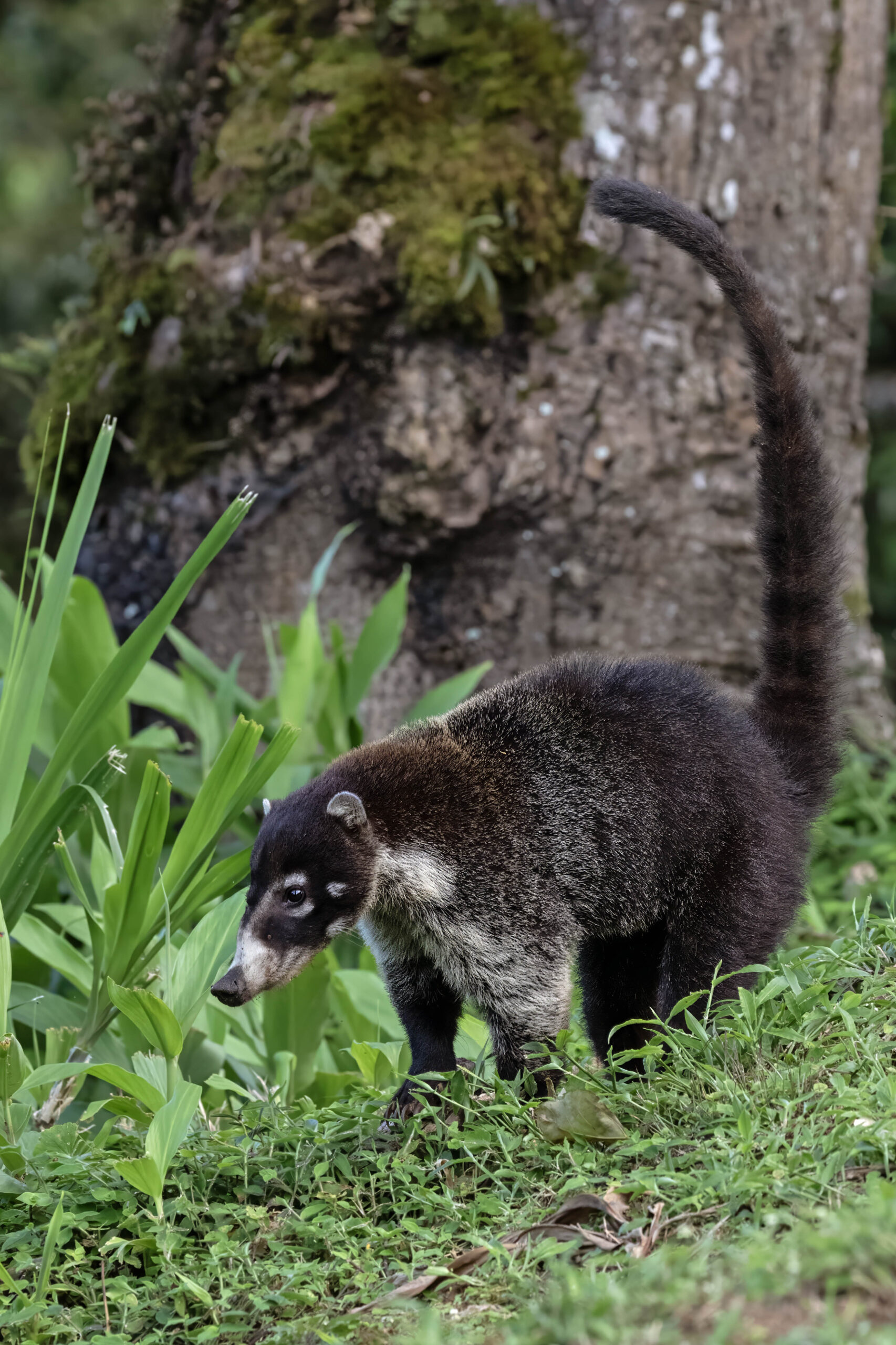
Coati (photo credit to Wikipedia)

Amongst the other foreign animals we encountered are collared peccary (or javelina), which is a pig-like animal with long bristly hair. Then there’s the big-eyed, tree-dwelling ring-tailed cat, which is the most adorable animal imaginable, that is, until it raids your food supply, tears up your garbage, and eats your hanging deer quarters at night.

Less strange, but just as exotic, is the Coues deer itself, which is the most elusive and frustrating animal a person could hunt. Even the less spooky variety always seem to slip away at the moment of truth. And finally there’s the Mexican gray wolf. I’d never seen a wolf in the wild until one day when a single wolf came trotting down a game trail, looked at me and trotted away. Meanwhile, Brent had a whole pack of wolves move into his secret area overnight, just as the rut was picking up, driving all the deer out.

Day #8

Beat down by the daily trudge, I decided to ambush a known deer route from beneath a juniper tree. I’d been sitting and writing in my hunt journal for a while and decided to throw out a random grunt call. Just after grunting I happened to look behind me and there stood a fine Coues buck at 30 yards. He just stared at me for a few seconds and then walked by as if I wasn’t even there. My heart raced as I froze in place and judged the deer’s rack. He didn’t know what I was or why I was grunting, but clearly didn’t register me as a threat. Unfortunately he wasn’t the buck of my dreams, so I just watched him amble out of sight. And with that, I knew the rut was finally on.
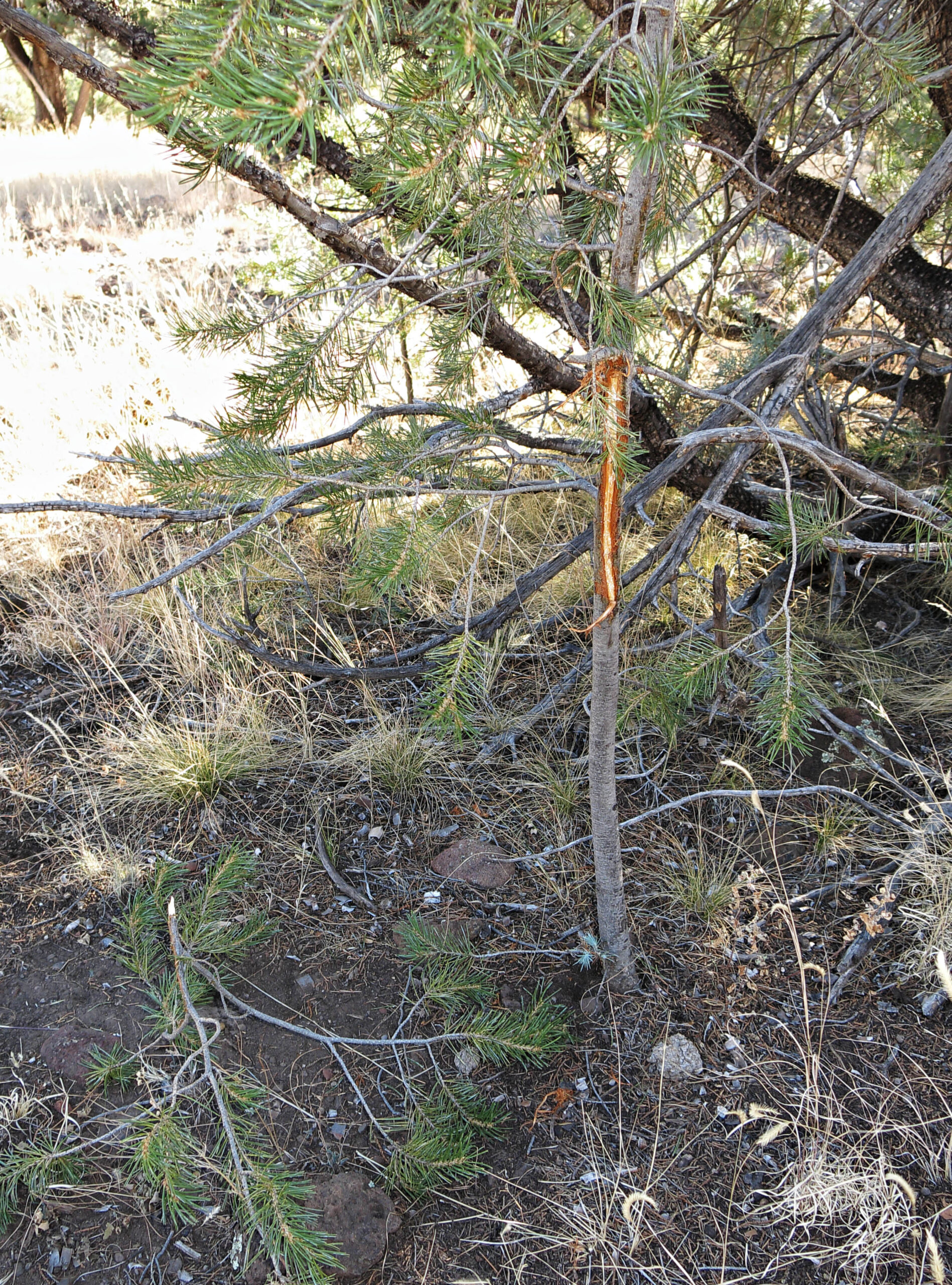
Fresh rub tree.

I was full of anticipation as I hiked up the mountain on January 10th. I was still-hunting along a ridge when I saw something out of the corner of my eye. A magnificent buck was bedded in the wide open 50 yards away with some does that I’d busted earlier that morning. I knelt down behind a nearby shrub and pulled an arrow, but the deer got nervous and moved away. I tried to follow but they gave me the slip in the dense trees.

The next day was a total rain out that turned to snow over night. Inspired by recent rut activity, Brent tried to hunt but came back to camp empty-handed and a soggy mess.

Day #12

Twelve days in and I was ready to cut my losses. The mountain was blanketed in snow as I made the slippery trudge up to one of my favorite areas. As I neared the top, a great buck—the same one from before—stood up from a bed and melted into the trees. I loaded an arrow and crept forward. Tracking was impossible as the deer had torn the place up overnight and he gave me the slip. I continued on with no luck and then back-tracked.  As I rounded a tree, I ran face-to-face into the buck. This time he snorted and blasted down the mountain, apparently tired of my chase. Again I wandered back up the mesa.
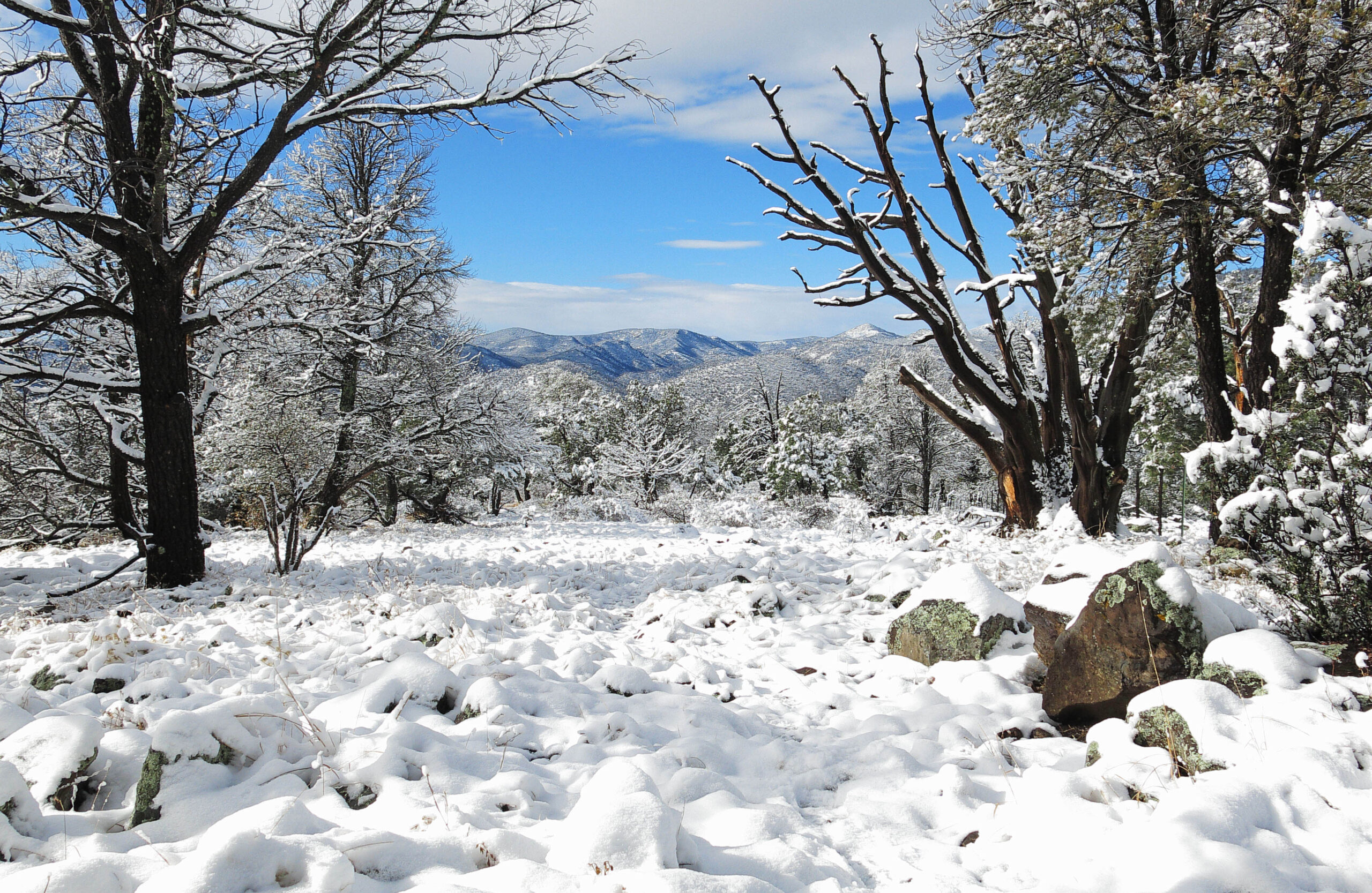
Snow day.

I’d gone a mile or so and was growing tired of the trudge and disillusioned by twelve days of bad luck. Out of ideas, I turned back towards camp. As I rounded a juniper tree, I ran smack into a new buck with long main beams. He pranced away without looking back. In desperation I pulled an arrow and made a series of grunt calls. To my surprise he came poking back, weaving through the thick trees. I continuously ranged him, but there was no shot.

Gradually he came to 40 yards before hanging up with only his head visible behind a tree. When he didn’t see another buck, he got nervous and turned back. I scanned frantically ahead for a shot window and spotted a 20 foot gap about 50 yards away.

I was at full draw when the buck broke the clearing in full stride. I grunted with my mouth and when he stopped I quickly settled my pin and released my arrow. There was a distinct WHACK, and the buck mule kicked before exploded out of sight. I knew he wouldn’t go far.

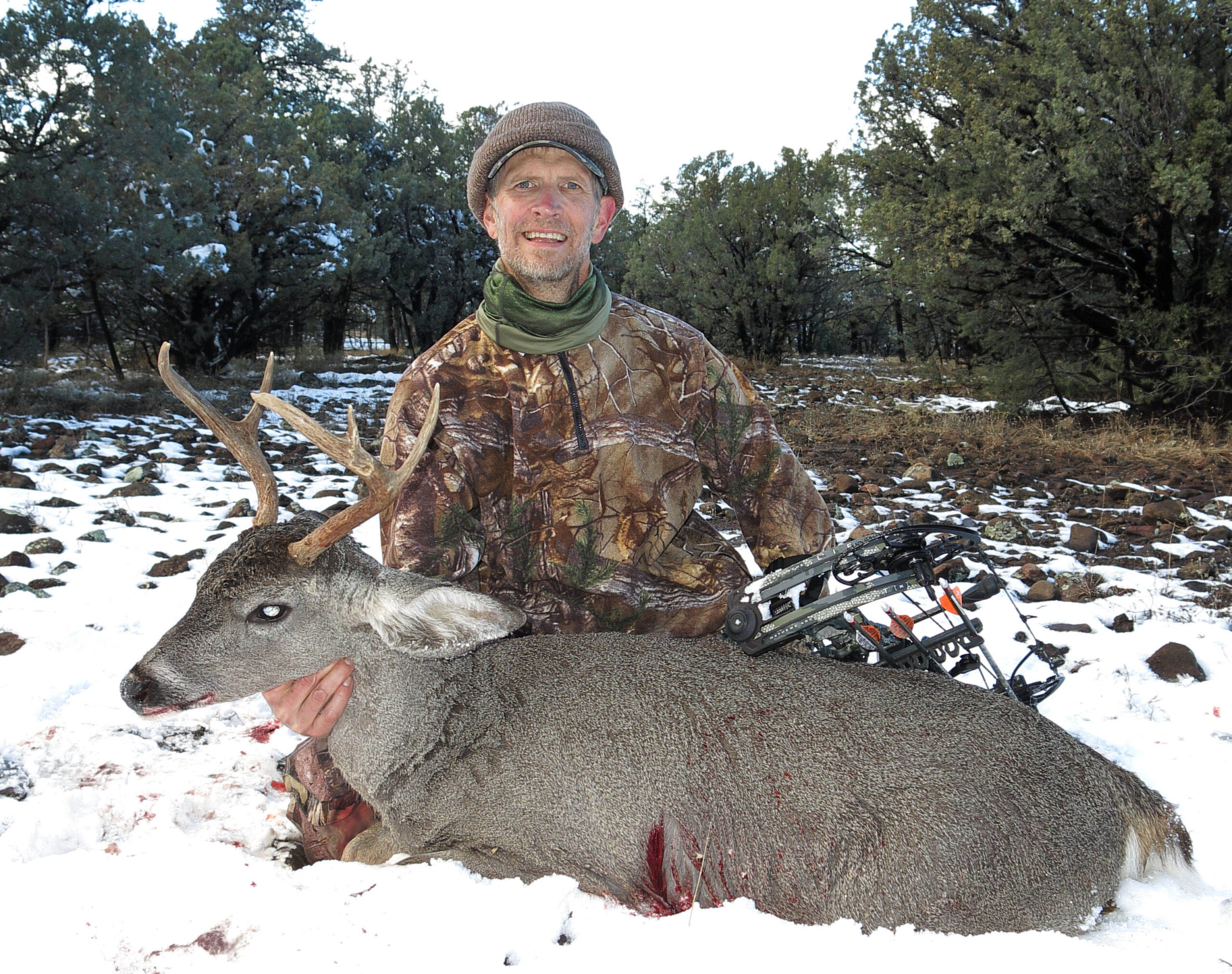
It was the easiest blood trail I’ve ever followed. The arrow made a full pass-through and blood was streaked across the snow in all directions. Less than 100 yards later I found him sprawled out in the snowy rocks. I sighed the sigh I’d been holding for seven years and knelt in gratitude for the harvest before me.
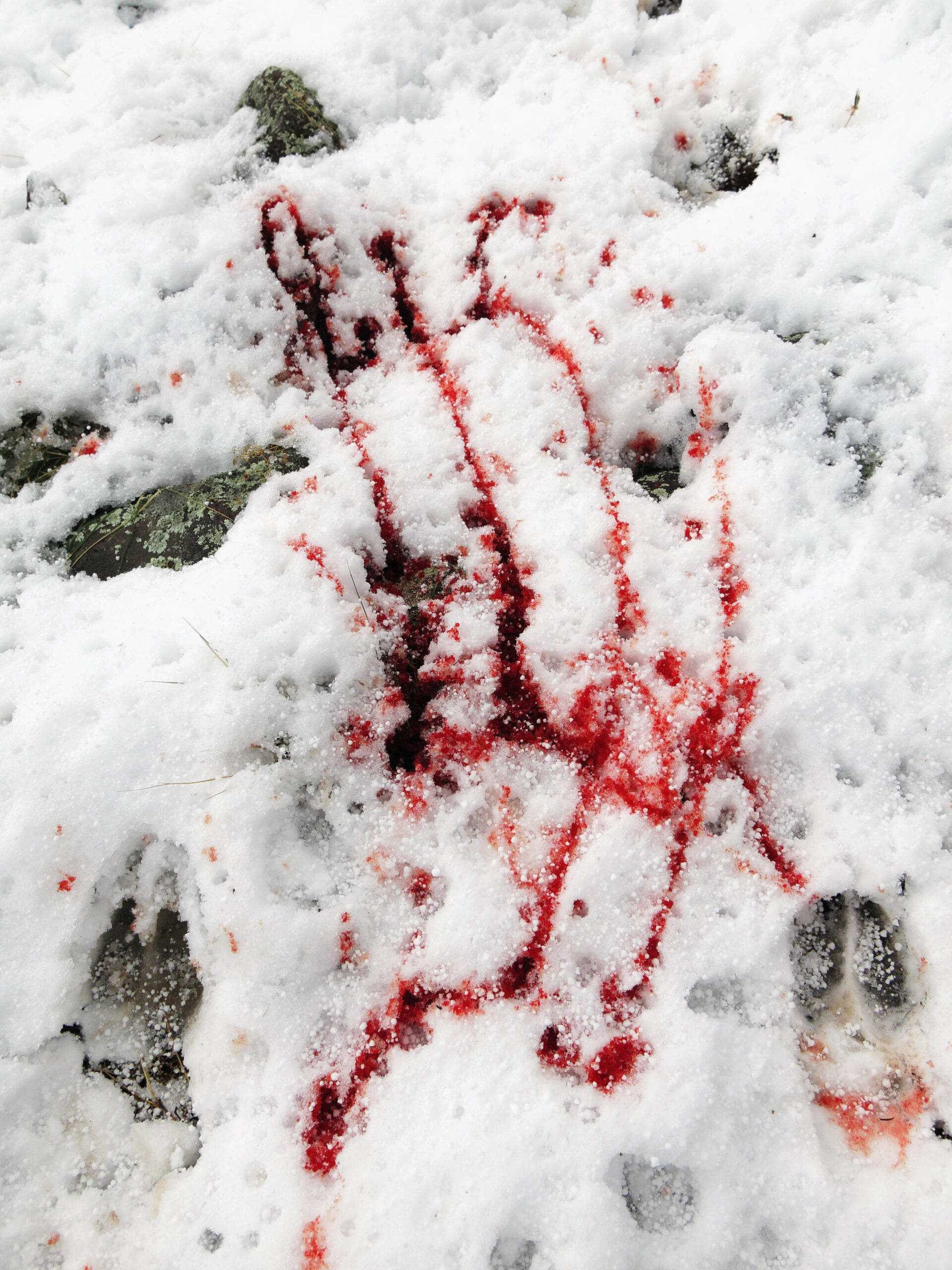
Coues blood trail.

My buck was an older-class deer with the tell-tale thick hair tuft on his forehead. He had long main beams, but only sported a handful of points due to poor genetics. Certainly there were better-framed deer around, but I was tickled nonetheless. It just gave me more incentive to return to the wondrous landscape of Arizona’s backwoods to chase the gray ghost next year.

Incidentally, Brent arrowed a fine buck right about the same time I did. We certainly put in the time and earned our deer this year.
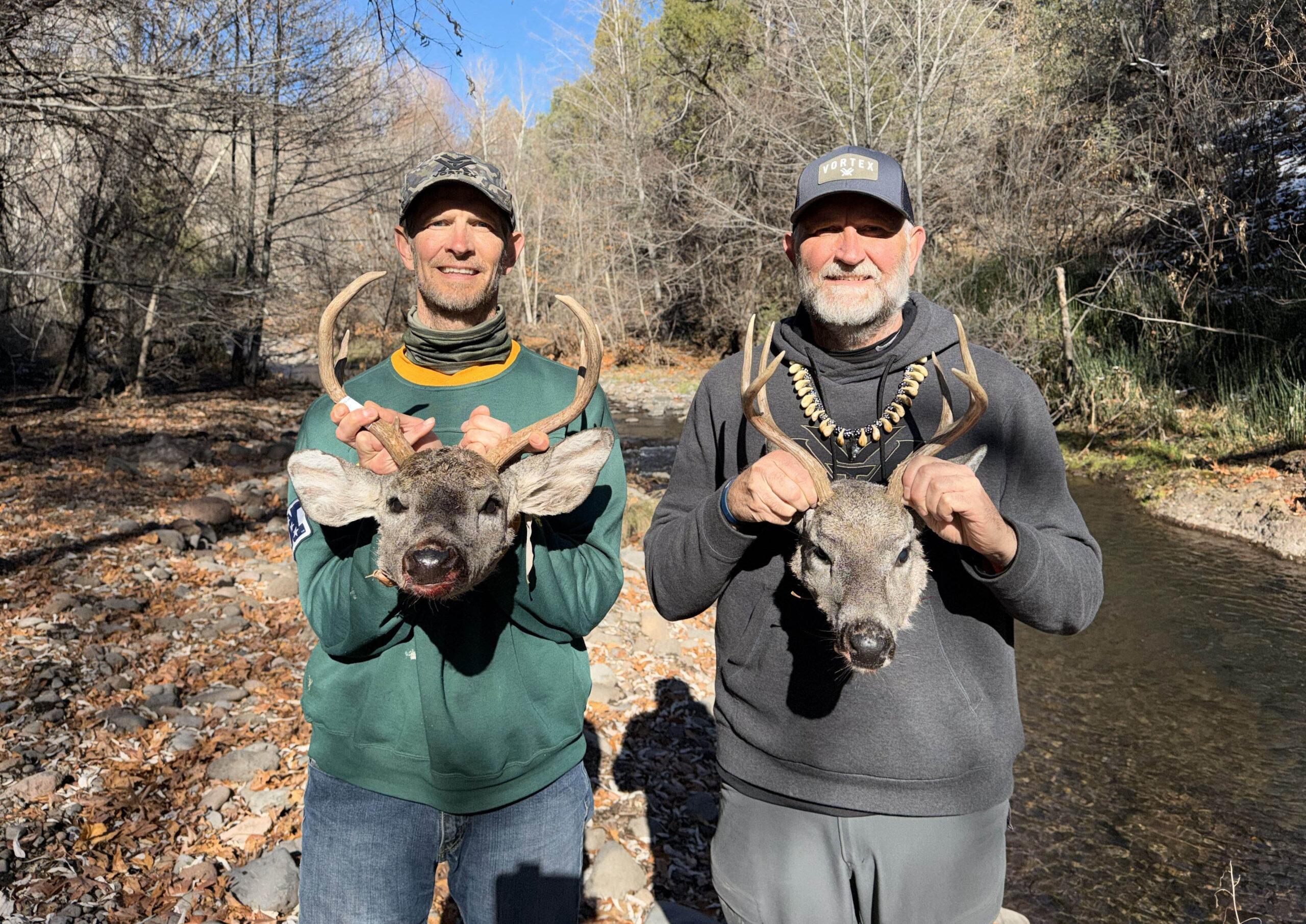
Nate and Brent with Coues bucks in 2026

I hung the meat overnight and returned the next day with my frame pack. To my surprise I bumped into the same big buck from previous days, and once again he wandered off without a care. Perhaps we’ll meet next year when he’s even bigger.

Advice Column

To conclude I’d like to offer some advice to my fellow Coues brethren:

First, get away from people. Deer hate people more than anything and grow exponentially difficult to hunt with pressure. Look for areas far away from population centers and you’ll find deer that have never been hunted before. Phoenix is the 5th most populated city in the nation, but Arizona is big with large tracts of undisturbed backcountry.

Second, Coues hunting is difficult no matter where you hunt, but if you are patient and put in the time, you’ll find success. Patience, time, and perseverance are the keys to any bowhunting success.

Third, use the rut to your advantage. Find doe groups, and the bucks will surely appear. Target the peak of the rut (usually mid-January, although it can vary depending on latitude) and avoid hunting too early or late in the season. Hunting during December was my biggest mistake over the years. Also, bring a grunt call; it could make all the difference. I haven’t tried rattling, but I’m sure it’s just as effective.

Fourth, locate all watering sources. Rut bucks need water almost daily and tend to hit water during daylight hours. Ambush hunting over trails or water isn’t my preferred method, but if you’re patient, it can be far more effective than still-hunting for wary Coues deer.
My 2016 Idaho Black Bear Story

Difficult to Bear: My Idaho Black Bear Story

The following is my 2016 Idaho bear hunt story. I hope you enjoy it!

Bear_Hunt (2)

The skies were dark as a steady cold rain soaked the steep mountainside. A big chocolate phase bear was barely visible feeding in the dense brush forty yards away. After ranging him several times and unable to see his vitals, I knew I’d have to get closer. Any apprehension I had about getting close to dangerous predators was suddenly gone.

I eased into thirty yards and nocked an arrow. The bear sat on his rump facing away from me. My eyes were locked onto him as I crept ever closer. I ranged him again at twenty yards. Close enough, I thought, wait for him to turn. The storm-driven wind began to swirl. Something needed to happen.

Bear_Hunt (4)

I don’t remember exactly when it started, but several years ago I felt compelled to challenge my bowhunting abilities by pursuing dangerous game with a bow. I suppose this is the natural progression of any serious bowhunter, but in the back of my mind I wasn’t completely confident I had what it takes. I would often play out the stalk in my mind, but when it came to getting close I always felt a tinge of panic. I knew that a bad hit could turn deadly, and so getting well within bow range and shooting straight would be the ultimate test of grit.

In 2016 I miraculously drew an any weapon Idaho controlled bear tag with less than 1 in 40 odds. Like many hunters today, I read and reread the word “Successful” on the postcard, thinking there must be a mistake. It was hard to believe that a quality bear hunt was suddenly on the horizon.

Back in 2012 I bought an OTC tag and took a kamikaze trip to Idaho looking for bruins. It was a complete failure. At no time did I feel remotely close to one of these elusive animals. I had much to learn. Now, with my hunt just a month away, I knew almost nothing about hunting bears.

The unit I drew is actually two large units, neither of which I’d ever seen before. The hunt spans the entirety of April and most of May, so there would be plenty of time to learn the area. In March I contacted the biologist for the region. All I really wanted was a starting point. Unfortunately, the information she gave me was pretty vague. When I asked about bear concentrations, she said they were scattered evenly throughout the area. However, the northernmost unit had historically better harvest statistics, so that’s where I would begin my search. She also mentioned that it was a heavy snow year, so the best strategy was to avoid the first week of April to allow time for the bears to emerge from their dens. By the last week of April, all the bears should be out and feeding heavily on green shoots just below snow line.

Rugged Idaho.
Rugged Idaho.

My plan was to hunt the second week of April alone. Mostly I’d be looking for road access and bear sign throughout the unit. If that trip failed, I would return the last week of April with my wife, Esther, for a week-long excursion. I must admit that I felt much more comfortable having a “gunner” next to me in case I got into trouble. Needless to say, my first trip was one of apprehension.

In the meantime I dug around for more information online and was fortunate to find a few good starting points. I also read everything I could about hunting black bears. Some of the best information came from Eastmans’ Bowhunting Journal. Years ago I began clipping and saving some highly informative articles written by Guy Eastman and the bear-slayer himself, Brian Barney. This lexicon of bear knowledge became the guidebook for my hunt.

After a long, eight hour drive across the plains of Southern Idaho, I arrived at the beautiful, moss-covered woods of Western Idaho. I set up my solitary camp alongside a muddy dirt road near a runoff-swollen stream at the bottom of steep canyon.

Around 8:00 a.m. I headed up the slippery mountainside. From the information I gathered, bears like to feed for a couple hours on open, green, south-facing slopes during warm weather, and then bed down for a few hours in the dark timber, and repeat. Not even fifteen minutes into my hike I spotted my first black bear feeding exactly where I expected: on a green, south-facing slope near old-growth timber.

This was the first bear I’d seen in more than a decade, and my heart leapt with glee. Was bear hunting really this easy, I wondered? The bear was about a thousand vertical feet above me and too far to judge, so I needed to get closer. While scrambling towards the bear I suppressed a nagging inner voice that continually questioned my motives, asking “Why are you running towards this horrible beast?!”

In short order I arrived on the same elevation as the bear and shot some video from about 120 yards. He’d finished feeding and was ambling into the dark woods where I quickly lost sight of him. Judging by the distance between his ears, I estimated him as a younger bear. But what did I know?

Slowly, I made my way to where he disappeared. I soon realized he was gone and began hiking up the ridgeline. A little farther along I heard a scuffling below me. As I pulled up my binos, the hair rose on my neck and my hand fumbled for the .357 revolver on my belt. The same bear was digging out a bed just thirty yards away and somehow didn’t notice me. He just lay down and went to sleep.

For the longest time I stood motionless, peering at the sleeping bear through my binoculars. He was indeed a young bear, and eventually I moved off to glass different parts of the mountain. A few hours later I glassed up another bear—a big blond sow with two cubs—half a mile away. I shot some more video and moved along. As exciting as it is to see sows with cubs, they are protected and illegal to hunt, for obvious reasons.

Still, my hopes ran high most of the day. Unfortunately that was my last bear sighting before getting socked in by storm clouds and running out of daylight. All in all it was a productive first day.

First day, socked in.

I woke the second day to an inch of snow. My goal was to cover as much new ground as possible. Apparently the bad weather had the bears down because I didn’t glass up a single bear, nor did I find any fresh tracks in the snow. I’d read somewhere that bears hate being out in the rain, and this was proving to be true. That night I stumbled back to camp wet and sore, and a little discouraged. At that point I decided to move camp to a different part of the unit.

On Wednesday I spent the day driving the muddy roads farther north. I soon discovered that most of higher elevation roads were still snowed in. I would plow my truck as far as I could, then get out and hike. Overall I wasn’t finding much sign.

That afternoon, while driving lower elevation roads, I spotted a huge blond sow with two cubs about a quarter-mile up the mountain. When she saw my truck, she bounded onto a boulder outcropping and took a defensive posture. She held her head high with her eyes transfixed on me while swaying back and forth. I half-expected her to come barreling down the mountain and tear my truck apart. I knew that sows were protective of their cubs, but this was ridiculous. What have I gotten myself into, I wondered?!

That was my second reality check moment. If I were to continue hunting bears with a bow, then in a very real way I had to make peace with the possibility of death. Success meant that one of us wasn’t coming out of the woods alive, and there was a chance it might be me! It was painfully necessary, at that very minute, to either accept this fact or go home. Did I really have what it takes?

Later that evening I went searching for a campsite. Just before the road became snowed in, I was able to glass up big, jet-black bear on a far-away hillside. It was lone bear and likely a boar. My game plan for morning was to drive as far up the road as possible and then hike after the bear. But the weather had other plans.

On Thursday I woke to a full-on blizzard and knew my hunt was over. The bears would hunker down and the roads would only get worse. Best to cut my losses, take the knowledge I’d gained, and come back later with a plan. I was encouraged that in three full days I had four bear sightings. Still, I didn’t get a single stalk opportunity, and for such a difficult-to-draw hunt, I expected a little more. Perhaps  many of the bears were still hibernating…

The following week we had beautiful warm weather, but I was stuck at home working. Then, just as we departed on another week-long bear excursion, it turned bitter cold and wet. Originally I planned for my wife Esther—who is deathly afraid of close-up bear encounters, by the way—to be my gunner and carry a rifle for protection. But in the week between bear hunts, I decided the mountains were just too steep to carry all that extra weight. Instead, she came armed with paltry can of bear spray. ;^)

Before setting out on the open road, curiosity had me searching the IDFG website for past harvest statistics for my unit. I was surprised, and dismayed, to learn that of the 75 tags given out, only 20 hunters were successful. That’s less than 30% success! Already, I was planning a third trip in May.

On the night of Sunday, April 24th, we pulled into the area that I’d left off on my first trip in the remote, muddy mountains near the Oregon border. There were no other hunters in the area, which I found encouraging. As we set up the tent we were accompaniment by the ghostly howls of wolves in the distance. There was something peaceful about having these blustery, wild mountains to ourselves.

Wolf track.
Wolf track.

We struggled to keep warm that night. In the morning we began hiking where the road ends and right away spotted a sow with cubs on a far-off, cliffy mountainside. We continued hiking all day and glassing all day and eventually we dropped into the canyon where I’d seen the lone black bear on my first hunt. There were numerous bear tracks in the area, as well as frequently used bedding areas surrounded by fresh scat. The whole time I felt we were very close to our quarry, but still couldn’t turn up any bears.

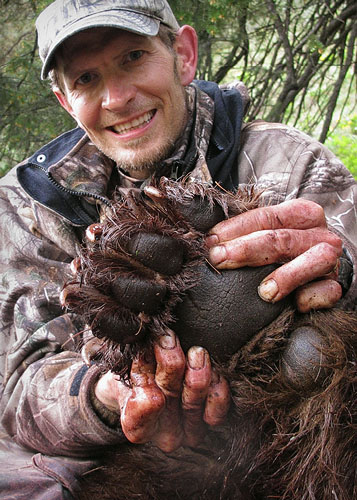
Rear foot pad.
Rear foot pad.

After a hard freeze overnight, we spent Tuesday morning driving miles and miles of roads with no luck. In the evening we returned to the canyon with all the bear sign. We sat on a saddle with deep, dug-in bear tracks going over it and a rubbing tree littered with bear hair. I nicknamed this area “Bearea.” All was quiet, but then just before dark we caught sight of a sow with cubs walking along a logging road.

Dug-in tracks.
Dug-in tracks.

On Wednesday we went back to Bearea with intentions of exploring it entirely. Around 10 a.m. a heavy rain pinned us down in the dark timber. The relentless rain eventually chased us back to camp where we changed out of our soaked clothes. We were yet to see a lone bear on this trip and were getting a little discouraged. The rain let up that evening, and again we dropped into Bearea but to no avail. At that point we decided to move camp farther south, to where I had my first bear encounter.

Thursday was sunny and clear. We spent the whole day hiking from 4000’ to snowline at 5000’. We were excited to come across innumerable tracks, beds and fresh scat, but still, no amount of glassing could turn up a bear. Nonetheless, I was learning quite a bit about bears, primarily what I refer to as the “triple S” of bear behavior: shy, secretive, and slippery.

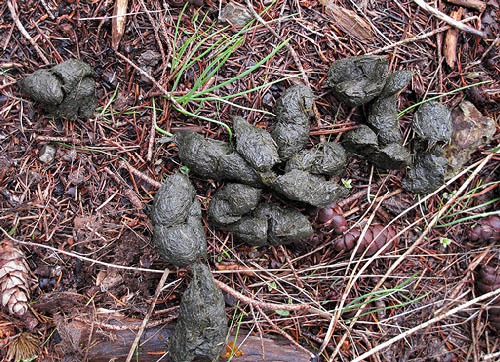
Bears, like deer, don’t want to be found! Even if you spot a bear, they tend to move around a lot and eventually disappear. Sometimes we’d find a steamy, green pile of scat, but the leaver of such piles remained invisible. I began to refer to them as “invisabears.”

It became increasingly clear that at least one bear was living full time on this mountainside above camp. Frustration had me clambering from pine bed to pine bed, all over the steep slope looking for these invisible bears, but once again the day ended bear-free.

While pondering bears that evening I decided we should start hunting bears like we hunt deer. We would wake very early on Friday and spend the whole day glassing and bed hopping. All the information I’d read about bears—that they emerge from beds several times to feed during the day—was apparently not the case here.

Bear sign.
Bear sign.

It was a cold and rainy Friday morning as we began our ascent up the mountain. When we arrived at our first vantage we spotted a lone chocolate phase bear feeding far above us in the low clouds that partially obscured the mountain. Determined to finally get my stalk on, I trotted up the near vertical slope with Esther floundering behind. Just as we were closing the distance on the bear, he disappeared into the clouds. Surely he’d bedded down in one of the dozens pine beds littered across the slope. So the rest of the day was spent hiking in circles looking for the lone bear, who for no particular reason I named Sedwich. We visited all the promising areas—and more—but again found nothing. Wet and discouraged, we returned to camp around 2 p.m.

We were officially out of dry footwear which encouraged us to go driving down one of the long, winding roads in the relentless rain. By late afternoon we hadn’t set eyes any bear and returned to camp for lunch. To my dismay the forest service had opened the locked gate on the logging road leading up the mountain where we had toiled for so long. With the impending weekend, I feared the area would soon get blown out by rifle hunters. It was hard to imagine a scenario wherein I might get a successful stalk.

Bear_Hunt (10)

In disgust we took advantage of the newly opened road and drove a short distance to glass. Not surprisingly, the bears weren’t out. As we sat pondering impending failure, Esther suddenly leaned over and asked, “Is that your bear???” My binos flashed up and sure enough a large, lone bear materialized out of nowhere and sat feeding in the rain 1000 vertical feet above the road. Instantly I grabbed my pack, slipped on my soggy boots, and just before jumping out of the truck exclaimed to Esther, “Stay here!”

Then halfway across the road I looked up and noticed a second lone bear feeding a short distance from the first one. When it rains, it pours bears! I looked back to Esther in astonishment, and then took off running up the mountain.

Halfway up the near vertical slope I paused. I couldn’t breathe and both my legs were going numb. I gasped and sweated, slipped and fell, and pushed onward. A few minutes later I arrived at the same elevation as the bears, and wouldn’t you know it, both had vanished! When I got within view of the truck, I waved and flailed my arms at Esther, hoping she could point me towards the bears. To my dismay, she held both hands up, gesturing that she too lost sight of the bears. Now what?!

Through drizzling rain I zigzagged to the top of the ridgeline, desperately trying to stay above the swirling winds that had likely busted the bears. Soaked with sweat and rain, I glassed every bit of cover but turned up nothing. Darkness was falling, as were my spirits. The only option was to work back down to the truck and try again in the morning. While following a finger ridge down the mountain, a dark blob in the brush caught my eye. My heart jumped. It was the big brown phase bear, nearly invisible as it fed in the dense brush below. No shot; must get closer.

Staying above the feeding bear, I crouched low and skirted the hillside towards it. I ranged the bear at forty yards. He was feeding in circles with just the top of his back visible. Gotta get closer! I slowly eased into thirty yards, trying my best not to roll a rock down the hill. My heart thundered in my chest. I took long, deep breaths to calm myself, knowing this would likely be my only opportunity. I nocked an arrow and waited for him to present a shot. Instead the bear sat flat on his rump facing away from me. The storm-driven wind began to swirl. Must get closer quick!

I meticulously closed the distance to 20 yards. Close enough, I thought. Wait for him to turn broadside. I drew my bow and held tight. He didn’t move; I let down. Seconds later he stood and slowly turned uphill, exposing his shoulder. My sight pin danced all over his vitals. I paused for a couple seconds and slowly exhaled. I resettled the pin and the arrow was off.

To my dismay, less than half the arrow buried into its shoulder. The bear swung around to face me and somehow, in the same two seconds I had loaded another arrow and redrawn my bow. The bear’s head swung left then right, then forward. His piercing eyes locked onto mine. When he raised his head to look at me, my second arrow sailed under his chin and disappeared into his chest.

The bear swung around and barreled straight down the mountain, smashing through the brush as he went, and then disappeared into the dark timber below. I stood shaking in disbelief, oblivious to the rain battering down on me.

My first instinct was to head back to the car and get Esther. My second instinct told me to go after the bear. The rain threatened to wash away the blood trail and darkness was falling. In no way did I want to track a wounded bear in the dark. I pulled my revolver, and with my gun in one hand and bow in the other, slowly headed in the bear’s direction. The blood trail was heavy and full of frothy lung blood. Surely the bear wouldn’t go far.

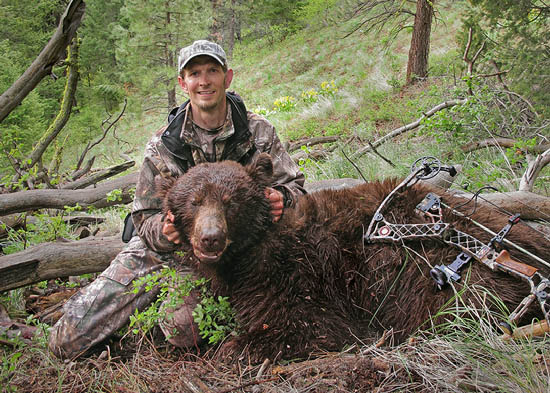
200 yards down the mountain, at the edge of the dark timber, I slowed way down, glassing as I went. Fifty yards deeper in the tangled maze of a giant deadfall tree, my eyes locked onto the dark, furry patch of my expired bear. I was overcome by relief and a sense of accomplishment unimaginable. What had arguably been the most difficult and frustrating hunt of my life, had instantly transformed into wonderful success.

After verifying the bear was indeed done, I hung my bow in a tree and jogged back to the truck. Esther burst from the vehicle and ran to meet me on the road. She raved on about how she witnessed the entire stalk, and her excitement throughout was equal to mine.

The rain died out as we approached the downed bear together.

My bear—Sedwich the bear—has become a major milestone in my life. I can’t think of a better way to challenge one’s skills and bravery than a close-quarters bear hunt with a bow. I also learned that there’s no such thing as an easy bow hunt.

As with all hunting, it’s the hunter’s responsibility to learn everything he can about his prey and its behavior. I have nothing but admiration and respect for these powerful creatures that we share our mountains with, but rarely get to see. For this reason I’ll probably never hunt bears again. Like all game animals, our beautiful black bears are a renewable resource for our taking. And indeed, blueberry-glazed bear steaks are quite delicious. But unlike elk and deer, there just aren’t a whole lot of them to take. These fascinating beasts have their own special place in the woods, and for me, preserving this hunt as an once-in-a-lifetime experience is plenty enough.

Bear_Hunt (13)

In the end my bear green scored 19.5 inches, making it my fourth spot-and-stalk Pope and Young trophy in seven years. Yet, as proud as I am of this accomplishment, I must remind myself that life’s most precious experiences cannot be measured in inches or trophy quality. How we hunt—and the people with whom we share our hunts—are what matters most. None of my bow trophies would have been possible without the love and support from my wonderful and understanding wife, Esther, who’s been by my side during all of these magical hunts.

Bear_Hunt (1)

Out of the Woods

Aug_Hunts 001

Out of the Woods

So that was the 2015 bowhunt; it came and went faster than I could imagine. What I expected to be just another same-old archery season ended up being a whirlwind of ups and downs and a dramatic unfolding of failure and success, coupled with new ideas, concepts, and a solidification of theories that sprung up during the 2014 season.

But in the end I failed to bag a buck, which was so spiritually deflating that I decided to take a month off writing and devote my energy to regrouping and digesting it all. Fortunately, the whole adventure was documented in my super-top-secret field journal. There is now enough new information in this little notebook to fill an entire book, and someday it will.

Aug_Hunts 013

Enough with the pleasantries, let’s move on to the details.

My hunt was 28 days long, but I devoted half of it to my wife Esther’s, limited-entry bull tag in Fish lake. This was the most difficult hunt of my life. The terrain was super-steep, thick, boulder-strewn, log-fallen and all-round unforgiving with mostly hot, 90-plus degree days. A myriad of cow and spike hunters chased the herds into the far reaches of the worst mountain tops long before we arrived. We beat ourselves ragged on two separate trips just to close the distance on this silent 310-class bull which wouldn’t respond to calls. Esther was finally able to shoot it bedded, facing us, at only 20 yards. Thus began a most grueling 11-hour pack out on our backs. All in all it was a wonderful success and Esther’s very first bow kill. Congrats, doll!

Hunts - 2015 025

In the end I shot nothing…just like last year. So here we go again, into the even more difficult extended season. The difference this time is that I am building off countless lessons learned last year. Not only is it my goal to shoot both a Pope & Young buck, but a P&Y elk too! Unlike last year, I’m not just saying it; I’m doing it.

So we say goodbye to the 2015 general season forever. Incredibly difficult throughout, but beautiful. The story has just begun; can’t wait for next year!

Aug_Hunts 029