Tag Archives: mule deer

One Giant Antler

Deer Hunting Story:  One Giant Antler

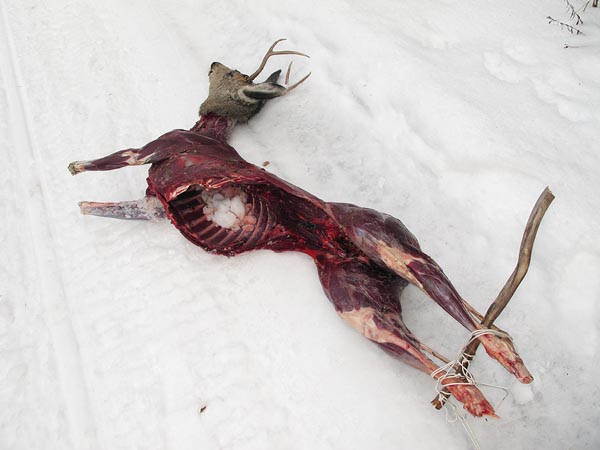
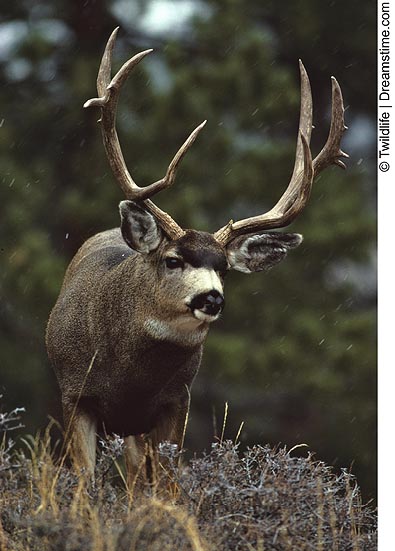
There is an image, not unlike the one above, that still haunts me today.

It was the muzzleloader hunt of 2001. I was still getting used to my new hunting area near Fairview, Utah. I knew the hunting pressure would keep the big bucks in the thick timber, so that’s where I spent my days. I’d never gotten a real trophy-size buck before, and up until then, I’d only seen a few true trophies in all my years of hunting. But I’d seen enough in this unit to know it was possible. These were the bucks I daydreamed about.

On opening morning our camp dispersed across the land. I dropped into the deep and steep pine forest below camp. The deadfall was so thick I had to hop from log to log, not touching the ground for a hundred yards or so. Eventually it opened up with aspens and narrow feeding swathes. Judging by the sign—and I was no expert back then—there were plenty of deer around, but where they went during the day, no one knew.

I’d grown accustom to blowing stalks on large deer, and as you’ll see, my confidence was way down. I knew there were big deer in this unit, attested to by an occasional flash of antler, a loud snort, and the sound of heavy hooves smashing away through the dense woods. I pressed on, but really, I’d already given up.

Judging by the high sun, it must have been close to noon.  I knew the deer wouldn’t be up on their feet at midday, but I wouldn’t allow myself to return to camp and make excuses for my failure; blaming the lack of deer on the area and then bedding down for the day myself. That would be submission. No, I would continue my quest, beating the pine-needled forest floor to death with my stinky old boots.

I was still-hunting along on a steep and rocky slope. The timber was less dense at the edge of the pines where interspersed aspens and deer brush heedlessly  begged for a more sun. My predator eyes suddenly and haphazardly caught the slightest bit movement a hundred yards below me in some tall brush. My cheap, murky binos came up and locked on. ANTLERS! Little bits of tines bounced and bobbed through the tall brush. What they were attached to I could not tell in the thick brush; no fur nor face nor hide nor hair, just bits of antlers appearing and disappearing. How big was he, I wondered? A two-point? A four-point? No way to tell and no shot; I needed to get closer.

Here’s where my lack of confidence shines brightest. Based on previous buck encounters, I told myself this would never work out. I didn’t really believe I could get close enough for a shot, but I had to try—I desperately had to try!

It’s different these days, here in the future. Today, I would just sit tight. The wind was most likely rising from late-morning thermals. I would sit and wait for the buck to feed into the open, even if it took all day. 100 yards is an easy shot with a gun. Woulda-coulda-shoulda. But this is how we learn…

I dropped to my butt and began my slow-motion descent. The pine needles were dry and loud, and the terrain was terribly steep. I used the wind and forest sounds to cover my approach. For twenty minutes I slid, scooted, and crab-crawled down the hill, drawing closer and closer to the sighting. Minutes felt like hours.

The buck eventually moved out of sight, swallowed up by the forest. Unable to keep tabs on him, I became increasingly skeptical.  Did he bed down? Did he sense me and move off? Gotta get closer! I crept closer and closer until I was within a few yards of where I first saw him. All was quiet. Now what?

He’s gone! I must have busted him out. I knew this would happen. Oh well… I would’ve been a little upset if I ever truly believed I had a chance at this buck.

I stood up, slung the gun on my shoulder, and dug my GPS unit out of my pocket. I stared blankly at the screen as it tracked and tracked and tracked for satellites. There’s nothing more tedious than waiting for the GPS to track in thick timber. My eyes lifted and floated around the forest. What direction did he go, I wondered.

As my gaze drifted to the right, my lethargic eyelids suddenly flashed wide-open; my heart stopped. Fifteen yards away, a massive, tall, sweeping, 4-point antler stuck directly out from behind a large tree trunk. On the other side, the long gray line of a deer’s back extended outward.

No thoughts, just action.

In one motion my left hand opened and the GPS went into free-fall. My hand flashed to the butt of my gun. The GPS was halfway to the ground as my gun twirled like a baton in front of me. My right hand caught the gunstock and lifted it to my shoulder. The GPS bounced inaudibly as the gun’s muzzle swung towards the buck.

Too late. Heavy hooves dug into the ground with a loud thud and every trace of that monster buck instantly vanished into the woods. Frantically I aimed at the crashing and snorting of my invisible foe, but he was gone.

And that was that. Nothing left but a haunting technicolor image of a huge antler sticking straight out of a tree trunk, burned forever in the forefront of my long-term memory. For the duration of the hunt I beat myself up for my failure.

I am tempted to leave the story right there, but habit forces me find the good in the bad. I knew then, as I know now, that my biggest mistake was over-estimating the buck, and under-estimating myself. I failed because I accepted failure from the start. I had him in my hands, if only I’d been patient. If only I had believed this one burning truth: that he was “just a deer” and not an impossible phantom.

The End.

Over- and Under-Estimating Big Bucks

muledeer_011
(Photo courtesy of Utah DWR)

Over- and Under-Estimating Big Bucks

Any seasoned hunter will tell you, “NEVER underestimate a big deer!” I agree, but experience also tells me that ‘NEVER’ really means ‘SOMETIMES.’

I have spent up to seven hours stalking big bucks, and other times, I’ve barreled right in on the animal, either because I was losing light or he was distracted by something.

I’ve also watched hunters watched hunters stalk directly at a deer or elk in plain view, thinking he was invisible because he’s wearing camouflage! I’m not joking! You should’ve seen the look on the animal’s face just before it jumped up and ran away.

What it boils down to is that every situation is different. You can’t judge the current situation on the last one, whether it worked out or not. In bowhunting there are just too many variables.

Big bucks are extremely wary…or at least most of the time. On rare occasion you’ll still catch a buck being lazy or carelessly feeding along. But most times you won’t be able to get inside the buck’s 60-yard security bubble without using extreme caution. Within this bubble a buck’s senses are exceptionally acute. This is where critical decisions make or break your hunt.

Below is a list of situations that either cause me to speed up my approach, or sloooow waaaay down:

When to Speed Up a Stalk

  1. It’s getting dark. Assuming you won’t be able to relocate your target buck later on, you’d better roll the dice and make your move. I’ve seen a lot of stalks end in dark failure. If it’s the last evening of your hunt—for example—you will have no choice but to make a move. Even if you have to walk straight at him, it’s still better than doing nothing.
  2. The buck is about to unbed. Finding an unaware, bedded buck is a Godsend. If he it’s early and he just bedded down for the day, you’ll probably have several hours to implement a stalk strategy. But if he’s been bedded all day, you’d better make your move. Can you get close enough for a shot before he stands? I hope so, because when he stands you’ll likely be pinned down.
  3. The wind is about to change. If the wind is blowing steady in your face during a stalk, you’re golden. But wind can change at any moment. If the wind is starting to swirl, you’d better speed up your stalk. Wind direction changes more often in stormy weather or with thermals: in late morning it begins to rise, and in the evening, as the sun begins to set, it cools and goes downhill. Anticipating wind changes is probably the most important factor in speeding up or slowing down during a stalk.
  4. There is cover noise. I’ve used every possible noise for cover including wind, flying grasshoppers, squirrel barks, jets and planes, buck fights, etc. Anything that makes noise–other than you–will help you get closer faster. Wind rustling through the trees or brush is the most common cover noise. It’s also important to pattern wind. For example, at higher elevations winds are mostly non-existent early and then kick up between 10 a.m. and 11 a.m. In the evening winds often die down precipitously just before sundown.
  5. The buck is distracted. Distractions range from buck fights to antler rubbing to squirrel chatter; basically anything that distracts the buck away will give you a chance to move in. The best distraction is when he’s raking a tree with his antlers. Bucks are practically blind and deaf when they head is buried in a tree

When to Slow Down a Stalk

  1. When the buck beds down for the day. Once a buck beds you’ll likely have several hours to get close, so take your time and move with the wind or other cover noise. It’s usually best to wait a couple hours for the buck to start sleeping before making a move. Usually the buck will rise up and re-bed at least once before really dozing off. So the longer you can wait the better.
  2. The wind is blowing steadily in your face. If you’re lucky enough to be hunting during a stretch of steady wind, you can keep your stalk slow and methodical. Unless there’s unsettled weather, wind will prevail from a certain direction for several hours of midday.
  3. The ground is noisy. See how quiet you can be while sneaking twenty yards across a forest floor covered in dry pinecones, gravel, or pine needles. Dry conditions can be a nightmare, especially in thick cover. Oftentimes it’s simply impossible to stalk close to a buck. Fortunately, there are a couple things that can help you. First, take your boots off and stalk-in-socks. Second, wait for cover noise like wind or jets. Dry, hot conditions often bring flying grasshoppers to life. Their loud, short-burst flying noise is the ultimate cover noise when you need to get one step closer. Worst case you can always scoop sticks and brush out of the path with your hands.
  4. The buck is facing you. If you’re trying to stalk close to a buck that’s facing you, you probably can’t move at all. If you can see the buck’s eye, it can see you. However, if the buck’s face is partially hidden then a super slow-motion stalk is possible. Deer have a hard time seeing fine detail and slow motion. Technically, if you could move slowly enough, you could literally walk right to a buck without him seeing you.

These are just a few examples of when to speed up or slow down a stalk. What it really boils down to is common sense and experience. It also helps to spend some time observing and studying your prey. What are their strengths and weaknesses? The more you understand your prey, the better you’ll understand its limitations.

Mule Deer Age Progression

Mule Deer Age Progression:  Antlers

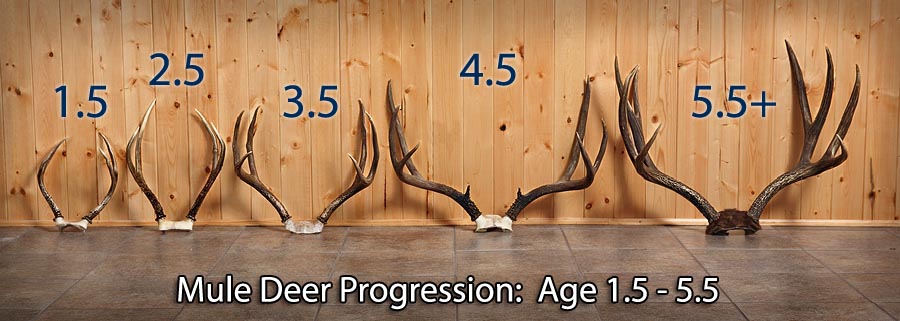
This is pretty neat. I got a bunch of younger deer in for taxidermy this year (including my own) ranging from 1.5 to 5.5 years old. So, I lined them up in order of age for this photo.  (Click to see larger version).

progression2
Mule deer antler age progression based on size.

The reason they are aged in half-year increments is because all mule deer are born in spring, and then harvested in fall, making the youngest legal buck 1.5 years old. Before that, they are fawns without antlers.

The buck on the far right is my late grampa’s largest buck.  It’s a beautiful, symmetric 4×4 without eyeguards. Without seeing the buck’s teeth, I can only guess the age at 5.5, although it could be as old as 7 or 8.

It can be difficult to age large bucks just by their antlers because after they become fully mature (4.5 years), genetics plays a big part in determining antler size.

The best way to age a buck is to look at tooth wear. After 5 or 6 years there will be noticeable wear on the back molars. They become less jagged and more flat. Eventually all the molars flatten down to the gum line while the front teeth (aka biters) fall out one by one.

The next best way to age a buck is to look at antler bases. Old bucks (from 8 to 10) grow similar size racks each year, but they are thicker around, especially at the bases. This is called “mass.”

Very old bucks (10-12 years old) tend to regress in antler size because their teeth become so worn that they can’t get enough nutrition from their food. At that point they slowly starve and/or freeze to death during winter. Mother Nature can be a cruel beast! And you thought hunters were cruel…

The one thing that would enhance this photo is a true giant in his prime, aged 9 – 11 years.  A “superbuck” scoring into the mid-200s would dwarf them all.

My 2014 Archery Buck

01Nate2014

My 2014 Archery Buck Story

Here it is folks, my 2014 trophy buck!  Okay, it was an off year, but I couldn’t be happier.  With only two days left in the season, I was very fortunate to find this buck up a little side canyon. After Thanksgiving, the area was being pounded by dozens of other hunters (or “dudes” as I call them).

I busted this little two-point halfway up a dense draw. He ran to fifty yards where he stood for a while before returning to feeding. For fifteen minutes I debated whether or not to take a shot. Would I find bigger buck? Highly unlikely. Do I need meat for the winter?  YES!!!

The buck stepped through a narrow opening in the trees. As I shot, he stepped again… I was worried as I watched my arrow hit several inches behind where I was aiming. The buck exploded down the canyon and out of sight.

I hurried over to where he stood and found my arrow: a clean pass through with lots of dark blood. Thank goodness it wasn’t guts!

02IMG_1927

I waited a while then wandered down the canyon. The blood trail was easy to follow as it was coming out of both sides. About 100 yards down the canyon I spied a motionless pile of fur. The shot was good, hitting liver and lots of vital arteries.

Reflections

As I sat in the snowy canyon cleaning my harvest, I couldn’t believe the season was finally over. I thought about the many challenges I endured this year–blown stalks, swirling wind, dreadful heat, blinding blizzards, and a major illness that wiped out half of my November hunt. I also thought about the dozen or so BIGGER bucks I passed up for a chance at a real monster that never came.

Shot on the 28th; my lucky number!

In the end, I wouldn’t be that much happier with a bigger buck earlier on. For the trophy hunter, it’s all or nothing and I never found what I was looking for. But I’m also a meat hunter, and so this little buck means a lot. His death means continual life for me and my family.

Dragging my organic, free-range food back from God’s grocery store
Dragging my organic, free-range food back from God’s grocery store.

The Bigger Picture

It’s easy for the trophy hunter to lose sight of what’s really important. The experience, the opportunity, and the passion supersedes the kill. The reality is, we are extremely lucky to live in a time and place where we can still partake in this wonderful tradition of hunting. I know that without it I would be lost in a world devoid of purpose.

I hope all of you had a great season this year. I’m already looking forward to next year. Good luck in 2015!

Modern Mule Deer: Brilliant Survivors Part 1 of 4

The following is a multi-part article about modern mule deer behavior, adaptation, and the future of hunting.

~~~~~~~~~~~~~~~~~~~~~~~~~~~~~~~~~~~~~~~~~~~~~~~~~~~

big_deer_A

Modern Mule Deer: Brilliant Survivors Part 1

BRILLIANT! This word echoed in my head throughout the entire deer hunt this year while observing mature bucks and their ingenious evasive tactics. For the most part, I knew where the big bucks lived, but getting close seemed almost impossible. In recent years, these highly pressured, public land bucks (and even does) have developed fascinating tactics to avoid modern hunters. Here are some examples:

While hunting in this unit last year, I stumbled across an ancient flint arrowhead. As I held the little piece of history in my hand, I thought of two things. First, how serendipitous it was to find such a rare bowhunting treasure left by ancient bowhunters. And second, part of the reason why the deer in were so dang smart was because ancient folk have been chasing these critters for centuries before us moderns came along. Unlike a lot of other units, the deer here have been mastering the art of human evasion for centuries. Thanks a lot, Native Americans! Other than people-predators, mule deer are stalked year-round by cougars, coyotes, bears, and now wolves. In order to survive, they must be on constant high alert. Now throw in ancient hunters, modern bowhunters, muzzleloader hunters, rifle hunters, and poachers, and pretty soon the few remaining deer are either super-survivalists or non-existent.

Early one morning on this year’s bowhunt I watched a group of bucks feeding along a steep and open mountainside. One of the bucks was a solid 4-point and worth a closer look. Unfortunately there was no way to approach them without being spotted. So, I waited until the sun came up and for the bucks to meander over a finger ridge to bed. They weren’t in a hurry and I figured they’d bed a short distance from where they disappeared. This was NOT the case. I found their tracks alright and followed them for quite some distance. They meandered through some dense scrub-aspens, then dropped down the canyon for another couple hundred yards, then turned left and continued along a steep and rocky slope. Eventually they took a sharp turn and went straight back up the mountain. What the heck were they doing! It seemed random and chaotic. At that point I realized it was futile to continue pursuing these travelling bucks through such thick and noisy terrain. As I stood there trying to figure out what to do next, I suddenly heard the deer above me jump up and bound away. They had bedded in such a way that anyone crazy enough to follow them would eventually get winded by the rising thermals. Pretty obvious, but BRILLIANT on their part!

Last season while hunting the same unit, I watched three very nice 4-points feed atop an open hillside. As the sun got higher, the bucks disappeared over the ridge. I climbed after them, being careful to keep the wind in my face. The whole area was above timberline so I knew that if I could get to their elevation I would see where they bedded. Well, when I got there they were gone. I followed in the direction they had headed and found some sparse timber that I was sure they’d bedded in. But there was no trace of them. I spent the entire day exploring every piece of cover in the area, but they were gone. I was perplexed that they could simply disappear in the wide open. BRILLIANT! I returned to the same spot this year, and sure enough the bucks were there again. It was early so I watched them feed for a while. This time I was perched across the valley but on their same elevation. I was certain I could watch where they bedded this time. Well, the bucks dropped into a small draw and disappeared momentarily, but never reappeared. Sure of where they bedded, I made a stalk. But when I got there, the bucks were gone. Again, I wasted half the day circling around the mountain trying to figure out where they went, but never did.

On the last day of this year’s bowhunt, I went back to the same hillside and observed a lone four-point buck feeding in the open brush above timberline. There was plenty of time for a stalk, so I waited patiently to see which direction he was feeding before entering the thick timber that separated us. Interestingly, there was a small group of does feeding just below him. As the does moved along, so did he. Apparently he was using the does as a security fence between the pine-line and the open feeding area. From the tree line, a hunter would have to get through the doe group to get close enough for a shot. BRILLIANT! With the clock ticking, I decided to make the stalk. Well, I didn’t get too far. Before I even got to the timber that separated us, an unseen doe busted me, snorted once, and trotted off. The buck stood staring in my direction for fifteen minutes before wandering off, never to be seen again.

While all this was going on, my wife Esther had set up an ambush in some thick timber adjacent to a feeding zone. She was similarly impressed by the deer in her area. At one point, two doe fed along. One doe had apparently been relegated to security and wasn’t allowed to feed. When she finally did put her head down to eat something, the other doe ran over and began swatting her with its hooves, driving the security-only doe back to standing watch. BRILLIANT!

Just about every deer group I’ve seen has a security system. While feeding is high on the deer’s priority list, sheer survival supersedes everything. In most cases, a herd will have a lead doe (or for elk, a lead cow). The lead doe is generally the oldest, wisest, and strongest doe. She rarely feeds while the other deer are feeding, but stands guard instead. She only feeds when she feels secure or while other does in the group are bedded. During the 2012 archery extended hunt, I watched a very large doe walking a head of a small group of deer including a very large buck. She emerged from some thick oak-brush just twenty yards below me. She couldn’t see or smell me, but somehow suspected danger. She continually buried her head in the brush, and then whipped it up looking one way, then the other, in attempt to catch a predator’s movement. I watched her mock-feed like this for about twenty minutes while the other deer fed around her with nary a concern. In all that time, the lead doe never ate a single thing. BRILLIANT!

These evasive tactics are not only used by deer, but elk too. While deer hunting in Southern Utah, I was sitting out a thunderstorm beneath a large pine tree at the edge of a large, steep meadow. It was mid-afternoon and out of the timber emerged a whole herd of elk, approximately 50 head, including a giant 6×6 herd bull. The herd fed into the meadow, and eventually two large cows split off and headed down to a small stream. At the stream, neither cow watered but instead stood facing in opposite directions. I was a little perplexed by this strange behavior, but not a minute later the 6×6 herd bull began making his way down to the stream. When he got there, he stomped into the water, drank for a couple minutes, and then wandered back to the herd. The two sentinel cows never drank, but just stood watch and then followed the bull back up. It then occurred to me that the cows were strictly providing sentinel duty for the bull, putting security before water. BRILLIANT!

Modern Mule Deer: Brilliant Survivors Part 2 of 4

Modern Mule Deer: Brilliant Survivors Part 2 of 4

deer_4

Modern Mule Deer Part 2:  Adaptation and Evolution

Deer use the other forest creatures as sentinels as well. As you travel through the woods you’ll notice that squirrels, chipmunks, and all kinds of birds will call out to announce your presence. They do this unwittingly to announce danger to their own species, but in effect, also announce danger to the deer. I’ve observed these creatures doing the same thing to deer and elk, which can sometimes be useful to a hunter. But when the creatures bark at you, the deer always take notice. Next time you’re watching a deer, notice how it perks up its ears at every squirrel bark and bird chirp.

These are just some of my recent observations. In truth, mule deer have been changing continually—even dramatically—over the course of the last few decades. Anyone who spends a little time observing mule deer in the wild will witness all manner of well-thought-out security measures developed to avoid predators of all kinds; particularly the human kind.

Avoiding bowhunters is easy enough for any deer, but with today’s long-range guns shooting well over 1000 unethical yards, deer must adapt quicker than ever before. One way bucks have avoided rifle hunters for decades is to keep trees and brush between the hunter and himself. Older bucks are fully aware of the capabilities of long range weapons. Generally, if you bust a buck at close distance, he won’t run directly away from you but rather heads to the nearest tree, and then bee-lines away, careful to keep as many trees between you and him. If there are multiple trees or bushes, the buck will even zigzag from one tree to the next so the hunter never gets a shot.

One of today’s greatest mule deer hunting experts is author and speaker, Jim Collyer. In his book, Blood in the Tracks: A Mule Deer Manifesto (highly recommended reading by the way), he writes about an interesting encounter with very wise buck:

 …I was working my way up a remote ridge and spied a good buck looking down at me from his bed on the ledge above. I could see only his head and the top of his back. I rested the rifle in the crotch of a tree and waited for him to stand up. Instead of standing, the wise old buck lowered his head and crawled on his belly (much the same way a dog does) until he reached cover. Then he uncoiled like a spring and bounced over the ridge, keeping as much brush between us as possible. While uncommon, I have seen bucks belly crawling twice and have talked with several other hunters who have witnessed the same phenomenon. Now, that’s smart! (Collyer 2013)

For as long as we have hunted deer, deer have developed ways to avoid us. It’s well known that deer are crepuscular animals (being most active at morning and evening). But in high pressured areas, I’ve seen deer become completely nocturnal; never rising during daylight hours. For the bowhunter, setting the alarm for 5 a.m. is almost useless because the deer have already fed, watered, and traveled to hidden bedding areas by starlight. Now, there are many degrees of nocturnal-ness. All deer feed at night, but if left undisturbed they also feed during the day. But as hunting pressure increases, deer become less and less daytime active—maybe rising out of bed for only a minute or two to eat and use the restroom before bedding back down again. Traditionally, mule deer experts have agreed that all deer must rise out of their beds to feed occasionally throughout the day in order to maintain adequate energy levels and fat stores. However, it’s been my observation that bucks living on high-pressured public lands have simply adapted to a nocturnal lifestyle which provides plenty enough food ingestion at nighttime to negate daytime feeding. It’s like saying humans have to eat occasionally during the night to survive. It’s just not necessary.

The following is a quote from mule deer expert and writer, Walt Prothero, concerning the ways mule deer have adapted to increased hunting pressure:

But mule deer are quick learners and highly adaptable…The bucks that didn’t pause to watch their backtrail survived to do most of the breeding and pass on genes that made them more secretive. Buck’s have essentially become nocturnal, at least during hunting seasons. They don’t pause in the open during daylight hours, and they won’t even come out in the open unless it’s dark. Most won’t move unless they’re certain they’ve been located. (Prothero, 2002)

Modern Mule Deer: Brilliant Survivors Part 3 of 4

Modern Mule Deer: Brilliant Survivors Part 3 of 4

deer_1

Modern Mule Deer: Big Buck Classification

I have categorized mature mule deer bucks into three categories: trophy bucks, superbucks, and megabucks.

Trophy bucks are mature, solid 4-point or better bucks, four years or older, and sporting a rack above 160 inches. Trophy bucks are still common these days, but dwindling in numbers each year.

Superbucks are older and bigger bucks in their prime, aged around 6-10 years. They have very large and wide antlers scoring 200 inches or more. These bucks are extremely rare, often referred to as ‘once-in-a-lifetime’ bucks. Many hunters will never see a superbuck in the wild.

Megabucks are very old bucks scoring close to 300 inches, have mass like a baseball bat and towering racks that resemble elk. When I was younger I referred to these as ‘elk-deer’ because at first glance, your mind can’t classify it as a deer. The key ingredient to Megabucks is age. Megabucks are more common in warmer climates where they live longer (12-13 years instead of 10). I’ve been hunting a long time—25 years to be exact—and I’ve only seen three bucks that you might call megadeer. All three megabucks were in the Central Utah Manti-Lasal Range. I spotted the first one in 1996, the second in 2001, and the last megadeer I ever saw was in 2002. After 2002 I spent more days afield, but never saw another megadeer.

Superbucks are the hunter’s last hope. With a finite amount of wild lands and ever-increasing human population encroaching on winter range and over-development of every square inch of land, bucks can no longer live long enough to reach mega proportions. Fortunately, we still have a few superbucks around—I see one or two every year. The problem is not with ‘trophy hunters’ shooting all the big ones, but with non-trophy-hunters, or meat-hunters, blowing away all the spikes and forked-horns every year. One and two years old bucks don’t have enough experience in the wild to reach maturity, which is why they’re such easy targets. But the few babies that do slip through the cracks have the potential of reaching magnificent proportions. These are the only bucks that I—and other trophy hunters–hunt anymore: the elusive surviving few.

According to biologists, if a mule deer buck survives to be 5 years old, it has an 80% chance of dying of old age or other natural causes. Every year that a buck survives, it gets exponentially smarter. The problem is that 80% of yearling bucks never make it to five years old. One thing that trophy-seekers should keep in mind is that Superbucks don’t just father more super-bucks, but super-does as well. These superdoes pass along and teach their offspring the super-instincts that allowed Grandfather Superbuck to survive for so long. Over time, this results in an ever-wizening herd. Breeding is only done by the biggest and smartest bucks. So each successive generation of deer— doe or buck—is the spawn of super-intelligent bucks. Often times, when you observe a doe in the wild it seems kinda dumb (compared to the bucks). But this is only because no one is hunting her. If the doe were hunted, it would wizen up fast, I guarantee it!

Modern Mule Deer: Brilliant Survivors Part 4 of 4

Modern Mule Deer: Brilliant Survivors Part 4 of 4

City-Deer

The Future of Hunting

Hopefully by now you’ve gained some appreciation—or maybe even admiration—for these brilliant survivors. Some biologists have predicted that the mule deer will eventually go extinct. They argue that the mule deer—which split off from the whitetail deer after the last ice age and evolved to fit the rigors of the West—will eventually be dwindled down to minimal numbers due to human encroachment. After that, mule deer will gradually be bred out of existence by the natural reintroduction of the whitetail deer which more readily adapts to human pressure and is already making its way back into the West. After pursuing great mule deer for so long, I personally don’t see the mule deer going out without a fight. If they can survive to this point, they’ll be around for a lot longer…but a little help from the humans wouldn’t hurt!

All existing animals—predators and prey—have learned to survive and adapt to environmental pressures for thousands, or even millions, of years. If a predator doesn’t adapt to its smarter prey, then he starves. If the prey doesn’t adapt to a more efficient predator, it goes extinct. The biggest problem I foresee is humankind. The difference between man and other predators is that he adapts exponentially. In a few short decades, the hunting industry has exploded with new weaponry and products designed to gain an acute advantage over deer. Fifty years ago bowhunters used strictly traditional gear—recurves and longbows—with a maximum effective range of about thirty yards. Gun hunters had opens sights and relatively short-range rifles. But only a few decades ago, the compound bow was invented, and re-invented to the point that it can shoot effectively out to 100 yards or more. Scoped rifles have expanded their range to well over 1000 yards. With this kind of unnatural firepower, it’s amazing we have any deer left at all! Certainly we have a lot less.

What the hunting industry unwittingly and greedily ignores is the trade-off: less animals and/or smarter animals. And now, here we are with both! In twenty-five years I’ve seen giant bucks go from standing in the open at daybreak to becoming completely nocturnal, and nearly non-existent. What the hunting industry ignores is that the few surviving bucks—the neurotic, brilliant few—will be the only one’s living long enough to do all the breeding. And so what you’ll have in the future is an entirely new sub-species of mule deer. It looks the same—assuming you ever see one—but it doesn’t act the same…at all. The problem that overly-efficient weaponry creates is two-fold. First, there will be fewer deer in the future, which means fewer tags, which means fewer hunters. And second, the existing deer will be completely nocturnal and almost unhuntable. Ironically, this expediting of evolution will create brilliant, impossible ghosts that will inevitably put the hunting industry out of business! From what I’ve seen, most young, newbie-hunters lose interest after a just couple disappointing seasons, abandoning the woods for more entertaining and/or productive hobbies. The result of losing our deer will finally result in losing our hunting heritage.

So what does the next generation do? There can be only one solution: Learn how to really hunt—how to read sign and stalk close—but more importantly, they must first become deer conservationists (i.e. protect habitat, put restrictions on yearling shooting, discourage technology-driven hunting tactics, etc.) To succeed in the future, hunters will have to continually adapt to this new breed of wily mule deer. This can be especially difficult for the veteran hunter who continually makes the mistake of approaching today’s deer with yesterday’s tactics. Occasionally he might get lucky—after several failed seasons. And thus begins the downward spiral. He gets lucky and suddenly thinks he’s got the neo-buck figured out—maybe it was a new area, a new rifle, a new attitude, or more boot miles. But the next year, the deer have seemingly vanished, gone again, year after year, and he’s back to eating tag soup.

It seems like the only hunters who are dragging anything out of the woods these days are either very lucky, or very young. Someone old once said, “Youth is wasted on the young.”  This is mostly true, but occasionally you’ll meet a young gun who knows how to hunt! He didn’t grow up with herds of big ol’ 4x4s standing in the open. He grew up with incredibly smart bucks eluding him in the nastiest terrain every season since he began hunting. He’s only seen one or two real mature bucks—ever—but keeps after ‘em. Unlike his A.D.D. buddies who gave up hunting long ago, he sees the potential of the woods. Every day he dreams about success and understands the great, final reward of outsmarting a giant, majestic mule deer buck with wide-sweeping antlers. Voraciously he studies deer behavior, physical needs, and learns from their evasive tactics. He’s learning how to read sign and follow tracks quietly through tangled timber. He’s willing to hike many miles from the nearest road. He hunts in cliffs and sub-zero temperatures. He knows that the greatest enemy of success is comfort. He knows that these wily old bucks will continue to change from year to year, and so he too must change how he approaches them. This is the only way to have consistent success—or any success—in this modern hunting age.

Conclusion

As predators, we must adapt to our prey or be left behind. Our deer have changed, adapted, and evolved at a shocking rate. Our deer are brilliant survivors, and thank God for it! Many a trophy hunter has sought big mule deer as a way to be admired; but the true trophy hunter hunts for a trophy out of admiration for it. Conservation is key, folks. Humankind has hunted since the dawn of time, and if we are careful stewards of our forest denizens, then maybe we can pass along this invaluable tradition of hunting to another couple generations.

In reviewing my hunting notes for this article, I wondered if I was just making excuses for my failure this year. But further contemplation suggests that these ingenious evasion tactics are more a reason for failure than an excuse for it…and not just for me but for the majority of hunters out there. As failed hunters, all we can do is study these animals, admire them—maybe even obsess over them—because the more you understand your quarry, the more you’ll understand yourself and your role as a predator.

Modern Mule Deer: Brilliant Survivors (Part 1 of 4)

Modern Mule Deer: Brilliant Survivors (Part 2 of 4)

Modern Mule Deer: Brilliant Survivors (Part 3 of 4)

The Buck of Destiny

IMG_2413z

The Buck of Destiny

Is this the buck of destiny? Well it’s not on my hit list…yet.

As I was walking out my front door today I noticed this handsome little two-point buck feeding in the empty lot next door. I barely had enough time to grab my camera and snap this shot as he made a high jump and then fed within 20 yards of our house.

When my wife and I moved out to the country in 2012, we just wanted a yard big enough to shoot our bows in. Little did we know there was a whole herd of deer living along the slough that passes behind our house. We’ve seen up to 21 deer at one time! Below is the biggest buck we’ve seen:

IMG_9111

The best part about having backyard deer is that you can really learn a lot by observing their natural behaviors. Sometimes I try to move about the yard undetected. I watch how they react to different sounds and movements. I observe their daytime routines, feeding habits, and anything else I can learn. The fact is, the better you understand your prey, the better hunter you’ll be.

So, today’s buck was a real treat. We haven’t seen bucks all summer and now they’re here, in the backyard. And just in time, too, because tomorrow is the big day. I’m finally heading into the hills on my first bowhunt of 2014. When I return in a few days I’ll update this blog, hopefully with a bunch more pictures of much bigger bucks.

Still Holding Out For the BIG One

Still Holding Out For the BIG Buck

I’ve had deer on my mind lately…probably because the season is in full swing and here I am sitting behind my computer!

Unfortunately, I’ve chosen the difficult and lonely path of a trophy deer hunter. What this means is I’m holding out for a true, one-in-a-million, mule deer giant, also known as a superbuck. What makes a superbuck you ask? In Utah a “trophy” is defined as any buck with at least a 30-inch spread. But a trophy is really in the eye of the beholder. In my mind, a superbuck is:

  1. At least 30 inches wide.
  2. Has at least 5 points on each side (eyeguards included).
  3. Is a mature buck with a huge body and worn down teeth.
  4. Has long and massive main beams with deep forks.

If the buck doesn’t have at least three of these four qualities, I’ll pass. Passing any big, mature mule deer is extremely difficult. Not only is it rare to find any mature bucks these days, but getting within 50 yards or less is nearly impossible. The biggest challenge is when you come face-to-face with a “good” buck–not a great buck. It’s easy to get excited and fool yourself into thinking he’s bigger than he really is. And what if you don’t get another chance? But when you pull the trigger, it’s all over. Remember the old saying: “You can’t shoot the big ones if you shoot the small ones.”

I didn’t set out to become a trophy hunter, it found me! For decades I was happy to bag any buck. The problem is with human nature. It’s human nature to continually seek bigger and better things. Complacency and mediocrity might be common traits nowadays, but it’s really an anomaly. Human consciousness compels us to achieve more and more, even sometimes to our detriment. For me and my mule deer aspirations, I simply choose excellence because I can. I just love big bucks.

Trophy hunters sometimes get a bad rap. Some people associate trophy hunters with “head hunters” or people that shoot deer not for the meat, but for their headgear. This is sometimes true, but for me, bigger heads means bigger bodies, and that means more meat. Besides the meat, their regal, majestic heads are just beautiful!

I only get to hunt one deer a year; why not make it something I’m proud of?! I hunt trophies not for the glory, but to prove to myself that I can. This year I refuse to settle. No matter how difficult, no matter how much time I must spend afield, I won’t even think about pulling an arrow until I’ve verified a genuine superbuck. My mantra is: One tag, one year, one superbuck!

I’ll probably need some superluck…