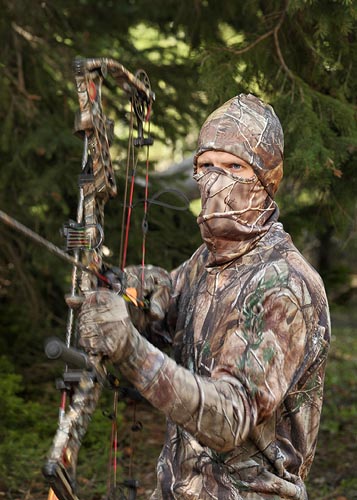
Stealth in Hunting: Be Invisible

bowhunter_1

Stealth in Hunting: Being Invisible

In hunting, it’s not enough to be stealthy; you must be INVISIBLE!

These words echoed in my head last year while bowhunting. It occurred to me that being stealthy–or super-sneaky–isn’t enough. You must move through the woods in a way that you are completely undetectable. But what does it mean to be invisible?

Being invisible requires 100% control over your presence in the woods. This is especially critical when hunting giant muley bucks (aka super-bucks or mega-bucks). Big bucks are infinitely smarter than little bucks, not allowing even the slightest amount of hunter pressure. Heck, half the time these bucks explode out of the woods and THEY don’t even know why!

Seriously, if you’ve spent any amount of time hunting monster bucks, you know what I’m talking about. Last year I had a 180-class get up and leave the area simply because a squirrel fired up ahead of him.

I’ve divided my invisibility management techniques into three categories: scent, sight, and sound:

Scent Control

Scent is always number one. Many hunters don’t realize just how sensitive the giant snout of a deer is. More deer bust out ahead of you, not because they’ve seen you but because they’ve smelled you. The first rule of invisibility means you hunt with the wind in your face. Otherwise you must adjust your approach or back out completely.

Scent control doesn’t just apply to wind direction, but to your person and property. While walking through the brush your clothing/footwear is leaving behind scent molecules on the ground, foliage, and everything else that you touch. Whether you’re aware of it or not, deer eventually figure out every place you’ve been in the woods just by sniffing around. That’s why it’s so easy to blow out an entire area just by being there, hidden from view or not.

Last year I sat briefly on a rock outcropping to rest and scan the hillside. I moved 100 yards farther and sat again. Pretty soon a little 2×2 buck came along the same route. He stopped at the rock outcropping and sniffed the ground, then immediately jerked his head up and stared in every direction before briskly moving away. I couldn’t believe how easily he picked up my scent!

To manage scent–or just to feel better about it–I use scent killer spray every morning before heading out. It’s especially important to spray down the entirety of your boots. Still, you should avoid any unnecessary trips through woods or feeding areas where you suspect big bucks will travel, even at night.

TP

And then there’s everyone’s favorite subject: urination and defecation! Inevitably you’re gonna have to leave a surprise in the woods, and with any luck the urge will hit you right smack in the middle of your “prime” area.

So what do you do? Wrap up your presents. What I mean is, get your goods underground no matter what. Whenever possible I look for the biggest rock or boulder I can find and roll it over. In it’s void I’ll leave my goods, then return the rock to it’s original position. (Uh, it’s easier than packing a shovel.)

Another good strategy is to find a ground squirrel’s hole (quite common out West). Funnel your surprises down there, and then cover it up. This stinks for the squirrel, but pre-dug holes are very convenient for the hunter. When hunting prime areas I’ll sometimes carry a urination bottle and pack my secrets out with me. Your only other option is to take a side trip to another part of the woods (preferably where your buddies hunt).

Sight

Assuming a buck hasn’t picked up your scent, the next biggest threat to invisibility is sight. Don’t think just because you’re fully camo-clad that the deer can’t see you. Camo or not, deer’s eyes are specially designed to pick up the slightest movement. But there’s a trade-off: deer can easily see normal movement, but are almost blind to very slow movement.

I tested this in 2013 while stalking a cow elk bedded facing me. There was no other approach according to the wind, so I elected to walk straight at her in super-slow motion. Somehow, over the course of three hours, I got within bow range in the semi-wide open! Unfortunately, it took so long to close the distance that she finally unbedded and fed away before I could get a shot.

Next, keep to the shadows. If a deer is facing the sun–as they often do when bedded–their pupils are adjusted to brightness, and shadows become nearly black, or invisible. I got caught last year in the open by a good buck that bedded down facing me at 60 yards. Fortunately I was in the shadows and the buck never knew I was there. A basic understanding of light dynamics is helpful in remaining invisible.

I’m no gear-nut, but with regards to camo patterns I tend towards high-contrast camo because it breaks up my human outline more effectively than semi-solid patterns. Whatever camo you choose, be sure to match the type of terrain you’re hunting.

Lastly, whenever possible enter your prime hunting area before first light. Now, deer are mostly nocturnal and see just fine at night. So a wide open approach is a no go. That being said, deer feel much more secure at night and will be more forgiving of the inevitable sights and sounds you do make.

Sound

This is fairly obvious. Assuming you’ve used the wind for scent control and stayed out of view, human noise is your next obstacle. Human noise is always present simply by existing. Not only is breathing, sneezing, and coughing a constant threat, but you will  always make some kind of sound with every single footstep  or arm movement.

To remain audibly invisible I only wear soft- and thin-soled boots. If that’s not quiet enough, I’ll take my boots off and stalk-in-socks. I also lean towards tight-fitting clothing and soft fabrics. If I have to open a zipper or button, I’ll muffle it with my fingers or gloves. To avoid unnatural “clanks” on your bow and gear, tape moleskin over  any plastic or metal parts such as your bow, quiver arrow rest, backpack, and bino harness.

Use the terrain to your advantage. The quietest substrates to step on are soft dirt, wet ground, logs, and rocks. Whenever possible I hop from rock to rock, or soft dirt and logs. One advantage to having ground squirrels in abundance is the soft dirt mounds they  create everywhere on a daily basis.

Especially important is the use of cover noise. Surprisingly, the woods can quite noisy at times. Timing your footsteps with natural sounds (or even unnatural sounds) such as wind, planes, flying grasshoppers, squirrels, birds, and other animals, provides plenty of options when you need to get one step closer.

The deer themselves can make quite a cacophony. Deer ears are much easier to fool when they are feeding, fighting, or raking a tree. In crunchy snow or dry leaf situations I’ll actually use the deer’s footsteps to mask my own. As an aside, watch the deer’s ears whenever possible and time your movements for when it’s ears are swiveled away from you. It’s not foolproof, but it helps.

Finally, keep your camp quiet! Avoid music, door slamming, unnecessary driving around, and drunken yelling. And whatever you do, don’t make a big, smelly fire! There’s no point in announcing your presence at camp and then try ghosting your way through the woods the next day.

Conclusion

In conclusion, when hunting super-bucks it’s not enough to be stealthy; you must remain invisible. Each time you venture into the woods, make it a goal not to exist. There are far too many variables working against you already. Don’t become a variable yourself.

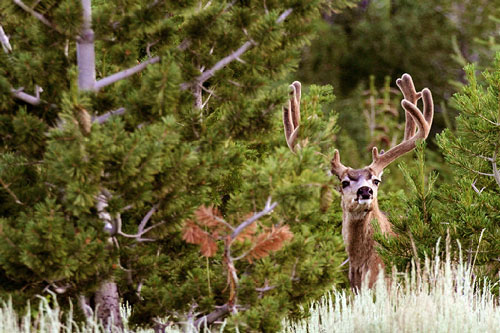
Deer Hunting: Five Levels of Alertness

mule-deer-1

Deer Hunting: Five Levels of Alertness

Novice hunters think there are two kinds of deer: spooked deer and un-spooked deer. What they learn over time is that there are many different levels of alertness.

If you get a chance to watch a relaxed deer in his summertime routine, you’ll notice that his ears are low, his eyes are calm and staring straight ahead, and he holds his head in a low and relaxed fashion. An alert buck is the opposite: his eyes are wide, his ears are forward and his head is erect and staring. Now, somewhere between these two opposites is where bucks reside most of the time.

As opening day rolls around, the majority of bucks already know it before the first shot is fired. They’ve heard the trucks and ATVs rolling in and can smell the campfires. Even before hunting season, a buck’s internal clock alerts him to impending danger of upcoming hunting season just by the angle of the sun. Any buck who has survived a few hunts knows that danger starts showing up at the beginning of autumn. Even worse, if there are lots of natural predators around—like cougars and coyotes—then a buck is already living in a state of high alertness at all times. This makes them even more difficult to hunt.

On high-pressured public lands, big bucks live full-time on a heightened level of alertness. Therefore, an accurate assessment your target buck’s alertness level will dictate your approach. For example, if a buck is bedded and alert, then you must be more cautious than when he is dozing off.

Over the years I’ve developed a rating system for assessing a buck’s different levels of alertness. A level 0 means the buck is carefree and happy with no pressure from predators. A level 5 means he’s turned inside out and running for his life. Your job is to figure out what level the buck is on, and adjust your approach accordingly. The following is my alertness level assessment system:

Levels of Alertness in Deer

Level 0

Level 0 is very rare, and basically means the buck isn’t alert at all. This only occurs in totally unpressured areas—such as unhunted private property or very remote country. It can also occur pre- or post-hunting seasons after the buck has calmed down and is in a relaxed routine. Level 0 also assumes that there are very minimal natural predators in the area.

Level 1

The hunting season has begun, but the buck is bedded in a far-away, secure area with the wind at his back. His eyes are closed, ears are pinned back, and he’s chewing his cud. Or maybe he’s sleeping with his chin flat on the ground. Otherwise, he’s up and feeding with a small group (for security). His head remains buried in the bush for long periods of time and he expects little or no threat of danger. Or perhaps he’s completely pre-occupied while rubbing a tree or sparring with another deer in a pre-rut state and doesn’t bother to look around for danger. This is an ideal situation for a stalk.

Level 2

The buck is bedded but his head is up and watching for danger. He may have heard or smelled something, but he’s not 100% sure. Maybe there are predators in the area. Or maybe he’s feeding sporadically and lifts his head frequently to scan for danger. Also, any buck that’s on the move–like when he’s traveling to a bed or feed—will be on a level 2 (or above) because deer are always alert when traveling.

Level 3

This is an alert buck scanning for danger. The buck heard, smelled, or saw something out of the ordinary. He’s staring in a particular direction for a prolonged period of time. This is often the case when a squirrel fires up, when forest birds go silent, or when there’s increased road noise in the area. He might be standing up in his bed to have a look around. His head is high and his muscles are tense. In the back of his mind he’s planning the safest possible escape route. However, if the threat doesn’t materialize he’ll likely go back to bed or feed.

Level 4

The buck is tense and ready to bolt. His eyes are wide, head is high, and his ears are pinned forward. A hunter who has sky-lined himself—even at a great distance—almost always triggers a level 4 response. Or maybe he caught your movement or scent, or heard an un-natural sound nearby, like the clanking of an arrow or a breaking twig. Either way he’s not sticking around. The hunter is pinned down and unable to move. If you can’t get a shot soon, he’s gone.

Level 5

The buck explodes from his bed at close range, scaring you half to death. It’s all over; dust and butts are all you see. The buck saw or smelled you and confirmed the danger. He probably hunkered down in terror at first—until you were almost on top of him—his nose twitching, eyes watering—then blasted out of bed. He’ll likely run non-stop for a mile and you won’t see the buck again this season.

Final Assessment

In the future I urge you to practice assigning levels of alertness to the bucks you encounter. It’s fun and can be a handy tool in judging a situation ahead of a stalk. When watching deer with my wife, I’ll frequently assess a deer’s current level of alertness. She probably thinks I’m some kind of obsessive buck-nut, but I find it helpful nonetheless.

Trophy Hunting: Good or Bad?

mule-deer-5

The Ethics of Trophy Hunting

I’m a trophy hunter. On average I spend around 25 days per year beating myself up in the mountains just for a shot at a giant trophy buck. Most years I come home empty-handed, but what can I say; I just love hunting giant bucks! In this article we’ll explore the pros and cons of trophy hunting.

Trophy hunters sometimes get a bad rap, especially from non-hunters who sometimes refer to us as “head hunters.” Their assumption is that we hunt down and kill these majestic critters in cold blood, and then saw their head off and go home. This might be the case for a misguided few, but the hunters I know value the meat as much as the head.

This negative attitude isn’t just held by ignorant anti-hunters, but by other hunters as well. I was conversing with a fellow hunter once about the decline of big bucks over the years. Knowing that I was a trophy hunter he said, “Well, if people wouldn’t shoot all the big ones, there would be more around.” At first I thought he was kidding, but he wasn’t. I responded, “Isn’t that the point? To take the biggest buck you can?” I don’t remember his ignorant response.

A Case for Trophy Hunting

Aside from the large quantity of meat that trophy bucks provide, I don’t think there is anything more beautiful and majestic as a trophy mule deer buck with a massive rack. And since I only get to hunt one deer each year, why not make it something special?

But the best part of chasing trophy bucks with a bow is the extreme challenge it offers. Nothing tests a hunter’s skills like chasing trophy bucks on public land. The reward is so great that I won’t even think about pulling an arrow until I’ve verified a genuine superbuck. Each year my mantra is “One tag, one year, one superbuck.”

A while back I began pondering the ethics of trophy hunting. What were the pros and cons of trophy hunting? Is it more helpful or harmful to target trophies? As it turns out, trophy hunting is very beneficial, not only to deer herds in general, but to non-trophy hunters as well. Here’s what I discovered.

Trophy hunting does the following:

  • Provides more meat to fill the freezer and feed the family. Trophy heads come with trophy bodies and that means lots of venison. A mature buck weighs twice as much as a yearling.
  • Removes old, declining, and territorial bucks from the herd. This in turn allows more opportunities for young buck to reach maturity.
  • 80% of bucks five years and older will die of old age, not hunter harvest. Since these bucks are essentially unhuntable for the average hunter, then the trophy hunter doesn’t compete directly with non-trophy hunters.
  • Even veteran trophy hunters fail to harvest a trophy buck more often than not. Because trophy hunters aren’t shooting as many deer, it leaves more animals in the field which in turn provides greater opportunities for other hunters.
  • Trophy hunters spend more days afield than the average hunter. This equates to a richer hunting experience, in my opinion. This is probably the best part of being a trophy hunter.
  • Don’t be a “baby killer!” Being a trophy hunter means you’re not killing yearling or two -year-old bucks. Unlike older bucks, young bucks haven’t learned the art of evasion, so killing them isn’t really “fair chase” in my opinion. Several years ago there was a kill-anything mentality around our elk camp. On the last day of the season I had a young elk calf walk by at 20 yards. I drew my bow, but after looking at his cute, fuzzy face I just couldn’t bring myself to release my arrow. I got some razzing back at camp since “calves have better meat,” but shooting babies doesn’t seem fair to me.
  • Let’s not forget the greatest benefit of trophy hunting: A big, beautiful rack displayed on the wall in magnificent glory to serve as a life-long reminder of an unforgettable hunt! Nature really makes the best art.

Conclusion

In the end I can’t think of a single disadvantage to trophy hunting, well, aside from frequent failure. But oft-found failure is easily overshadowed by the occasional harvest of true monster-buck.

Happy trophy hunting this year!

New Year’s Goals Part 2

2016 New Years Goals Part 2

My brother. Russell, had some great comments regarding hunting goals. His comments and my reply are worth noting here.

Russ wrote:

“Making goals that you really set in your heart and are realistic is critical. My heartfelt goals this year were to help my daughter harvest her first big game animal. She harvested both a buck and an elk. It was awesome. I was perfectly happy with how the season went, even though I did not set any lofty goals for my own hunting, as I was concerned about the time dedication. I did manage to harvest my best buck to date, although that’s not saying much. Gotta really think about my goals this coming year. Might be time to harvest a really decent bull elk.

I think you’ll get it done in Utah this year. But i am curious, which state(s) are you going to add to your schedule that will still allow you the time you need for the Utah general hunt?”

I wrote :

Good points, Russ. Here’s some clarification:

Last year I set a goal to shoot a 200″ buck AND help Esther with her limited-entry hunt. Turns out you can’t do both. So really I sabotaged my goal from the start. But that’s okay; I wouldn’t trade Esther’s big bull for any buck! It’s wonderful to help people. There’s nothing more noble than setting a goal to help someone with their goal, especially family.

My lofty goals are deemed ridiculous by most people; I mean, how can I expect to shoot a 200″+ buck on public land with a general tag?! Am I setting myself up for failure? Am I setting unrealistic goals? NO, because I’ve done it twice already and I know the secret recipe; unfortunately that recipe takes incredible resources, mostly time.

It’s important to realize that in setting a ridiculously high goal you must do something every day to get closer to it: physical training, shooting practice, map study, scouting, scouting, and scouting. Most importantly is to acknowledge your goal every single day. Keep it in the forefront of your mind. Format your mind to focus all available  energy and decisions on your goal, and you’ll find a way to reach it.

As for out-of-state hunts, I only have one in mind: Idaho. I am a man of big vision, but modest means; a po’ folks po’ folk. For this reason I refuse to pay into the yuppie system of buying points in multiple western states, especially while Utah has such great bucks, even on publc land/general units. In my opinion the point system is evil. It might seem fair on the surface, but it really takes away opportunity from young hunters and new hunters, while catering to the rich. Many of my archery students ask me how they can get started in hunting. They assume they can just buy a bow and an OTC tag for any game species. Imagine their surprise when I explain they must pay into the system for decades just to draw a decent tag!

I paid into the system for years, earning points for multiple species for my son. Now he has no interest in hunting. Where’s my refund? My wife’s ex-boss’ dad paid into the system for 15 years and finally drew his moose tag. It arrived in the mailbox shortly after he died of old age!

That being said, I need more opportunities, and since Idaho is one of the only states that doesn’t have a draw system, it’s my best chance at getting a tag. Also, Idaho has several general deer hunts that don’t conflict with Utah’s season.

Congrats, Russ, on your biggest mule deer last year and good luck with your big bull goals. Dream big! Remember, elk are EASY!

To read the previous article, click on:

New Year’s Goals Part 1

Happy New Year 2016

Happy New Year

Thank good golly goodness 2015 is over!

Actually it wasn’t that horrible, but I sometimes I get accused of being overly critical. Call me a pessimist, but accepting mediocrity with a smile can only be detrimental to my lofty goals.

I entered 2015 with one goal: to shoot a 200″+ mule deer buck with a bow. It didn’t happen. I failed for three primary reasons:

  • First, because there are too many hunters vying for too few tags, I drew my last choice unit and lost hope from the outset.
  • Second, because of my busy work schedule I didn’t bother to scout my 5th choice unit. Work should never be an excuse for failure!
  • Third, I spent half of the general hunt helping my lovely wife with her Limited Entry elk hunt in Southern Utah where I didn’t even carry a bow.
  • Last of all, I entered the Wasatch Extended Hunt, where I’ve never even seen a 200″ deer, and failed there too.

So 2016 will be different. I’ve mentioned many times here that SUCCESS IS A DECISION. Last year, while wandering endlessly down an empty game trail, an annoying inner voice insisted that success is NOT a decision; that there are simply too many variables working against me, and so I can’t make that decision. By the time the season ended, a stronger voice confirmed that success is in fact a decision, but only if you are willing to do whatever it takes. That means putting in the time and effort worthy of a 200″ buck. I realize now that I didn’t do this.

So, this year I have only one resolution: to harvest a 200″+ muley buck with my bow. Here’s I will make it happen:

  • I will decline any and every job/work/responsibility that conflicts with my deer hunt.
  • Whatever crappy unit I end up drawing, I will scout every single week starting in summer and leading up to opening day. I’ve always believed there’s a huge,  200″ buck living in every single unit of the state; you just have to find it.
  • And finally, I will hunt out-of-state. The problem with Utah is you only get one tag and one opportunity. Giant bucks require more opportunities.

That’s all folks. I hope y’all are setting high sandards for this coming hunting year. Remember, success is always a decision, but only as long as you are willing to do whatever it takes.

P.S.  You can expect much more new and exciting iformation here in 2016. Last year I received tons of hunting insights and revelations. All of this will be shared here in 2016.

HAPPY NEW DEERS!