
Coues Whitetail Hunt: A Seven Year Quest
Early Encounters
From across the valley I watched a very nice Coues buck chasing a hot doe into a clump of trees where they bedded for the day. I didn’t dare make a stalk over crunchy ground, and elected to wait them out. But they never emerged and with only two hours of light left, I crept within bow range of the trees. As I lied in wait, another fine buck came creeping down the hillside with his nose to the ground, following the same trail the doe had been on six hours earlier. When the buck paused at 55 yards I shot. The buck jumped clean out of the arrow’s path and looked back. I was ready and sent a second arrow streaking his way. He jumped again, this time trotting away unscathed.
That was in 2023, my fourth year hunting the “gray ghost” of Arizona. I’d heard the rumors and read about these notoriously spooky deer, but now I’d seen it for myself. Famous bowhunter, Chuck Adams, once referred to Coues deer as “America’s most difficult big game animal to hunt.”
The wariness of the Coues is attributed to the fact that they are hunted relentlessly by mountain lions, coyotes, people, and even Mexican gray wolves. To compound the difficulty, I was hunting general units with OTC tags and never really found an area with any densities; just an occasional lone buck that always gave me the slip. But I wasn’t discouraged; I just wanted one even more.
What is a Coues Deer?
Named after the man who discovered them, Coues whitetails are a desert-dwelling sub-species of the common Eastern whitetail. Their range extends through Arizona, New Mexico and Old Mexico. They are North America’s smallest deer with mature bucks weighing 100 pounds or less, which is about half the size of the venerable mule deer buck. This also means your target kill-zone is half the size.
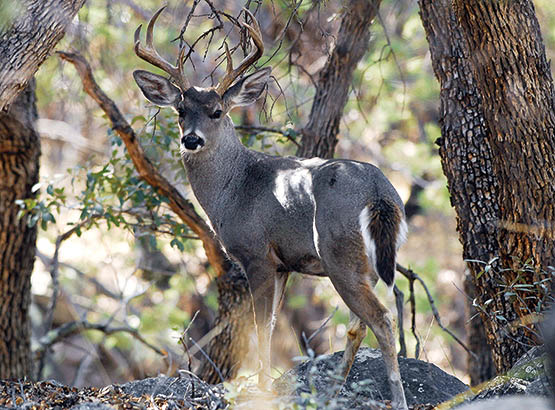
The only advantage bowhunters have with Coues deer is the timing of the rut, which starts in December and peaks around mid-January. During the rut big bucks climb down from their secret haunts and troll for hot does in more accessible areas. Bucks will scratch out scrapes below licking branches, just like Eastern whitetails. They also respond moderately to grunt calls and rattling.
A New Hope
As fate would have it, my brother Brent was scouting for elk in a remote part of Arizona that same year. While hiking to a glassing point one day he bumped into a gigantic Coues buck: a ridiculously old, heavy-antlered buck with long points and eye-guards. The buck took one curious look at him and then sauntered off without a care. It was obvious this buck had gone his whole life without encountering a person.
Until that time, Brent hadn’t given much thought about hunting Coues deer. But with the sudden prospects of a world record, he planned a hunt the following year. Surely this remote land of unpressured bucks would yield a true trophy.
In 2024 Brent and his daughter Maddy returned to the area while I was hunting javelina in a different unit. They spent several days chasing mature Coues bucks. Ultimately they both got shots, but didn’t connect. When I got into cell service, Brent convinced me to drive several more hours to join him for the last two days of the hunt.
The first day I didn’t even see a buck until late evening after hiking down the ridge toward camp. When I looked back up the mountain, there were two bucks standing right where I’d just been. With 15 minutes of light left, I scurried up the mountain but they were gone. If there’s one drawback to hunting the rut, it’s that bucks are always trolling for does, rarely staying in one place very long unless there’s a hot doe present. The second day I only saw two younger bucks and the hunt ended.
Year #6
With high hopes I hunted with Brent in the 2024-2025 season. We pounded the mountain hard, but noticed very little buck activity. It was December and the rut was apparently running late. We were also racing against a rapidly diminishing deer quota. Arizona manages their general units with a quota system, which means once a predetermined number of deer are harvested, the unit closes for the season. Well, six days into the hunt the quota was met. Brent got lucky and arrowed a decent buck at the last minute, while I had no choice but to head back to one of my old units that was still open.
It was a rat-race from the start; too many hunters and too few deer. But I had a secret. Years ago I located a small deer herd living in a secluded canyon situated about 1500 vertical feet from the dirt road. Unless you knew exactly where to look, you’d never see them.
The next morning I made the grueling hike and right away spotted a great Coues buck dogging a doe on the steep hillside above me. But as I closed the distance, they moved up and over the ridge. Figuring they’d bed on top, I looped around and slowly filtered through the trees. Well, I got close—maybe too close. There was a short snort followed by a white flag waving goodbye as the buck strode away.
I spent the rest of the day exploring new areas to no avail. Whenever I got cell service, I called home but my wife didn’t answer. In fact she hadn’t answered for the last 24 hours, which was odd. That night I called again and she answered, but couldn’t speak. I threw everything in the truck and drove eight hours home to find her half paralyzed and unable to speak due to a major stroke. Long story short, we spent half the year in and out of therapy while I planned a seventh Coues hunt for 2026.
2026
There was sticky note in my planner left over from last 2025. It read: “Coues buck no matter what; do or die!” I pulled it out and stuck it in my new planner; same plan, different year. I pored over my old notes and drew up new strategies to conquer my nemesis creature. I raced to get caught up with work, and then three days after Christmas made the long trek to Arizona, vowing to stay as long as it took.
The hunt was tough from the start. The rut was late again, with very little buck activity. I rotated daily between known and unknown canyons and mesas, glassing and exploring as I went. The good news was I didn’t see a single other hunter in the woods. The bad news was the bucks were still scattered over a massive area, living in secret haunts away from doe groups.
In the few cases that I bumped into a buck, he wasn’t really spooked, having never seen a person before. Rather than snorting and running, he’d just move cautiously away while holding tight to the thick brush and trees. One time I bumped a shooter buck at 15 yards. I could only see bits and pieces as he moved off. I caught up with him again while crouching through a tunnel of thick oak brush. When I looked up he was peeking through the tunnel 20 yards ahead. All I could see was his head and then he moved off for good.
It was now a waiting game with the rut building momentum with each passing day.
Terrible Terrain
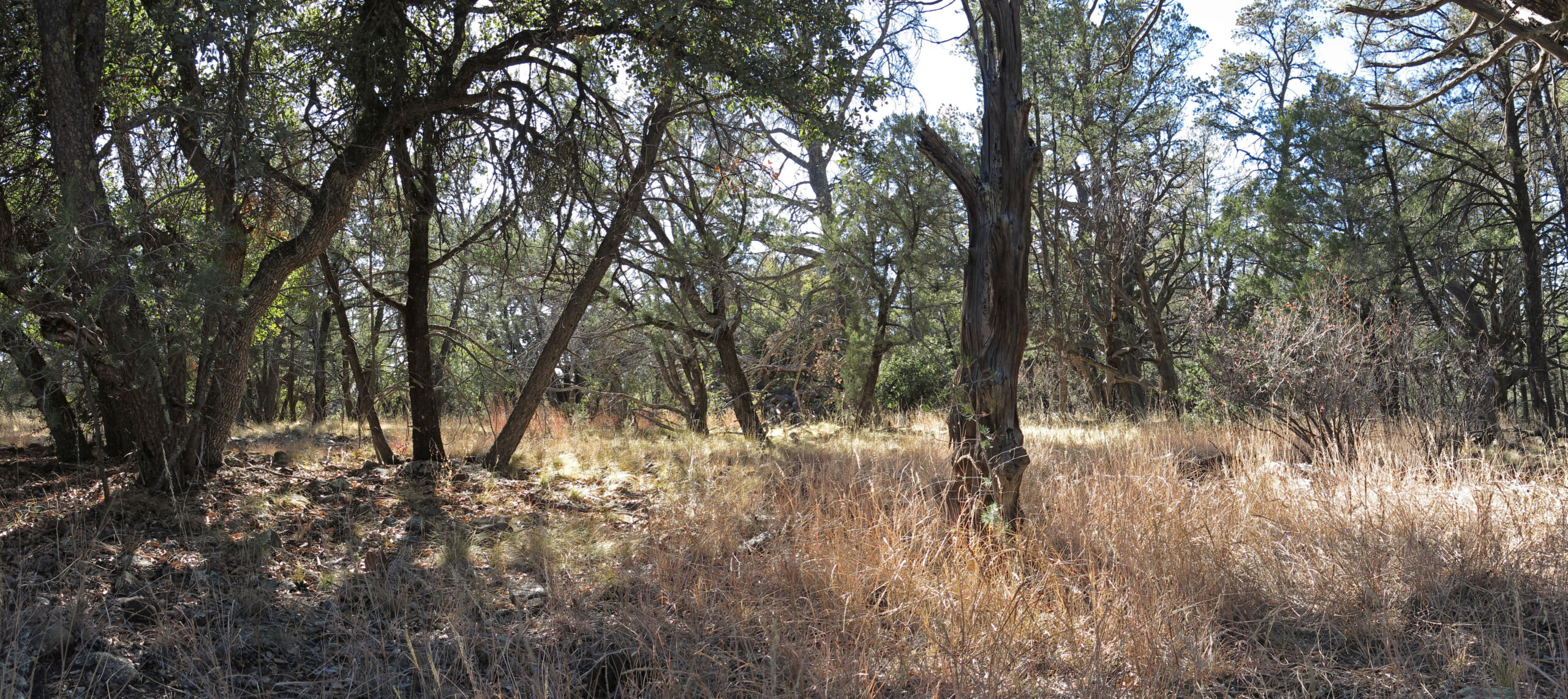
Arizona is the rockiest state I’ve ever seen. In our area the entire landscape is blanketed with loose rocks and small boulders. I like to keep my eyes up when hunting, but here you have to watch every step or you’ll roll your ankles continually. It’s the only place where I have to wear stiff-soled boots with serious ankle support. But even then, your knees get hammered for the first week or so.
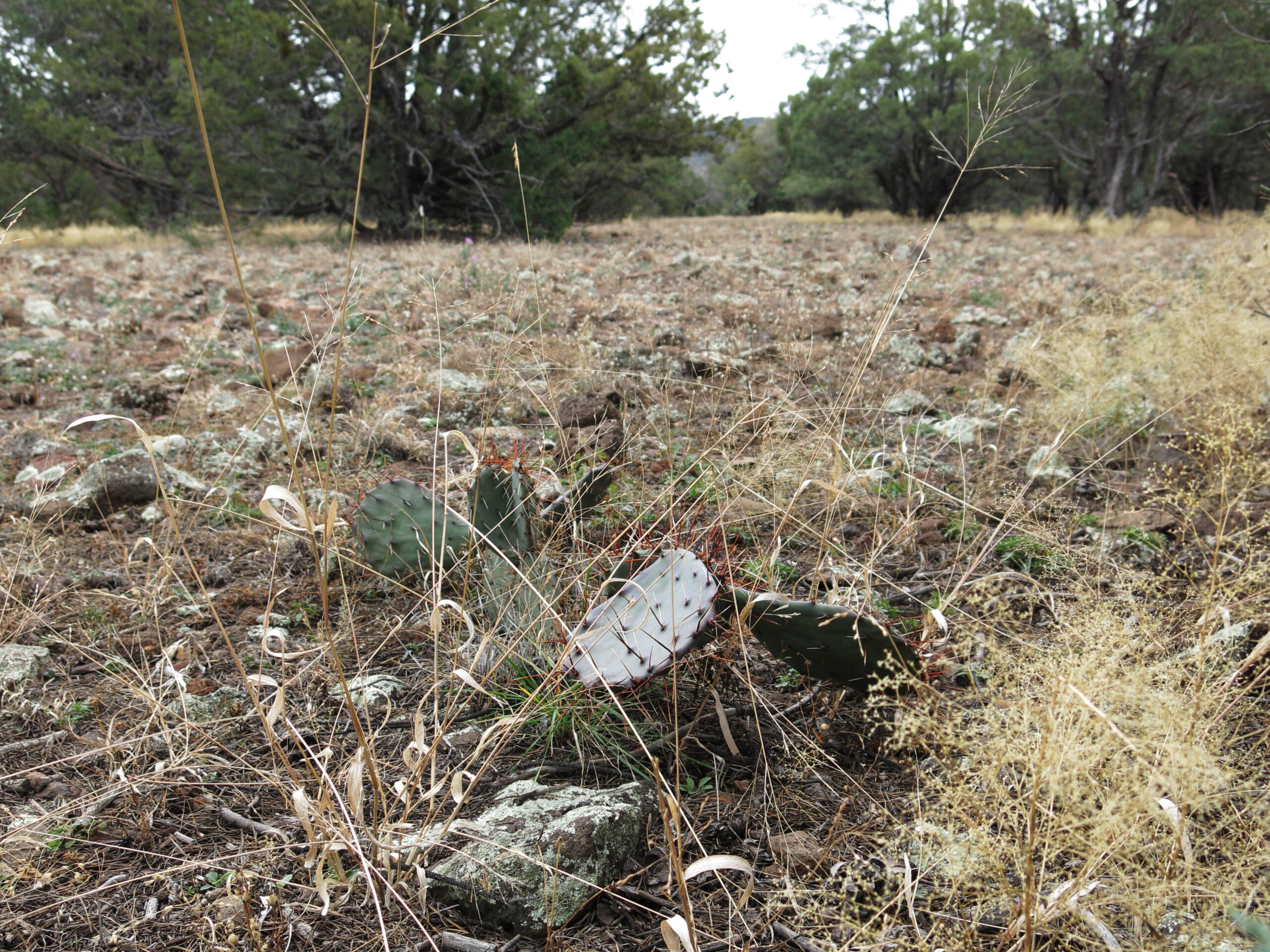
Then there’s the weird fauna….and I mean WEIRD!
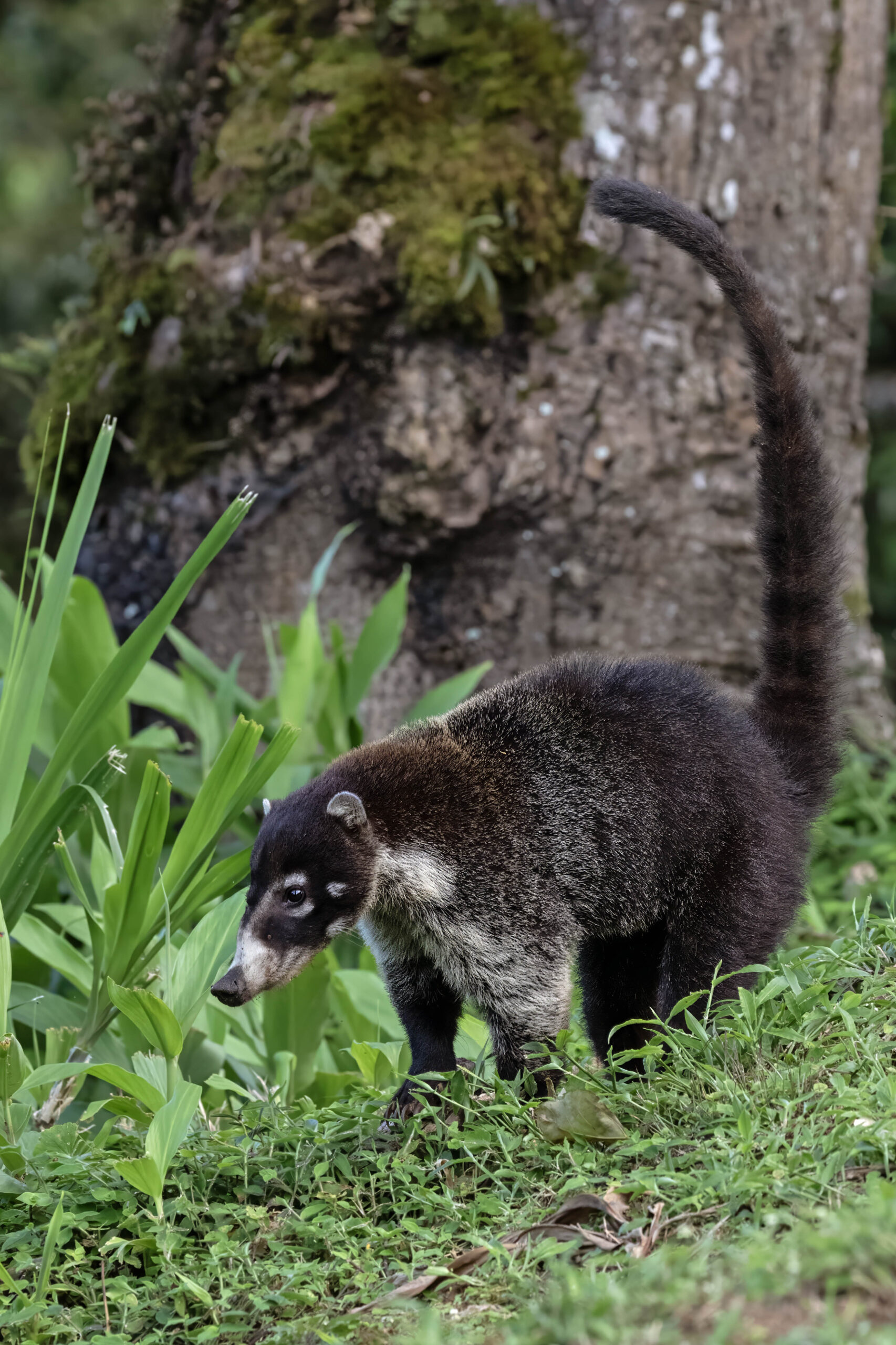
After falling asleep under a big juniper tree, I woke to a strange skunky smell blowing up from the south slope. I headed down the slope to warm up when I caught sight of a long, four-foot, black monkey tail moving fully erect through the brush. Through my binos I could see it was attached to a fuzzy animal resembling a giant raccoon with a long snout and tiny ears. I moved closer for a better view and spotted five of these strange creatures stacked in the lower branches of a tree. When they saw me they bailed out and scrambled away.
Later, Google told me it was a pack of “coati.” When I got back to camp I described the encounter to Brent. He was perplexed. How did we live our entire lives without hearing about these creatures before? What other strange animals are lurking in the woods that we don’t know about?
Amongst the other foreign animals we encountered are collared peccary (or javelina), which is a pig-like animal with long bristly hair. Then there’s the big-eyed, tree-dwelling ring-tailed cat, which is the most adorable animal imaginable, that is, until it raids your food supply, tears up your garbage, and eats your hanging deer quarters at night.
Less strange, but just as exotic, is the Coues deer itself, which is the most elusive and frustrating animal a person could hunt. Even the less spooky variety always seem to slip away at the moment of truth. And finally there’s the Mexican gray wolf. I’d never seen a wolf in the wild until one day when a single wolf came trotting down a game trail, looked at me and trotted away. Meanwhile, Brent had a whole pack of wolves move into his secret area overnight, just as the rut was picking up, driving all the deer out.
Day #8
Beat down by the daily trudge, I decided to ambush a known deer route from beneath a juniper tree. I’d been sitting and writing in my hunt journal for a while and decided to throw out a random grunt call. Just after grunting I happened to look behind me and there stood a fine Coues buck at 30 yards. He just stared at me for a few seconds and then walked by as if I wasn’t even there. My heart raced as I froze in place and judged the deer’s rack. He didn’t know what I was or why I was grunting, but clearly didn’t register me as a threat. Unfortunately he wasn’t the buck of my dreams, so I just watched him amble out of sight. And with that, I knew the rut was finally on.
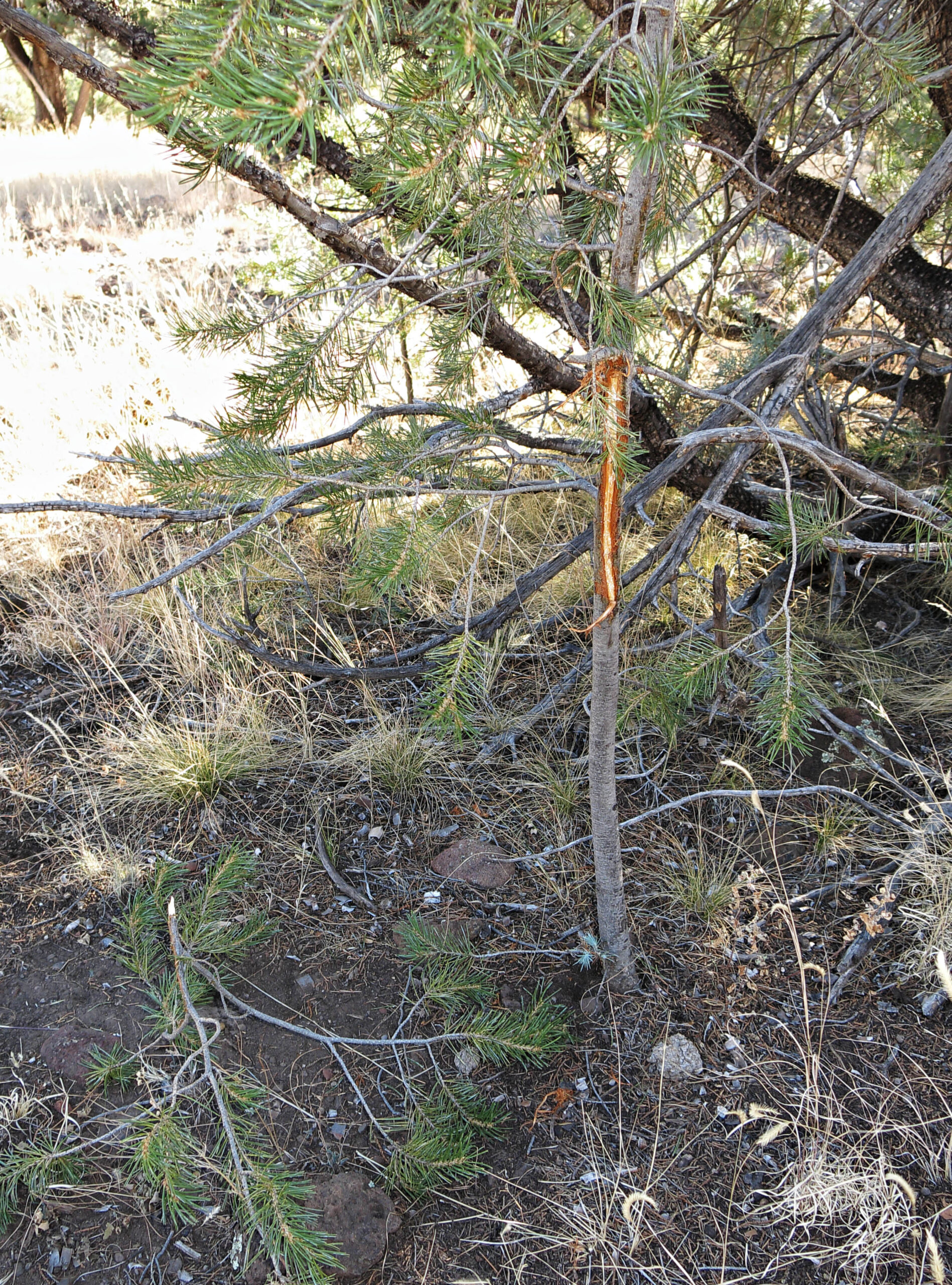
I was full of anticipation as I hiked up the mountain on January 10th. I was still-hunting along a ridge when I saw something out of the corner of my eye. A magnificent buck was bedded in the wide open 50 yards away with some does that I’d busted earlier that morning. I knelt down behind a nearby shrub and pulled an arrow, but the deer got nervous and moved away. I tried to follow but they gave me the slip in the dense trees.
The next day was a total rain out that turned to snow over night. Inspired by recent rut activity, Brent tried to hunt but came back to camp empty-handed and a soggy mess.
Day #12
Twelve days in and I was ready to cut my losses. The mountain was blanketed in snow as I made the slippery trudge up to one of my favorite areas. As I neared the top, a great buck—the same one from before—stood up from a bed and melted into the trees. I loaded an arrow and crept forward. Tracking was impossible as the deer had torn the place up overnight and he gave me the slip. I continued on with no luck and then back-tracked. As I rounded a tree, I ran face-to-face into the buck. This time he snorted and blasted down the mountain, apparently tired of my chase. Again I wandered back up the mesa.
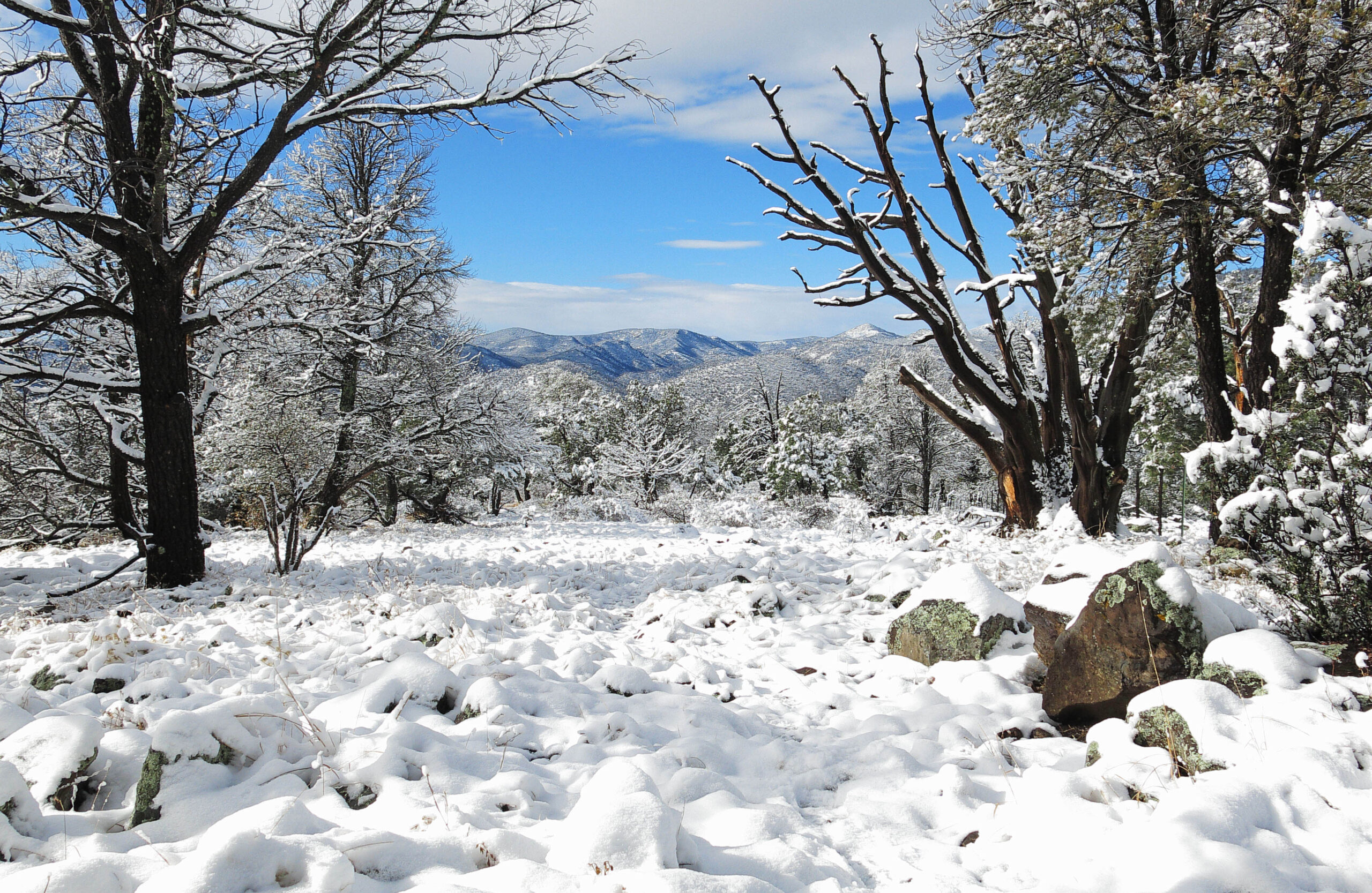
I’d gone a mile or so and was growing tired of the trudge and disillusioned by twelve days of bad luck. Out of ideas, I turned back towards camp. As I rounded a juniper tree, I ran smack into a new buck with long main beams. He pranced away without looking back. In desperation I pulled an arrow and made a series of grunt calls. To my surprise he came poking back, weaving through the thick trees. I continuously ranged him, but there was no shot.
Gradually he came to 40 yards before hanging up with only his head visible behind a tree. When he didn’t see another buck, he got nervous and turned back. I scanned frantically ahead for a shot window and spotted a 20 foot gap about 50 yards away.
I was at full draw when the buck broke the clearing in full stride. I grunted with my mouth and when he stopped I quickly settled my pin and released my arrow. There was a distinct WHACK, and the buck mule kicked before exploded out of sight. I knew he wouldn’t go far.
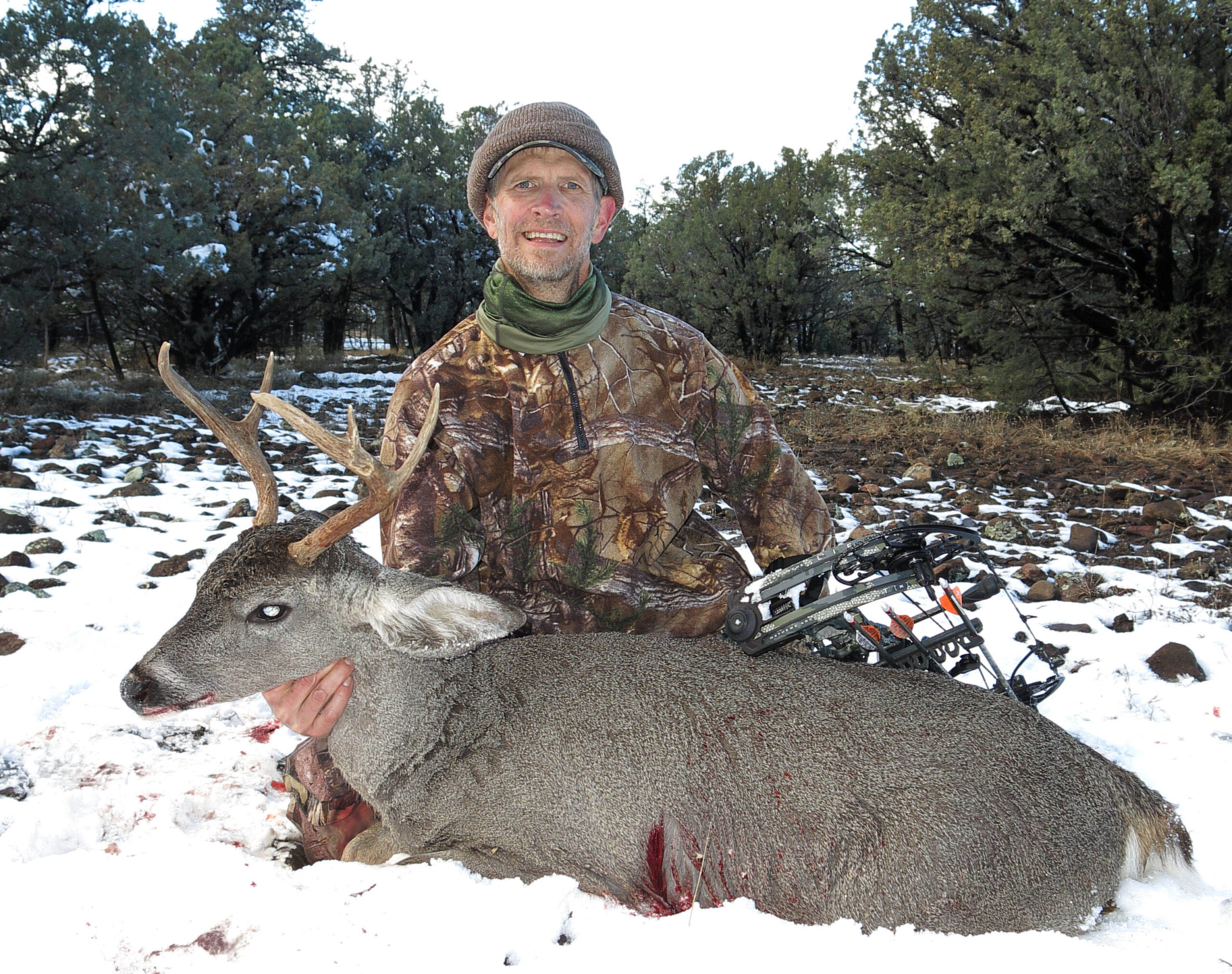
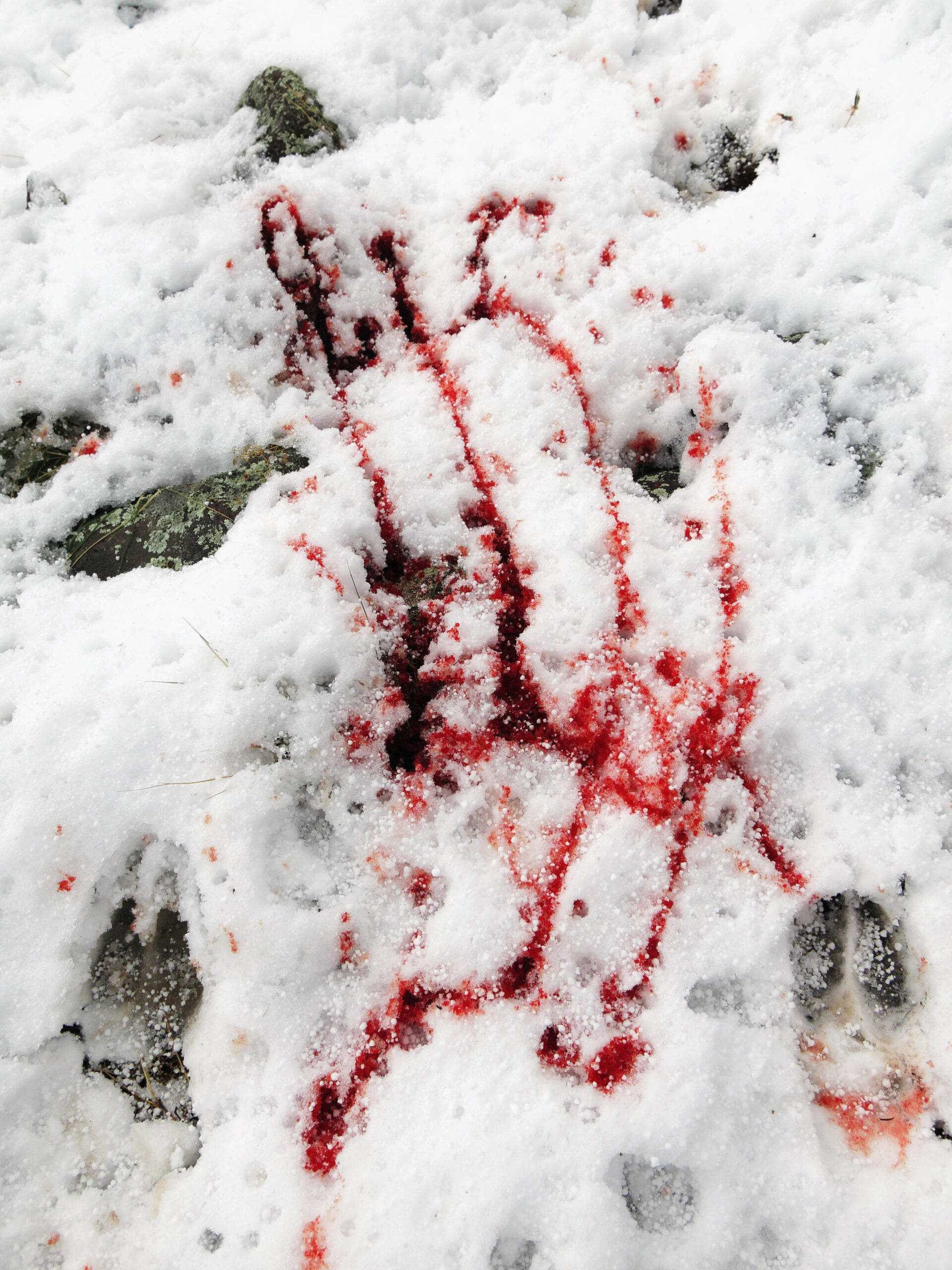
It was the easiest blood trail I’ve ever followed. The arrow made a full pass-through and blood was streaked across the snow in all directions. Less than 100 yards later I found him sprawled out in the snowy rocks. I sighed the sigh I’d been holding for seven years and knelt in gratitude for the harvest before me.
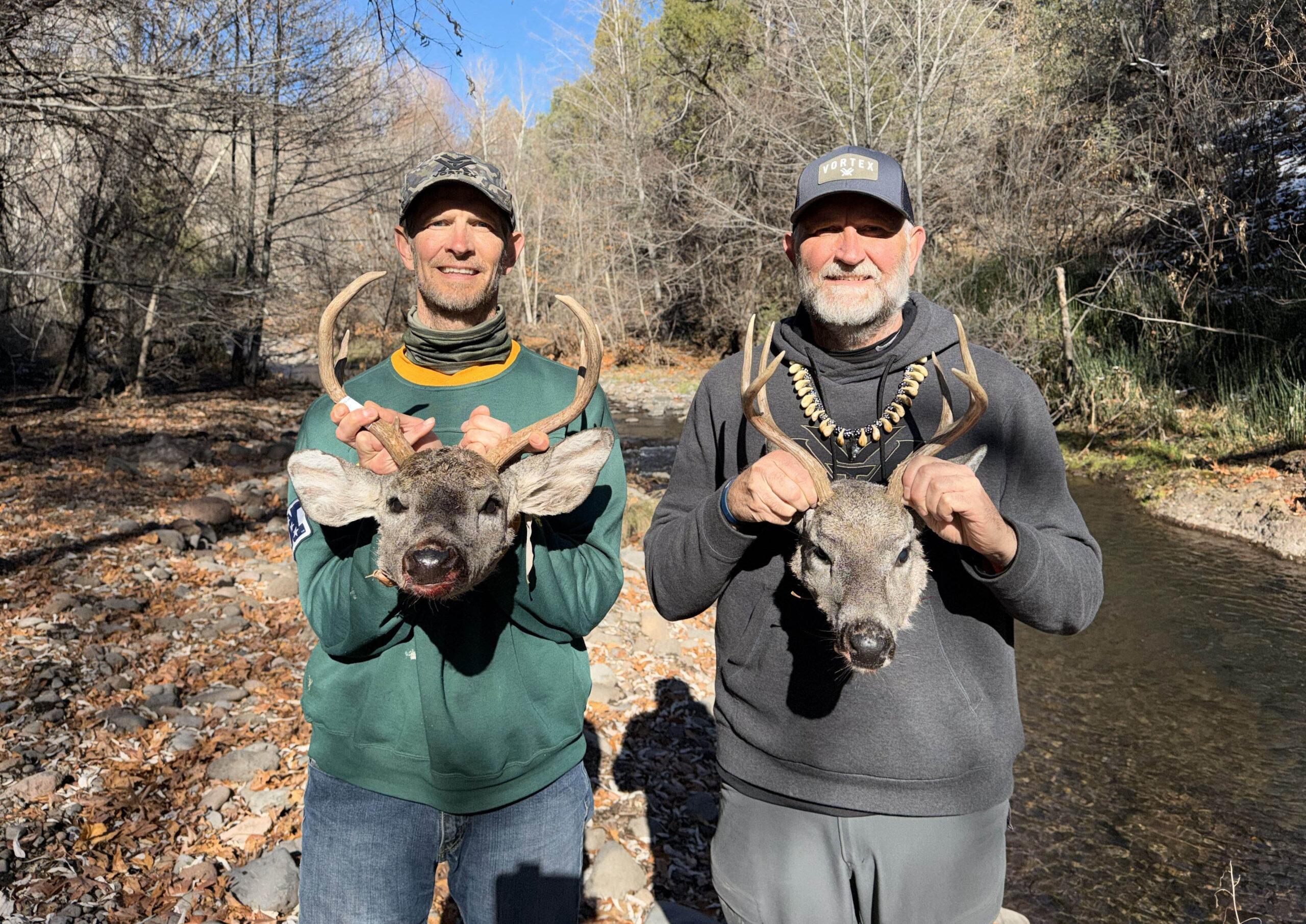
My buck was an older-class deer with the tell-tale thick hair tuft on his forehead. He had long main beams, but only sported a handful of points due to poor genetics. Certainly there were better-framed deer around, but I was tickled nonetheless. It just gave me more incentive to return to the wondrous landscape of Arizona’s backwoods to chase the gray ghost next year.
Incidentally, Brent arrowed a fine buck right about the same time I did. We certainly put in the time and earned our deer this year.
I hung the meat overnight and returned the next day with my frame pack. To my surprise I bumped into the same big buck from previous days, and once again he wandered off without a care. Perhaps we’ll meet next year when he’s even bigger.
Advice Column
To conclude I’d like to offer some advice to my fellow Coues brethren:
First, get away from people. Deer hate people more than anything and grow exponentially difficult to hunt with pressure. Look for areas far away from population centers and you’ll find deer that have never been hunted before. Phoenix is the 5th most populated city in the nation, but Arizona is big with large tracts of undisturbed backcountry.
Second, Coues hunting is difficult no matter where you hunt, but if you are patient and put in the time, you’ll find success. Patience, time, and perseverance are the keys to any bowhunting success.
Third, use the rut to your advantage. Find doe groups, and the bucks will surely appear. Target the peak of the rut (usually mid-January, although it can vary depending on latitude) and avoid hunting too early or late in the season. Hunting during December was my biggest mistake over the years. Also, bring a grunt call; it could make all the difference. I haven’t tried rattling, but I’m sure it’s just as effective.
Fourth, locate all watering sources. Rut bucks need water almost daily and tend to hit water during daylight hours. Ambush hunting over trails or water isn’t my preferred method, but if you’re patient, it can be far more effective than still-hunting for wary Coues deer.