How to Bowhunt Javelina: Tips and Tricks

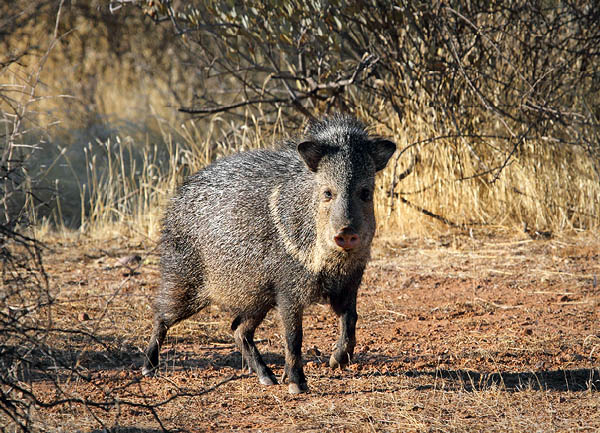
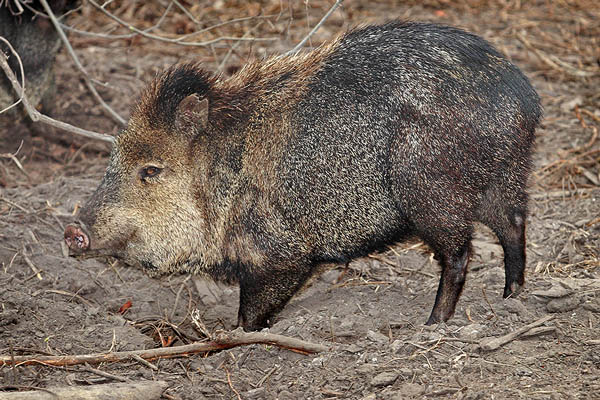
Javelina, aka collard peccary.

Bowhunting Javelina

A long, cold winter can be a dreary time for a committed bowhunter. But it needs not be. Lurking around the cactus and brush of the American Southwest desert is a fascinating creature that many people have never seen before. This coarse-haired, pig-like creature is the collared peccary, more commonly known as a javelina.

He stands about two feet tall and three feet long, and weighs between 30 and 60 pounds. He’s a clever, secretive creature that offers a fun and exciting challenge to any bowhunter.

The javelina is common enough in places like Arizona to procure a tag at least every other year. Best of all, most javelina hunts occur in the dead of winter, making it an ideal wintertime activity.

When and Where

Javelina are found sparsely over desert landscapes varying from 2000 to 5000 feet in elevation. It can take a while to locate them these small animals in the vast desert, so be sure you allow enough time to get the job done. I wouldn’t consider a hunt less than five days long.

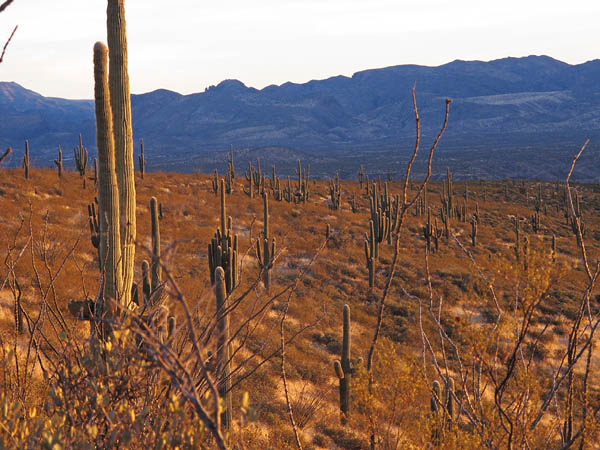
Typical javelina country at 2500′.

For the novice javelina hunter, the near-sighted, unassuming javelina can be deceptively difficult to hunt. Like other “big” game animals, javelina are highly skilled at evading predators. Bowhunting success hovers around 25%, so it’s crucial to learn all you can before heading to the desert.

General Info

Javelina rely on their noses, ears and eyes to detect danger. Although javelina have relatively poor eyesight, they are still adept at picking up movement, especially within bow range. Their sense of hearing is very good, but their sense of smell is excellent, so always approach from downwind.

Javelina are territorial animals with home ranges averaging one square mile, but this can vary widely from place to place. Javelina travel in herds commonly between 8 and 10, but sometimes more.

Adult Javelina.
Photo Credit: Fir0002/Flagstaffotos

Rarely will you find a lone pig. If you do, be on the lookout for others that could ruin your stalk. Occasionally you’ll find small bachelor groups of two or three animals traveling apart from the main group.

Habitat

Like many other prey species, javelina are most active in the morning and evening. In winter when days are cold and short, javelina spend more time up and feeding. It’s not uncommon to find javelina feeding or traveling as late as 11 a.m. In the evening they tend to unbed an hour or two before dark, so morning is your best bet.

Dug out bed and scattered droppings.

Javelina bed down together in large, dug-out beds beneath mesquite trees or rock outcroppings. Beds usually have piles of scat scattered around the outside. The freshness of the scat will tell you whether you’ve found an active bed or not.

Javelina droppings are easy to identify, like that of a large dog. Interestingly, javelina have the runs much of the time, so keep an eye out for that too.

Food and Water

Although javelina are classified as omnivores, they’re mostly herbivores, and their favorite food is cactus. Although they eat a variety of cactus species, their favorite is the prickly pear cactus.

Begin by locating areas with high concentrations of prickly pear. Look for cactus that has been torn apart, scattered around, and chewed up. From there, continue your search into brushy draws, washes, and river bottoms.

Prickly pear cactus torn up and eaten by javelina.

Despite the arid environment in which they live, javelina don’t visit water regularly. Instead, they get most of their moisture from cactus and other plants they eat.

Scouting & E-Scouting

Before heading to the desert for the first time, make sure you do a little research. Start by contacting the biologist over the unit to get some good starting points.

Next, check the state’s fish and game website for more information. Arizona’s hunting website has a “Where to Hunt” page with a helpful overview of each unit, including access points and biologist notes (www.azgfd.com/hunting/where-to-hunt). When hunting a new location, try to arrive a day or two early for scouting and glassing.

Spot & Stalk Tactics

Glassing south and southeast facing slopes early in the morning is the best strategy for locating javelina. Because they don’t have under-fur, javelina use the sun to warm up after a cold night. As the day begins to warm, glassing becomes less effective as the pigs head for cover and shade.

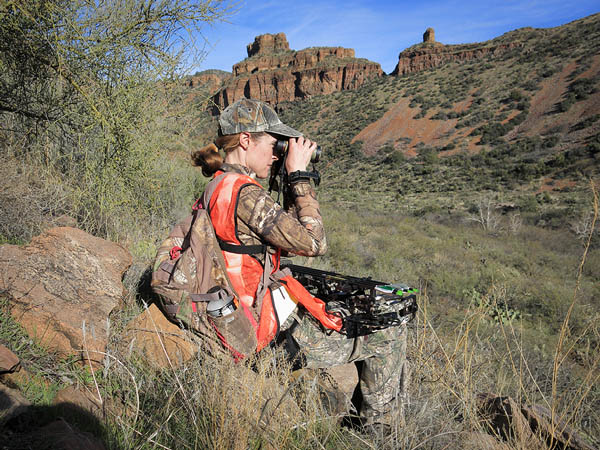
Esther glasses the brushy bottoms with binoculars.

Javelina are small animals that blend well with their habitat. A high-powered spotting scope on a tripod is far better than handheld binoculars. Always start your glassing from the highest vantage possible. Begin by glassing areas with plenty of cactus, and look for open hillsides above brushy draws or river bottoms. Javelina are mostly lowlanders and don’t spend a lot of time in steep country.

Once you’ve located a herd, plan your stalk based on two things: wind direction and the general direction the herd is headed. If it’s still early, the javelina will likely stay put, so you can take it slow and quiet. Later in the morning the herd is more likely to move during your stalk, so pick up the pace.

Sign and Tracking

The next step is to locate tracks, trails, beds and droppings. Javelina are creatures of habit and use traditional routes throughout their range. Locating trails is key to finding them. Trails rarely lead through the wide open, so begin your search in the brushy bottoms. On one occasion I unknowingly set my camp right next to a trail. Twice my wife watched javelina walk right through camp while I was out looking for them.

Javelina group tracks through desert.

Tracking is a great way to learn about javelina, like what they eat and where they sleep. Boars have larger, rounder tracks while juveniles and females have smaller, pointier tracks. If all the tracks you find are medium-sized with tiny tracks mixed in, then it’s likely a female and baby group.

Tracking is difficult in sandy or gravelly soil because it doesn’t hold detail well. But you can still determine the direction of travel by following the deeper, toe-end of the track which points forward.

When the track eventually runs into mud or hard dirt, you can make more determinations about the animals you’re following. Fortunately javelina travel in groups which makes tracking easier.

If you bust a group of javelina out of an area, there’s a good chance they’ll return after a day or two. In the meantime, keep moving. Javelina leave sign wherever they go. Watch for torn up cactus, beds and fresh scat piles. If the torn-up cactus is still bright green and wet, the javelina should be nearby. They also do a lot of rooting and digging, so keep an eye out for torn up ground.

Still-Hunting Tactics

During the day javelina can be found by still-hunting near bedding areas, especially around larger mesquite trees. Javelina have scent glands on their rumps which they rub on trees and rocks to mark their territory. When still-hunting it’s not uncommon to pick up their musky odor long before you see them. Just another reason to hunt with the wind in your face.

In areas with moderate to high hunting pressure, glassing can become futile. Once the animals are driven into heavy cover, you may never see them again. In the unit where I hunt, I’ve actually never seen a javelina while glassing. The animals always stay in thick cover and brushy bottoms, which makes still-hunting the best method for finding them. You just have to cover a lot of ground and follow tracks.

Ambush Tactics

Esther took this fine javelina as it traveled towards bedding area.

Ambushing heavily used trails, pinch-points, and active bedding sites is viable option. I’ve had best luck ambushing routes between 10 and 11 a.m. when javelina are moving to bed. The javelina’s poor eyesight allows you to set up closer than you might for deer or elk.

Sitting in a ground blind near a water hole can also be effective, but only on dry years. Although they get most of their water from plants, javelina will still visit water, especially if it’s unseasonably hot and dry.

Vocalization and Calling

Although there are some javelina calls on the market, I’ve found them to be marginally effective. I read once that javelina will come to a dying rabbit call, but in practice the javelina just got nervous and moved off.

It really depends on how much hunting pressure they’ve had. Javelina are curious by nature, but when pressured they tend to shy away from foreign sounds.

Otherwise, javelina are quite vocal. When traveling or feeding in heavy brush, javelina make continuous “woof” sound to keep tabs on each other. In the thick stuff you’re more likely to hear them before you see them.

If you spook a javelina but he doesn’t run, “woofing” may calm him down long enough for a shot. In some cases you can even use woofing to get them to step out from behind cover.

Once bedded, javelina are mostly silent. Occasionally herd members  will get into fights and make loud snarls and clacking sounds with their teeth, so keep your ears open.

Shot Execution

The bow and arrow set up you use for deer should work fine for javelina, just be sure to know your effective range beforehand. Javelina have a small kill zone of about 6 inches diameter.

Shooting distances will vary widely depending on terrain. Javelina can disappear quickly behind brush, even at close range. I’ve found most shots to be between 20 and 40 yards.

My first javelina with a bow.

Javelina are tough animals. A poorly hit javelina can run away at breakneck speed and be hard to track down, especially in thick or rocky terrain.

That being said, I’ve seen gut shot javelina go down pretty quickly, usually within 100 yards. The tall hair on their backs can trick you into holding too high, so always aim tight behind the shoulder and just below the centerline of the animal.

Javelina tend to stop abruptly when alerted. Unless you frighten him at close range, he’s likely to freeze up for a few seconds and give you time to settle your pin. If he busts out, however, he’ll likely sprint away without giving you a second chance.

Find Fresh Pigs

Over-pressured javelina learn fast how to avoid people. Once you bust a group several times—and maybe even shot at them—they can disappear completely for several days. At that point it’s best to find fresh critters. Continually chasing the same group will result in diminishing returns.

To avoid the curse of disappearing animals, I recommend hunting the opener when the pigs are still in their relaxed routine. If possible avoid hunting on weekends or near busy roads. Head to the backcountry whenever possible, and always have a couple backup areas in case your first area goes bust.

Harvest and Field Care

Despite what you may have heard, javelina provide excellent table fare. The meat is similar to pork, albeit a bit wilder, and lends itself well to southwestern cuisine like tacos and enchiladas.

Javelina skinned and hung to cool.

To avoid funky meat you need to use caution when skinning your animal. Their pungeant scent gland is easily identified on their lower back. Avoid touching it with your hands or knife. Once skinned, wash the carcass with cold water and hang it in the shade to cool

Conclusion

Bowhunting javelina is a fun and exciting way to hone one’s skills during the dark and cold months of winter. They are fascinating creatures that offer a unique challenge in a unique environment. I can’t recommend it enough.

The Secret to Chuck Adams’ Success

Who is Chuck Adams?

Chuck Adams is a living legend in the bowhunting world. Not only was he the first to achieve the Grand Slam of North American big game with a bow, but he also took six world record animals during his career and currently has 211 animals registered with Pope & Young. In his epic book, Grand Slam, Chuck chronicles his decades-long quest to harvest all 27 species of North American big game (now 29 species).

Biography of Chuck Adams, “Life at Full Draw'” by Gregg Gutschow.

Chuck Adams is probably the most prolific outdoor writer in history, having written innumerable articles for major hunting publications spanning four decades. He also wrote a handful of bowhunting books including three editions of Bowhunter’s Digest. In its time, Bowhunter’s Digest served as a comprehensive guide to bowhunting tactics and equipment.

Like so many other hunters from my generation, I’ve been reading Chuck’s articles since I was a teen. I’ve probably learned more about bowhunting from Chuck (may I call you Chuck?) than anyone else.

Recently I re-read Grand Slam, only this time I took careful notes in hopes of uncovering his secret to success. The following points are what I consider to be Chuck Adams’ top secrets to bowhunting success.

The Secrets of Chuck Adams’ Success

  1. Persistence. In a recent podcast Chuck was asked what his top tip for bowhunters would be. He responded, “Persistence …. It’s gonna go wrong most of the time … don’t give up.” Whether it takes multiple trips or multiple years, Chuck does whatever it takes to get his trophy.
  2. Personality. Chuck has what I call a “trophy hunter personality.” He has structured his entire life around bowhunting. Every decision he makes–no matter how insignificant–is made with consideration to how it will affect bowhunting. He even went so far as to forego having children. Most people can’t or won’t do these things. Also, being in the hunting industry full-time, Chuck has a vast network of outfitters and friends in the business who share information and support his goals.
  3. Time and Money. This goes hand in hand with his trophy personality. Basically Adams carved out a successful niche in the hunting industry as a freelance writer. In doing so, he is able to make his own schedule while earning enough money to afford his hunts, which in turn supports his career. That’s a rare feat. For the rest of us, we have to figure out how to earn enough money and free up work and family schedules for bowhunting. Chuck’s hunts average 14 days long, and many hunts—like sheep–require expensive guide fees and licenses.
  4. Extremely Tight Equipment Standards. Throughout his career, Chuck has maintained extremely tight standards for his bows, arrows, broadheads and other archery equipment. He upgraded his compound bow often as technology advanced. He constantly tests his equipment and won’t allow any arrow into his quiver that doesn’t spin perfectly. Chuck uses a rangefinder diligently, he sharpens his broadheads by hand, and he uses heavy-draw bows for maximum arrow penetration. This dedication drastically reduces variables and increases success rates.
  5. Physically Tough. Chuck doesn’t go into a lot of detail about his workout routine, but he does maintained peak physical fitness. At least in his younger days, there was nowhere he couldn’t go. Even his guides were surprised to see him keep up while toting a heavy load on his back. Successful bowhunters like Chuck do whatever it takes to get to the animals, no matter how rough the country or weather conditions.
  6. Hunting Alone. Like most successful hunters, Chuck is a lone wolf. Even on hunts that require a guide—in places like Canada and Alaska—Chuck leaves his guide behind for the final stalk. Chuck is a very personable guy and frequently shares a camp with good friends. But in the field he prefers to be alone.
  7. A Naturalist. It is evident from his writings that Chuck is as much a naturalist as a bowhunter. He is fascinated by the animals he hunts and learns as much as he can about their habits and behavior. Having a thorough understanding of his prey allows Chuck to close the distance on every big game species.
  8. Luck and Timing. Chuck readily admits that that many of his world record animals were taken by luck:  basically being in the right place at the right time. Certainly luck plays a role in bowhunting, but you still have to be out there putting the time in. You also need to draw a decent tag for a unit that’s capable of producing trophy animals. Chuck puts himself in the right place at the right time and that’s how he gets so lucky. Timing has played another role in Chuck’s life. The bulk of his hunting career took place in the 70s, 80s, and 90s when there were more animals and greater opportunity.

Conclusion

Even today Chuck Adams continues to be an icon and voice for bowhunting. Great hunters need great mentors and Chuck Adams is probably the best bowhunter out there.

Aside from the eight items listed above, you’ll find a wealth of information and entertainment in his books. My favorites are Super Slam and Life at Full Draw.

To learn more from a living legend, visit Chuck’s website: https://www.chuckadamsarchery.com.

How to Cure Target Panic in 5 Easy Steps

Like many archers, I’ve struggled with occasional bouts of target panic over the years. After trying just about everything to cure target panic, I’ve found that some techniques work better than others. In this article we’ll focus on the five best cures for target panic.

What is Target Panic?

What’s so scary about targets that we might panic? Target panic is a breakdown of the natural shot process caused by bad shooting habits. Simply put, it’s a fight or flight response to the pressure of hitting the bullseye. When a victim of target panic tries to acquire the bullseye, he either rushes the shot or fails to settle the pin without panicking.

What Causes Target Panic?

The worst contributor to TP is punching the trigger on a release aid. Shooting a heavy bow beyond fatigue can also lead to TP. A third contributor is mental stress from shooting competitive archery.

When an archer develops bad shooting habits (like punching the trigger), he begins to miss the bullseye. The more he misses, the more he tries to control the shot. Pretty soon this stress turns into a full-on panic. Just holding the pin on the bullseye becomes a physically impossibility. In extreme cases the archer is physically incapable of even raising his sight pin to the bullseye no matter how hard he tries.

Anyone who shoots regularly can develop target panic. Target panic is a maddening condition that wrecks ones confidence and can last for years if left untreated.

The goal of these exercises is retrain your brain not to react to a shot. This article focuses on compound shooters, but applies to traditional shooters as well.

Best Cures for Target Panic

  1. Use a back tension release. You can literally cure target panic in one day by using a back tension release aid. A back-tension release has an adjustable, hinged hook that rotates with your elbow during the shot process. As your shoulder blades squeeze together, the shot eventually breaks naturally. There is no physical way to trigger the release without pulling through the shot using your back. Unlike finger releases, the back-tension release creates a surprise release with every shot. Finger releases are great for hunting, but can cause target panic. Back tension releases are fully adjustable to your desired shot sequence. There are several good models on the market, but the one I used is called the Scott Longhorn Pro Micro.

    Scott Longhorn Pro Micro
  2. Hold on the Bullseye, then Let Down. This is a very simple, yet effective technique. It won’t cure target panic in a day, but it will gradually retrain your brain to hold on the bullseye without stress. Simply draw your bow, let the pin float on the bullseye for a few seconds, and then let down. Whatever you do, don’t shoot! Do this drill several times per session. After a week or two start releasing an arrow with every other draw. If stress creeps back into the shot, start over. Eventually you’ll be able to release the arrow without stress. It’s important not to hold the draw too long or you’ll fatigue out, which only exasperates target panic. It’s never a good idea to keep shooting after exhausting your muscles.
  3. Shoot a Giant Bullseye. Basically you create a huge bullseye out of paper or cardboard and pin it to your target. Shoot the big bullseye from just 10 yards away. Similar to blank bale shooting—where there is no bullseye—this drill is designed to take your focus off aiming, and focus instead on what a surprise release feels like. Be sure to use your back and not your fingers to trigger the release. Gradually reduce the size of the bullseye until you can shoot normally again.
  4. Shoot a Lighter-Draw Bow. A lighter bow removes all the physical stress involved with shooting. Shooting a very heavy-to-draw bow creates physical stress and can lead to target panic. Basically as you fatigue out your mind gets anxious to get rid of the stress. Pretty soon you’re rushing the shot instead of pulling through smoothly. During the off-season I switch to a bow that’s 15 pounds lighter than my hunting bow. I did this initially to save my shoulder, but it has the added benefit of letting me shoot longer sessions without fatigue.
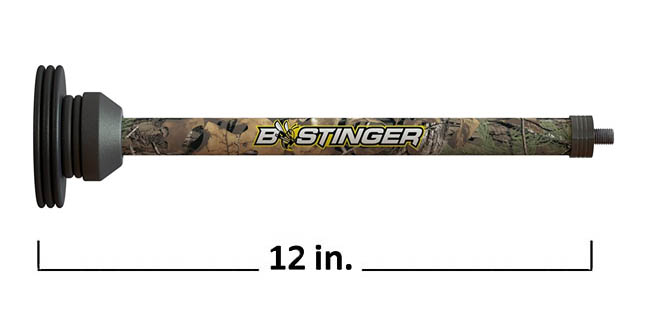
  5. Use a Longer Stabilizer. A long stabilizer on the front of your bow creates resistance to movement at full draw. The longer the stabilizer, the less movement. This is why you see tournament archers with ridiculously long stabilizers protruding three or four feet in front of their bows. For our purposes you’ll do just fine with a 12-inch stabilizer. A person struggling with target panic is prone to quick, jerky movements towards the bullseye. A long stabilizer resists these movements. Once you settle the pin on the bullseye, it stays longer. Whichever stabilizer you choose, just make sure the weight is out front. You don’t want a big, bulky stabilizer that will just add more weight to your bow. The B-Stinger is a great option and even comes with extra weights for customization. Or you could always make your own out of an old carbon arrow and weights found on eBay.

    A stabilizer measureing 12″ or more, and with front weights, will your bow help you stay on target.

A Final Note

The goal of these exercises is to relearn how draw to a relaxed state of mind and body. There are three ways to help you do this. First, don’t hold your breath. Archers oftentimes hold their breath when they draw, but that just adds more stress to the shot. Second acquire the bullseye quickly. Moving your pin slowly to the bullseye creates anticipation. And third, tell yourself it’s okay to miss. Miss on purpose if you have to, but teach your brain that it’s okay to miss occasionally.

Conclusion

If you’ve implemented these five steps then congratulations, you’re cured! If not, start over. Most archers will struggle with bouts of target panic now and then, but don’t panic, it’s easily cured.

You can avoid future bouts by practicing proper shooting techniques. Always strive to use your back muscles and have a surprise release with every shot. Avoid shooting a heavy bow beyond the point of fatigue. Instead use a light-draw bow with a long stabilizer during the off-season. A heavy bow turns archery a high stress activity when it should be fun and relaxing.

I hope this helps. Let me know if you have any questions and happy shooting.

How to Choose a Taxidermist

How to Choose a Taxidermist

It’s often said that one should spend as much time researching taxidermists as they do researching their hunt. That’s because a taxidermy mount embodies the memory of your hunt for a lifetime. A quality mount is not cheap, but neither is your hunt. While your hunt will soon be over, the memories will remain. So isn’t it worth investing a little time and money in a quality mount? In this article I’ll guide you through the process of selecting a quality taxidermist.

Before we begin, I should mention that I’m a professional taxidermist living in Southern Utah. My business is Nate’s Taxidermy and I’ve been mounting big game animals for ten years. I’m not seeking to score more business with this article, but rather help fellow hunters figure out how to get professional quality mount.

One reason I became a taxidermist was the vast unprofessionalism I encountered in the industry before I became a taxidermist. Turnaround time was always delayed, craftsmanship was questionable, and professionalism was unheard of. Calls mostly went unanswered and any guarantee of quality was non-existent. With this in mind, here are my top suggestions for anyone searching for a taxidermist.

Quality of work

First off, visit as many taxidermy studios as possible. Every taxidermist should have a well-lit showroom with a variety of species to inspect. The goal of taxidermy is to bring the animal back to life…or close to. Do the specimens look “alive”?

Begin by asking what skills and methods separate them from their competition. When touring showrooms look for things like symmetry in the face, especially the eyes and ears. Watch for drumming (places where the skin has pulled free of the form). This usually occurs in highly detailed areas like the face, inside the ears, and around the legs. Drumming indicates low-quality glue or cutting corners.

Another place to inspect is antler bases. Make sure there aren’t any gaps or separations where the hair meets the horn. Also, take a close look at habitat bases. If you see something weird in your wanderings, ask about it. A real professional will be honest and friendly, and value you beyond the money you’re spending.

Turnaround Time

Unless you are in a big hurry with your mount, don’t base your decision solely on a fast turnaround time. That being said, your mount should be finished within a reasonable time, say 8 to 12 months. Good taxidermy takes some time, but not years.

Most high-volume taxidermists use commercial tanneries, which are better than in-house tanneries (in my opinion). But most commercial tanneries are currently 8 months out due to supply-chain and staffing issues. As of 2023 you can expect completion times can to be a little longer.

Once the hide is back from the tannery, it shouldn’t take more than a month or two to complete. If your taxidermist keeps extending the time he quoted, or making excuses—like blaming the tannery—then beware. A taxidermist who accepts too much workload is more likely to cut corners on your mount.

Quality of Materials

Most people would be hard-pressed to distinguish whether cheap materials and high quality ones were used in the final mount. But there is a difference. Just like a food recipe, the quality of the final product depends on the culmination of ingredients. It would behoove you to ask about various materials used.

Start with the tanning process. Was the hide professionally tanned, or just “dry preserved?” Dry preserved isn’t really tanning, and in my opinion should never be used since it will drastically decrease the shelf life of your mount.

Next is the glue (aka hide paste). Hide paste is what holds the whole mount together. There are a variety of glues on the market, but many taxidermists are still using dextrin-based glue simply because it’s very inexpensive. Dextrin works, but it’s also a food derivative (from corn starch) which can attract bugs. Modern synthetic glue is much better. Some glues even contain bug-resistant additives.

Synthetic glues are more expensive, but they’re necessary for the long term survival of your mount. So be sure to ask about the glue! There are many other materials used as well–things like eyes, ear liners, paint, etc—but most are visibly apparent. Basically, if the mount looks cheap, it probably is.

Professionalism and Paperwork

Anyone working in the dead animal business is gonna be a little strange (myself included). Still, no business can survive without some basic customer service skills. Why should taxidermy be any different?

Let’s start by answering the phone. Simple, right? Nope. I recently tried to call a fellow taxidermist for a month straight before giving up. Apparently it’s still a problem in our industry. If your taxidermist does answer the phone, is he courteous and helpful?

What about paperwork? In the past I was given a little, scribbled receipt showing little more than my deposit was paid. When I opened my own taxidermy business I started with the paperwork.

When a client brings me a project, they receive a signed agreement with various details including balance of account, turnaround time, guarantee of quality, desired mount position, and even measurements taken from the carcass. When they pick up their finished piece they receive a “care sheet” for the long-term maintenance of their mount.

Professionals should also have a decent website with updated photos, contact info, and other helpful information.

Clean and Orderly Workspace

When you visit the taxidermy shop, is it clean, orderly, and well lit? Or is dark, dingy, smelly and cluttered? Similar to a mechanic’s shop, working conditions often reflect in the quality of service. For example, taxidermy requires a myriad of specialized tools. How can a mount be done properly if the taxidermist can’t find the right tools?

Cleanliness is also vital in a shop. A sanitary workspace prevents insect infestations, as well as bacterial cross-contamination from one project to another. I once visited a shop with a huge bison skull rotting under a table. It smelled so bad I could hardly breathe. The taxidermist didn’t seem to notice, but it didn’t help my confidence any.

Specialization vs. Generalists

One of the first questions to ask a prospective taxidermist is which animals they specialize in. This can usually be discovered on their website, if they have one.

Some taxidermists are generalists while others are specialists. Some guys specialize in birds; others specialize in big game (myself included). There are also specialists in skulls, fish, African game, and small game.

A generalist does everything–fish, deer, skulls, etc. This is fine and dandy, but such a broad spectrum of work requires many more years of training and experience. African big game–which includes vastly more animals–is more specialized than North American big game and also requires more specialized training.

In the end, just make sure you’re not dropping a deer off at a fish guy with little experience in big game.

Experience and Training

Be sure to ask about experience and training. How many years has the taxidermist been in business? How many times has he mounted the specific animal you’re interested in? Where did he get his training from? Did he go to a specialized taxidermy school or was he trained as an assistant? Both are fine so long as he’s acquired the requisite foundation in his field of taxidermy.

Experience matters. Every animal and every animal manikin (form) is unique, and thus requires some level of customization. Only specialized training and experience will guarantee the accuracy of your mount.

Customer References

It’s a good idea to request a reference list of previous customer phone numbers from your prospective taxidermist. With a deer or duck you might be fine with just visiting his studio. But with an especially large or expensive mount (e.g. life-size grizzly bear, bison or musk ox) you’d be best making some calls.

A few key topics to discuss with past customers is turnaround time, customer service, and quality of their finished mount. I would also ask long-term customers how their mounts are holding up over the years, and whether or not they would use that taxidermist again.

Conclusion

That’s about it, folks. I know these are mostly common sense items, but you don’t want to take chances with your once-in-a-lifetime memories.

Taxidermy is as much an art as science. Science says your mount should accurately recreate the living creature. A good taxidermist will ‘bring the animal back to life.’

Art, on the other hand, is subjective. That’s where finding the right taxidermist with the right style comes into play. Style varies from artist to artist, so your goal should be to find the taxidermist who reflects both the “look” you desire and an accurate representation of your trophy.

Shooting for Longevity in Archery: Protecting Your Shoulder

Archery and Shoulder Injuries

You’ve probably noticed by now that shooting a high-poundage hunting bow is a very strenuous physical activity. When you’re young, shooting a seventy pound bow is no problem. But like any physical sport, it will catch up to you someday.

I’ve met a lot of older hunters who were forced to give up archery due to shoulder injuries, or just a worn out shoulder. This usually occurs in one’s late 40s or 50s. Personally, I can’t think of anything worse than putting the bow down forever! In this article we’re going to explore ways to bowhunt into old age.

Shoulder Impingements

After fifteen years of continuous shooting, I began noticing some stiffness and soreness in my right (draw) shoulder. Fearing the worst, I went to a shoulder specialist and was diagnosed with a “shoulder impingement.” An impingement—sometimes referred to as swimmer’s shoulder—is a condition that causes pain due to a tendon rubbing against the shoulder blade.

Similar to tendonitis, shoulder impingements are caused by excessive strain on tendons over time. The pain is consistent and generally gets worse when a person reaches upwards or moves their arms above their head. Over time the shoulder becomes too painful and/or weak to do even modest work, like pulling a bow back.

Fortunately I didn’t have any tears (or worse) that would require surgery, just a persistent discomfort that worsened with physical strain, particularly after shooting my bow. To sum it up, I was put through several weeks of physical therapy and gradually noticed some improvement.

Reducing Physical Strain in Archery

Ten years later I’m still living with intermittent soreness, but now I’m shooting for longevity. I plan to bowhunt well into my seventies, God willing. I’ve taken several steps to reduce further damage while still shooting on a semi-regular basis. Here’s how.

Reduce Draw Weight

Reducing your draw weight is the first step to saving your shoulder. Unless you’ve already suffered a serious shoulder injury, I don’t recommend going overboard. Reducing draw weight will also affect arrow speed, pin spacing and penetration. I would start with 5-10 pounds.

I reduced my bow’s draw weight from seventy to sixty pounds. This was the lowest I dared go and still retain good accuracy and arrow energy. What I’ve learned since then is that shot placement is far more important than kinetic energy and penetration.

Use a Low-Poundage Bow in the Off-Season

Serious archers shoot year-round in order to maintain good form and fundamentals. If this is you, then consider buying a low-poundage bow. Go as light as you want since you’re only using this bow in practice. You’ll also need some lighter arrows to go with it, especially if you’re shooting in competitions.

For off-season practice I switch to a 45-pound bow that’s set up very similar to my hunting bow. This allows me to shoot year-round without wrecking my shoulder. Serious archers shoot hundreds of shots in practice, but only a couple during the actual hunt. So  a low-poundage practice bow is a great way to save your shoulder.

Reduce Shooting Time

Here’s a simple fix: Shoot less. Now that I’m shooting for longevity, I’ve reduced my practice sessions to an hour or less. During these brief sessions I make every arrow count. It’s a simple concept: quality over quantity.

Before hunting season, I’ll take my hunting bow out for fine tuning. Since I’m limited on shooting time, the tuning process can take a couple days, but at least I’ll still be able to hunt ten years from now.

Draw with a High Elbow

One last tip for saving your shoulder. Never draw with your draw elbow pointing down. Instead, draw with your elbow pointing out level to the ground or just higher than that.

You should always draw the bow with your back, not your arms. Drawing with a low elbow engages more of your arms which puts more strain on your shoulder. A high-elbow engages more of your back muscles like it should.

At-Home Physical Therapy for Impingements

If you’re already suffering from shoulder impingements or other discomfort, you might consider some at-home physical therapy.

There are multiple targeted exercises for shoulder injuries like impingements. These exercises are commonly known as “Jobe’s Shoulder Exercises” and can be found with a quick internet search.

These exercises work by strengthening the multitude of muscles and tendons that support the shoulder. This takes the strain off the affected tendon area. Depending on your level of impingement, these exercises should be repeated 2-3 times per week.

Conclusion

For many of us, bowhunting isn’t just a fun hobby, but a way of life.  Simply dropping archery because of a shoulder injury is not an option. So it just makes sense to adopt some level of protection before it’s too late.

Quality over quantity is the name of the game here: make every arrow count. Your long term goal should be to shoot less and shoot lighter. Shot placement is far more important than kinetic energy, so going lighter won’t be a problem as long as you can shoot accurately.

Why I Switched BACK to a Fixed Pin Bow Sight

Why I Switched BACK to a Fixed Pin Bow Sight

In 2016 I switched from a fixed pin sight to a one pin “slider” sight. That year I harvested a bear, deer, and an elk. I was sold on a one-pin sight, and for good reason. (Here’s the link to that article).

Then, in 2017, halfway through the deer hunt, my slider broke. The gears simply stripped out. Thankfully I had my backup bow in camp and was able to swap back to my old multi-pin sight.

When I got home I bought a slider sight and used it for a while, but it didn’t stick. Eventually I went back to my fixed pin sight and never looked back. In this article we’ll look at the pros and cons of using a fixed-pin (multi-pin) bow sight.

My TruGlo fixed-pin, composite bow sight.

Fixed Pin Sight Pros:

  • Fixed pin sights work with all bows and draw weights. But lower poundage bows aren’t always compatible with sliders. Especially at longer distances (usually over 60 yards) the sight housing adjust lower and lower until it actually comes into contact with the arrow or fletchings. What good is a single pin sight that can’t be dialed over 60 yards? This was the main issue I had while using a single-pin sight on my 60-pound hunting bow.
  • Unlike single pin sights, multi-pins don’t require extra hand movement when adjusting for moving targets. One-pin sights are great for stationary targets, but in the thick stuff you have to be ready for anything. Once you draw your bow, it’s not possible to readjust the sight if the animal moves, especially if it’s moving rapidly toward or away from you. Animals that move a lot—like bear, javelina, and turkey—are especially problematic with one pin sights. When hunting open terrain or when dealing with longer yardages—say 40 yards or more—movement isn’t a big issue because the animal is less likely to notice.
  • Fixed-pin sights don’t have moving parts. Once you’re sighted in, you just tighten down the screws and go. Moving parts can wear out or break easier than stationary parts. That’s what happened to me; my slider simply stripped out from normal use. And on a hunt no less! This is not acceptable.
  • Fixed-pin sights tend to be lighter than single pin sights. Slider sights with lots of working parts tend to be heavier than fixed pin sights. Of course accessory weight isn’t a big issue unless you’re already lugging around a heavy aluminum bow, or if you’re a backcountry bowhunter where weight is always an issue. Both apply to me, so using a lighter sight is better. My bare bow already weighs nearly 4.7 pounds, so accessory weight is a real issue. BTW, my favorite lightweight sight is the TruGlo Carbon XS Xtreme carbon-composite bow sight. At 4 ounces it weighs half as much as my old slider.

Now for the cons.

Fixed Pin Sight Cons:

  • The pins in a fixed sight take up more space in the sight picture. A long row of pins is not only distracting, but can block much of an animal’s vitals. It’s much easier to place a single pin on a small target than to wade through multiple pins, especially in a high-stress situation. However, using smaller diameter pins (.019 or smaller) mostly solves this problem
  • Shooting between the pins (aka pin gapping) takes practice. If you’re shooting heavy arrows and/or pulling a light draw weight, the pins on a multi-pin sight will be spaced widely apart. So shooting odd-yardages means shooting between the pins. This takes some practice to get use to. It’s much easier to just dial up the exact yardage and hold the pin on the target.
  • Selecting the right pin under pressure can lead to mistakes. This was the reason I switched to single pin sight in the first place. It’s rare that I select the wrong pin, but it can happen. And the more pins you have, the easier it is to make mistakes. That being said, mistakes are just as common with a slider sight. Anyone who has used a slider will admit to forgetting to move the pin from time to time. Mistakes happen with both sights.

Conclusion

There are pros and cons to using single- or multi-pin bow sights. The decision should be based on the type of hunting you do, your personal bow setup, and most importantly the sight you’re most comfortable using in real hunting situations.

In tournament or target shooting, I prefer a slider. In open country where long shots are the norm, I would definitely go with a slider. But in heavy cover or backcountry use, I’m more comfortable with a multi-pin sight.

Six years ago I swore I’d never go back to a fixed pin sight, yet here I am. What’s the lesson here? Never say NEVER.

Ode to My Bow

Ode to My Bow

My bow is my best friend and woods companion. It goes everywhere that I do, sometimes for weeks at a time. It hangs freely from my fingertips, never strapped to my back. It’s tough being my bow, constantly getting banged up and snagging on brush. Sometimes I break parts off of it, but it never complains or fails.

My bow has seen the most amazing things: Trophy bucks beyond imagination, breathtaking sunrises, the glowing Milky Way galaxy on a moonless night. It once protected me from a man-stalking cougar. Another time it was nearly struck by lightning as it hung from my hand during a freak thunderstorm. And yet another day, me and my bow were caught in a freak wind storm that blew down eleven trees into flying splinters around us with nowhere to run.Over the course of a year my bow gets soaked by rain, covered in dirt, and caked with snow. Despite the elements, my bow is 100% accurate with every shot. Whether it’s 100 degrees, or well below zero, my bow always shoots true. When an arrow misses the bullseye I only have myself to blame.

My bow is absolutely quiet, even when it snaps off an arrow at 300 feet per second. A deer might hear the arrow whiz by, but not the whisper of the bows release.

At first glance my bow looks like any other aluminum-framed, modern compound bow. But it’s not. My bow was designed by a certifiable genius-engineer by the name of Mathew McPherson. Since the 1990s, McPherson has led the charge in bow technology, quite literally reinventing the modern compound bow over and over again.

The name stamped on my bow is Halon 32. Halon is a fire-extinguisher gas and a strange name for a bow. Its actual name—the one I gave it—is “Excalibur III”.

Excalibur III is my third serious hunting bow. But in the end it’s still only a tool, and so I usually just call it, well, “My Bow.”

Since 2017 my bow has killed three P&Y deer, one trophy mountain goat, three javelina and several non-trophy animals. It’s the primary provider of meat for me and my family.

Shortly after returning home from a long hunt, I feel an emptiness by my side, like I’m forgetting something. Then I realize it’s my bow, now tucked snuggly away in its case on the floor behind the couch.

Out of sight, but never out of mind, my bow is a warrior and a friend. With my bow, alone, I share life’s greatest moments; my pain, my success, my tears and my glory.

Squirrels: The Bowhunter’s Nemesis

A Real Threat to Bowhunters

I’ll never forget. Ten years ago I rounded a large fir tree and spotted a 180-class buck bedded in some deadfall at thirty yards and facing directly away from me. But before I could even pull an arrow, a nearby squirrel lit up with a world-class barking fit. The buck instantly stood up and walked into the deep woods without offering a shot. Since then, I’ve had innumerable stalks thwarted by these cursed tree rats, some ending entire seasons in failure by a single squirrel.

Aside from using other deer as sentinels, big bucks use a myriad of other forest creatures for safety too. As you travel through the woods you might notice that squirrels, chipmunks, and a variety of birds are continually announcing your presence. They do this to warn their own species of danger, but the deer pick up on their calls and use them to their advantage. Big bucks, especially, are completely aware of their surrounding and pick notice anything out of the ordinary.

How Deer Use Squirrels

If you’ve had the chance to observe many deer in the deep woods, then you’ve probably noticed that every time a squirrel fires up, the deer will stop whatever he’s doing and stare in that direction. Squirrels don’t bark randomly; there’s always a threat, even if it’s just another squirrel in their territory. Either way, if you agitate a squirrel, then just know that any deer within earshot is now looking for danger. Conversely, squirrels bark at deer as well as people. Several times I’ve found deer in places where I’ve heard a squirrel fire up. So don’t be afraid to investigate random squirrel barks.

Like elk, big bucks enjoy the security of bedding in thick, over-grown conifer forests. The problem with conifers is the abundance of squirrels and chipmunks that inhabit them. Like most animals, squirrels are territorial. Long ago I noticed that the whole conifer forest is gridded in squirrel territory. When you leave one barking squirrel behind, you’ll likely run into another and another as you move through the woods.

Squirrels aren’t too noisy early season, but it gets progressively worse in September as the squirrels begin to amass food stores (pinecones) for winter. In my neck of the woods, August 25th is the beginning of mayhem.

Chipmunks Too?!

If you have an abundance of chipmunks in your area, you might notice they’re equally bad, erupting with a myriad of alarming noises that deer pick up on. One time I stumbled upon a crabby 4×4 buck feeding off a trail at 15 yards. Immediately, a cantankerous chipmunk situated between us erupted into a machine gun-like, high-pitched chirping fit. The buck stopped feeding and spent the next five minutes scanning the woods for danger. Eventually he marched nervously away. Just last year my eight-hour, once-in-a-lifetime mountain goat stalk was nearly blown by a single chipmunk who threw an alarming fit in a nearby tree.

Knowing that squirrels and chipmunks are such threats to bowhunting success, what do you do? I’ve tried everything, but here are a few tried-and-true techniques that might help you.

Squirrel Avoidance Techniques

Unless you are sitting in a fixed ambush position, your best strategy is to just get up and move. Once out of sight, squirrels will soon shut up and go about their business. Fortunately, not all squirrels are bad. Some will even allow your presence, like if they’re too busy gathering pinecones to notice you.

A second option is to wait the squirrel out. Squirrels will generally bark for 30 minutes or less, during which time no deer will enter the area, guaranteed. After 30 minutes squirrels will tire out and go back to their business. Another effective technique is to walk directly towards the squirrel’s tree. Most squirrels will get nervous as you approach and shut up—but not always. Some just get louder! Fortunately chipmunks are more skittish and scare easily.

As a last resort, feel free to shoot the wretched beast. You don’t necessarily have to kill him, just whiz an arrow past his head. When he realizes he’s in danger, he’ll likely run off. For this reason, I always carry a cheap, aluminum “squirrel arrow” in my quiver—because you’re not likely to get your arrow back; believe me, I’ve shot at a lot of squirrels. My Spanish name is actually Squirlero! Okay, it’s not, but it should be.

Again, it depends on the squirrel you’re shooting at. Some just climb higher and bark louder. For this reason, a more lethal method might be in order. I know one hunter who carries a lightweight BB pistol in his pack…just in case.

Conclusion

If you hunt long enough, you’ll inevitably have an entire hunt go down the toilet thanks to a random tree rat. So be prepared by using the aforementioned squirrel-avoidance techniques. On a side note, I’ve actually eaten more squirrels than the average person. It was a long time ago, but eat them I did. They’re actually quite tasty; like chicken but with a nutty overtone. Bon appétit!

How to Estimate Distance without a Rangefinder

How to Judge Distance without a Rangefinder

To Range or Not to Range

A laser rangefinder is an absolute necessity for compound bow shooters. Whenever possible I implore you to range the distance of any animal. This is especially important over flat ground and long distances.

That being said, all bowhunters must learn to judge distance without the aid of a rangefinder. When hunting in heavy timber, bucks can appear and disappear quickly, so you need to be ready for fast action. The majority of my trophies were taken on the fly with no time to range. Learning to judge distance without a rangefinder is something that can be easily practiced at home. Here are some techniques.

Practice Makes Perfect

Set your target in the weeds at an unknown distance, and then shoot from random yardages without ranging. After your first shot, verify the distance with your rangefinder. Do this exercise at every practice session and your distance-judging abilities will increase rapidly.

When you’re hunting in the woods you can take advantage of the vast amount of downtime by guessing random yardages of distant trees or rocks, and then verifying the distance with your rangefinder. This is both a fun and productive way to kill time afield.

Another exercise is to figure out the farthest distance you can throw a fist-size rock (it’s usually 40-50 yards). In the field, ask yourself if you could hit a certain object with a rock. Your brain already knows, through muscle memory, how far you can throw a rock, so you can pretty much gauge whether or not you could hit something with a rock by just looking at it. Then use that estimation as a reference. This method is surprisingly accurate.

Judging distance can be especially difficult over longer distances and flat ground. In these situations try using the twenty-yard addition method. You already know what 20 yards looks like, so you can figure out longer distances by finding a spot 20 yards away, and then another spot 20 yards beyond that until you reach your target. Keep adding 20-yards until you reach the target. It works!

The Vengeful Lion: My 2021 Cougar Encounter

Cougars Abound

The deer herd in my Southern Utah hunting area is on the decline thanks to a long-running drought, in conjunction with an ever-increasing human presence. Locating any remaining bucks means relying on an array of trail cameras placed along known deer routes across the mountain range. Every year we capture one or two photos of cougars prowling around, but last season was different. Over the course of a single month we captured cougar pictures on all four cameras.

A cougar-clawed tree.

Of course you’ll find cougars wherever deer are concentrated, but in recent years we’ve been seeing more and more cougar sign including deer kills, paw prints, clawed-up trees, and of course trail-cam photos.

My theory is that when deer numbers decrease rapidly, cougars (commonly referred to as mountain lions) are forced to roam over more territory in search of their most common prey, the mule deer. This, of course, increases the odds of running into a big cat while hunting. To make matters worse, when deer numbers are down, hungry cougars will actually consider humans as prey, although attacks are quite rare.

Cougar on trail camera in 2021.

In three decades of deer hunting I’ve only seen a handful of cougars. About half were seen at night by headlights on remote dirt roads, the other half up and prowling during daylight hours. It wasn’t until the 2021 deer season that I actually came face-to-face with a lion in the woods and was even forced to defend myself.

The Cougar Attack

It all began halfway through last season’s bowhunt. It was just another hot afternoon as Esther and I trudged up a dusty trail leading to a pine ridge where we like to hunt. Esther was excited to show me some trail-cam photos of a decent 3-pointer from earlier in the week. Sweating and puffing from the steep hike, we settled down on a log and began scrolling through the photos.

We’d only been there a minute or two when a series of blood-curdling screams and a loud scuffling sounds broke the silence about 50 yards into the heavy timber. At first I thought it was another hunter-jackass messing with us. However, the screams grew louder and morphed into what sounded like a sheep in distress…or at least something very non-human. Esther and I sat frozen, staring blankly at the timber. Seconds later everything was silent.

At that point it I figured it must have been a cougar attack and said to Esther, “I think a deer just got whacked by a cougar….” Of course I’d never actually heard a cougar attack on a deer, but what else could it be? Sasquatch, maybe?

As a self-proclaimed naturalist I was overcome by curiosity and stood up, saying, “Hey, let’s go take a look.”

“I’m not going over there!” was Esther’s immediate reply.

“Just stay behind me. If it’s a lion he’ll just run off.”

Everyone knows that big cats out West are naturally afraid of people and take every precaution to avoid humans. This is reinforced by the fact that humans are the cougar’s only natural predator. But I can’t fault Esther for being nervous. Only two years previous she had a very unnerving encounter with a lion on another trail. In the gray hours of morning she came around a bend at the exact same time a cougar was coming from the opposite direction. The cougar didn’t run away, but instead crouched low and stared at Esther from only fifteen yards away. Following the standard cougar-avoidance protocol, Esther yelled and waved her arms to scare it off. When that didn’t work she loaded an arrow and drew her bow. When he still didn’t budge she released the arrow which skipped off the dirt right next to the cat. Instead of running away, he just turned and walked casually into the woods.

Cougar on camera: 2019. Maybe the same one that stalked Esther…

A dangerous cat is a danger indeed. Due to their explosive short-burst speed, there is no physical way to outrun a cougar. They can grow to roughly the same size and weight (and color) as an adult human; a full-grown male lion can weigh more than two-hundred pounds. Cougars prefer ambush-style hunting: crouching in wait and then pouncing on his victim. He uses his powerful arms to pull down his prey, and then kills quickly by sinking his fangs into the back of the neck and severing the spine. Other tactics include crushing the windpipe and suffocating his victim. Either way it’s a quick and silent death. Your best chance at surviving a cougar attack is to fight back. If at all possible, go for the eyes. Cats are very careful to avoid personal injury and will back off if you threaten bodily harm.

Typical cougar kill (note claw marks).

Now back to our story.

Cautiously we tiptoed into the timber in the direction of the scuffle. Coming around a clump of stunted pines we found a yearling doe lying flat on the ground, gargling and gasping with its eyes rolled back in its head. Claw marks were raked horizontally across her hind quarters. The cougar had obviously heard us coming and ran off before we arrived.

Instinctively I loaded an arrow while Esther suggested what I was thinking anyway: “Maybe we should put it out of its misery.” But I decided to wait since, strangely, there was no blood present. About twenty seconds later, the deer’s eyes rolled back into place. She suddenly swung her head up, looked around, then sprang to her feet and bounded away as if nothing happened.

At that point we slowly backed out and into the open. On the way out I joked, “Looks like I saved a deer’s life. She better send us a thank you card in the mail.”

Cougar on trail camera in 2020.

Esther was planning to hunt this area in the evening, but after the nerve-wracking experience she decided to follow me into a different area instead. On the way I joked that the cougar might be plotting revenge for having his dinner plans ruined. In retrospect I was only half-joking, because that’s exactly what the cougar did! Before splitting up for the evening, I suggested she sit with her back to a tree and keep an eye behind her. But the evening was uneventful and at dark we walked back to the truck together.

A Vengeful Cougar?

Twenty-four hours later I found myself once again huffing and puffing up the mountain alone, this time about a mile away. I was thoroughly focused on deer; the cougar encounter already ancient history in my mind.  After all, what were the odds of running into the same cat, even if he was now desperately hungry and maybe even seeking revenge?

Big cougar tom wearing tracking collar in 2021.

I arrived at one of my favorite areas and immediately spotted two forest grouse pecking around. Realizing that any meat was better than no meat, I stalked toward the bigger bird. He got nervous, however, and flew into the low branches of a nearby tree. Moving closer for a shot, I settled my pin on the little target and released. POOF! The grouse fell to the ground in a shower of clipped feathers. Excitedly I trotted over to collect my bird, but to my dismay he was gone; apparently just a grazing shot. From there I walked in ever-widening circles around the trees scanning for the bird.

A moment later I spotted a grouse walking across a flat towards some nearby cliffs. I followed the bird, but when I got closer he busted from the cliff edge and soared into the wilderness 1000 feet below. Realizing it must have been the other bird, I turned back to look for the one I’d shot at.

But when I turned around my heart stopped. Sitting in the shadows, half-hidden behind a deadfall tree and exactly where I’d been standing just a minute earlier, was a big cougar staring right at me. Only his head and muscular shoulders were visible above the log, his eyes locked on mine. It didn’t seem real at first, and all I could do was stare back as my mind raced, trying to make sense of the situation. Was it real or someone playing a trick on me? Now what?

Adult cougar close-up. (Photo courtesy of Utah DWR, by Lynn Chamberlain)

Defend Yourself!

The hackles on my neck suddenly stood on end as I realized the gravity of the situation. First off, I was standing in the wide open with sheer cliffs at my back. Second, the cougar wasn’t budging and likely contemplating his next move. Finally, in all likelihood he was the same cougar from the previous night, now hungry and vengeful. At any moment I expected the great cat to explode across the flat in a tawny blur and rip me to shreds.

Without another thought I quickly and smoothly grasped an arrow from my quiver and loaded it onto my bow without looking down. Then, in one fluid motion I drew my bow while calculating the distance to the cougar. My sight pins scrolled across his face. Looks about thirty yards…

A second later my arrow whizzed into the shadows and found its mark with a loud CRACK!

The cougar disappeared into a flurry of dust and debris, its tail whipping wildly above the log. Instantly I pulled another arrow, this time fumbling to load it with my shaking hand. The scuffling suddenly stopped. Was he dead?

Nope.

The cat sprang up on another log situated perpendicular to the one he’d been sitting behind. Without looking back he casually walked the length of the log in the opposite direction, then hopped to the ground and meandered into the trees as if nothing happened.

I waited until the cat was well out of sight and then walked over to where he’d been sitting. There was no blood or arrow at first, just a few tuffs of tan fur mixed with pine needles and branches. A short distance later the blood trail started, dark red and drizzled steadily along the log and off into the woods.

For the moment I had no intention of following the cat, and instead spent some time looking for my arrow, the whole time wondering where I’d hit him. It was clearly a good hit, but there was no evidence that the arrow passed through, nor did he carry it off. The only possibility was the arrow hit him high on the head, a glancing, slashing blow that knocked him temporarily senseless, and then skipped into the woods.

Another cougar kill from 2021.

At last I cautiously followed the blood trail into the woods. It was my responsibility, after all, to follow-up on a wounded animal. The easy-to-follow drizzle trail continued for about 300 yards and then stopped abruptly as the forest grew thick with minimal visibility. At that point, and with darkness falling fast, I decided that following an injured, man-stalking cat into the thick stuff was a bad idea and backed out.

In the End

Interestingly, I returned to the site in the morning and found an entirely new blood trail. This blood was from a deer, however, its dug-in tracks intermingled with that of a cougar who’d apparently taken it down very near the same location as my encounter. Was it the same cat? We’ll never know.

Although I continued to hunt the same general area for the next couple weeks I never saw the cougar again, nor did I expect to. He learned a valuable lesson that day: To associate people with danger. Still, I’m looking forward to next season. If we meet again he should be easily identifiable; perhaps I’ll name him “scar.”

Archery, Zen, and Hunting